
Retailer links on this page are affiliate links. We may earn a commission if you buy, and your price doesn't change. How affiliate links work →
Backpacking Stoves
MSR WindBurner Personal Stove System Review: Built for Wind, Not Flexibility
Last updated:
OutdoorGearLab scored the MSR WindBurner top of its stove group for fuel efficiency and for wind, and bottom for weight. Three scores, and they're the whole review.
My call, once. Buy it if you boil water in wind and cold and you want one locked-together system that just works. Skip it if you count ounces or want to cook with your own pans. I give it 8.1 out of 10.
 By Brooke5 min read
Share this post
Send it to someone who's planning a trip.
How windproof is it?
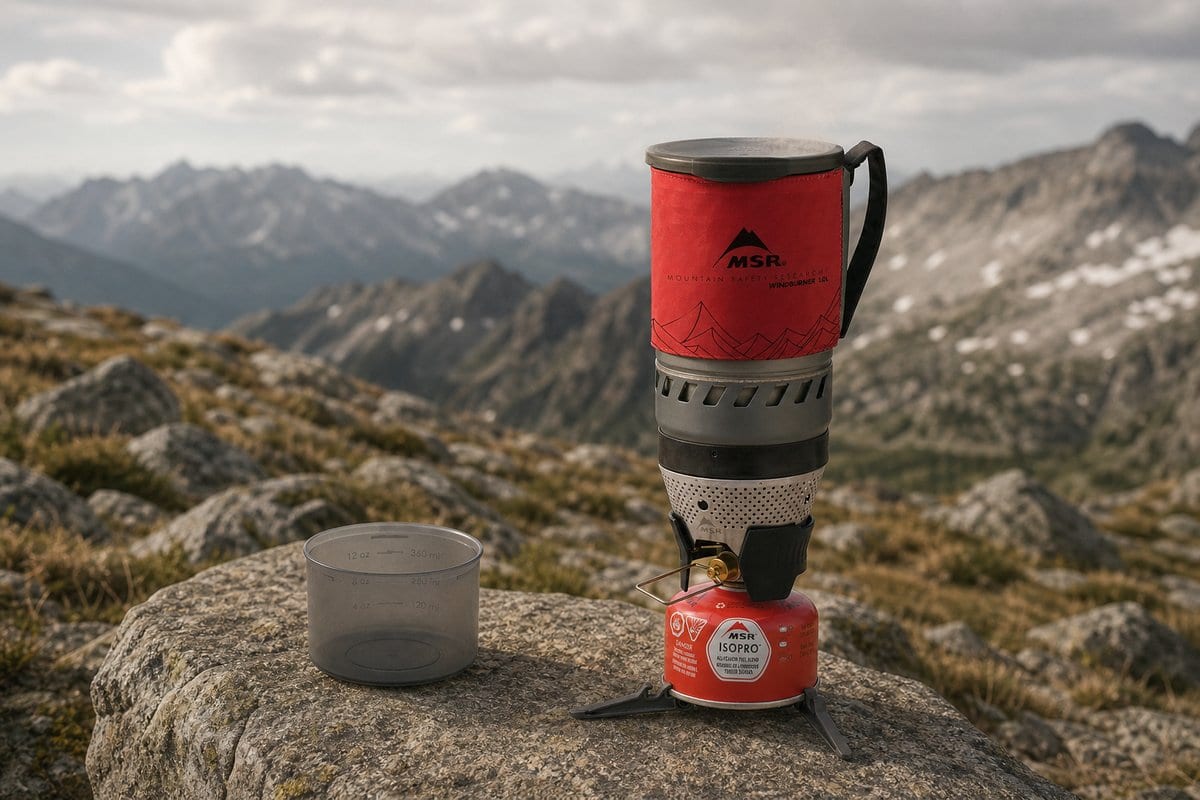
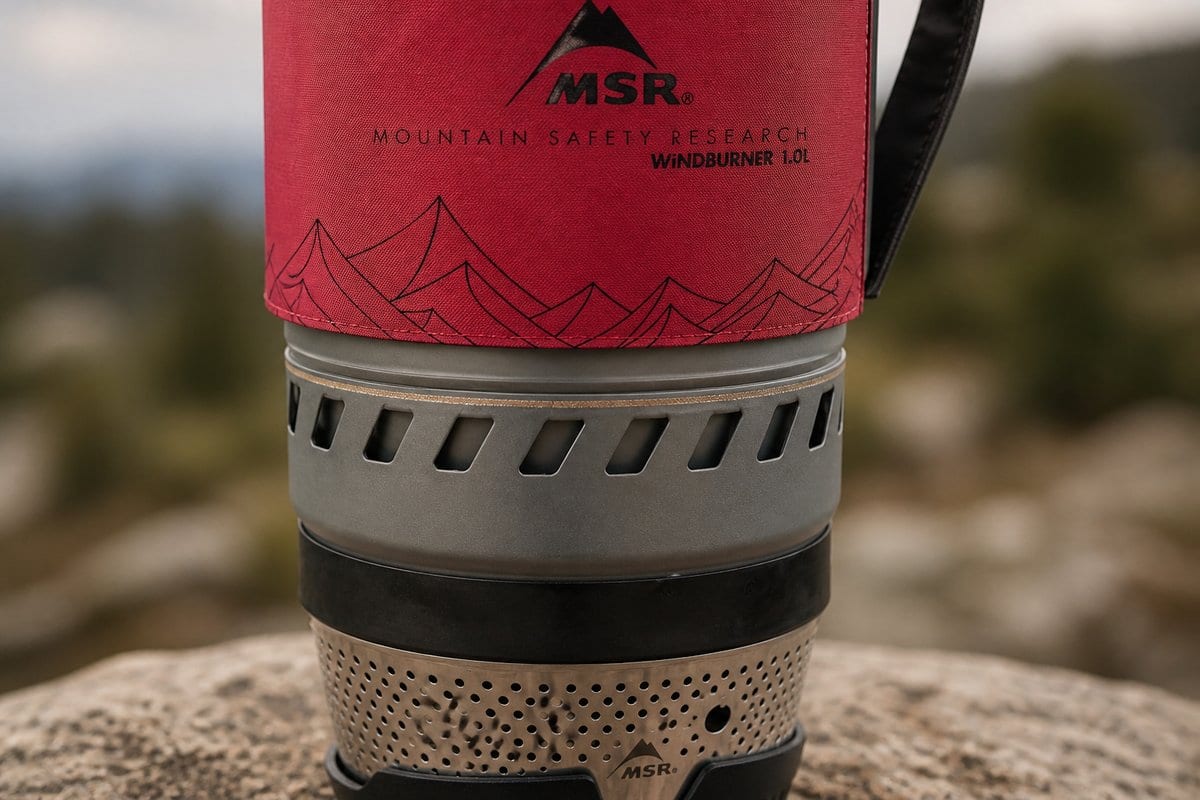
MSR calls it windproof. The burner is radiant and fully enclosed under the pot's built-in heat exchanger, and a pressure regulator, MSR says, keeps performance up in wind and cold.
OutdoorGearLab backs it up. It scored wind resistance 8.2 out of 10, the top of its five-stove table, and says that when things got cold and blustery, the WindBurner held its own. It also says the stove's fuel use was less affected by wind and cold than the others, and that its testers came to trust it from summer alpine camps to wintry overnights.
Treeline Review adds the family tree: the WindBurner shares its windproof burner idea with MSR's mountaineering Reactor, and is designed to use fuel more efficiently and be easier to use, at a lower price. I like that lineage. You get the expedition stove's main trick in a 1 L system built for one person.
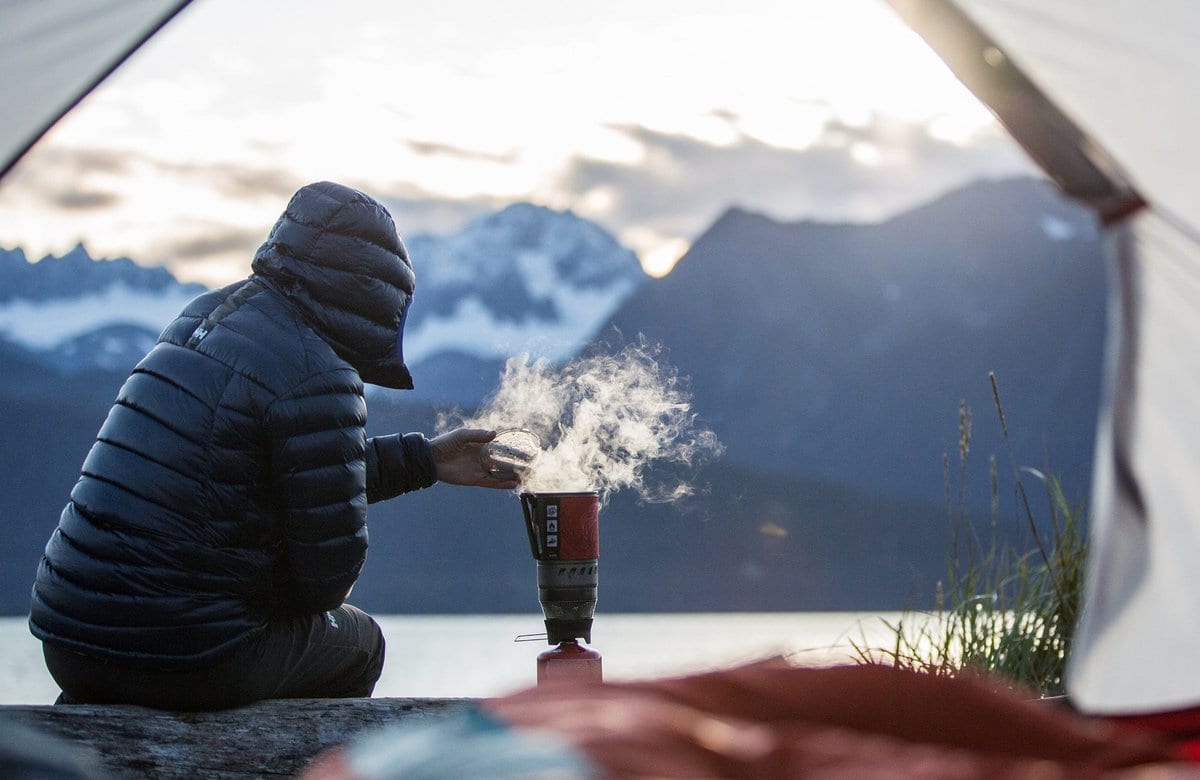
My read of all three, and of that 8.2: this is the stove for exposed camps. Ridgelines, desert flats, lakeshores where the wind never quits. If you mostly camp in sheltered trees, you're paying for protection you won't use often.
How heavy is it?
MSR lists a 15.3 oz minimum weight, 433 g, and 16.4 oz packaged. OutdoorGearLab weighed its kit at 14.7 oz, calls that hefty, and lists weight as one of the stove's most substantial drawbacks. Its weight score was 5.0 out of 10, the lowest in its table.
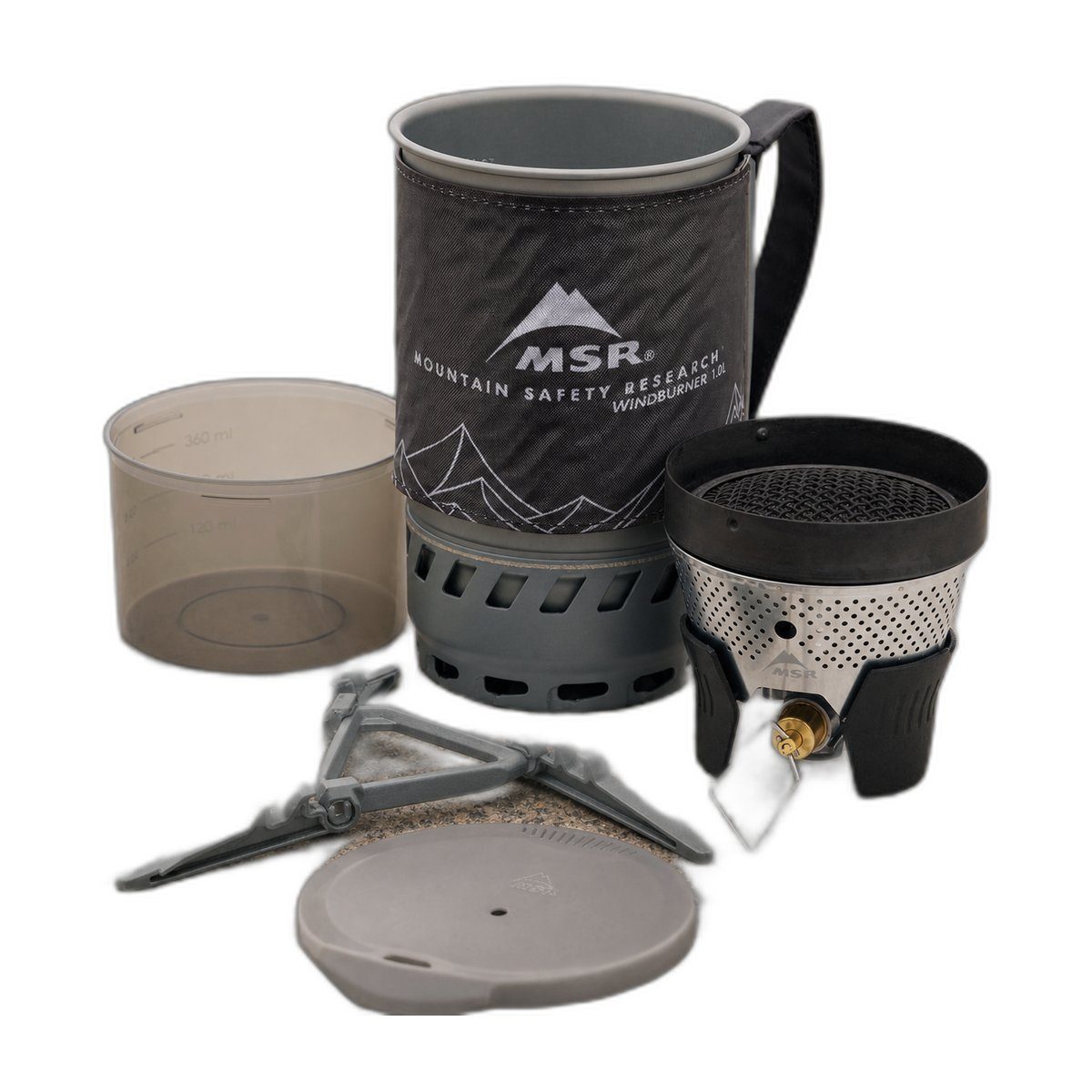
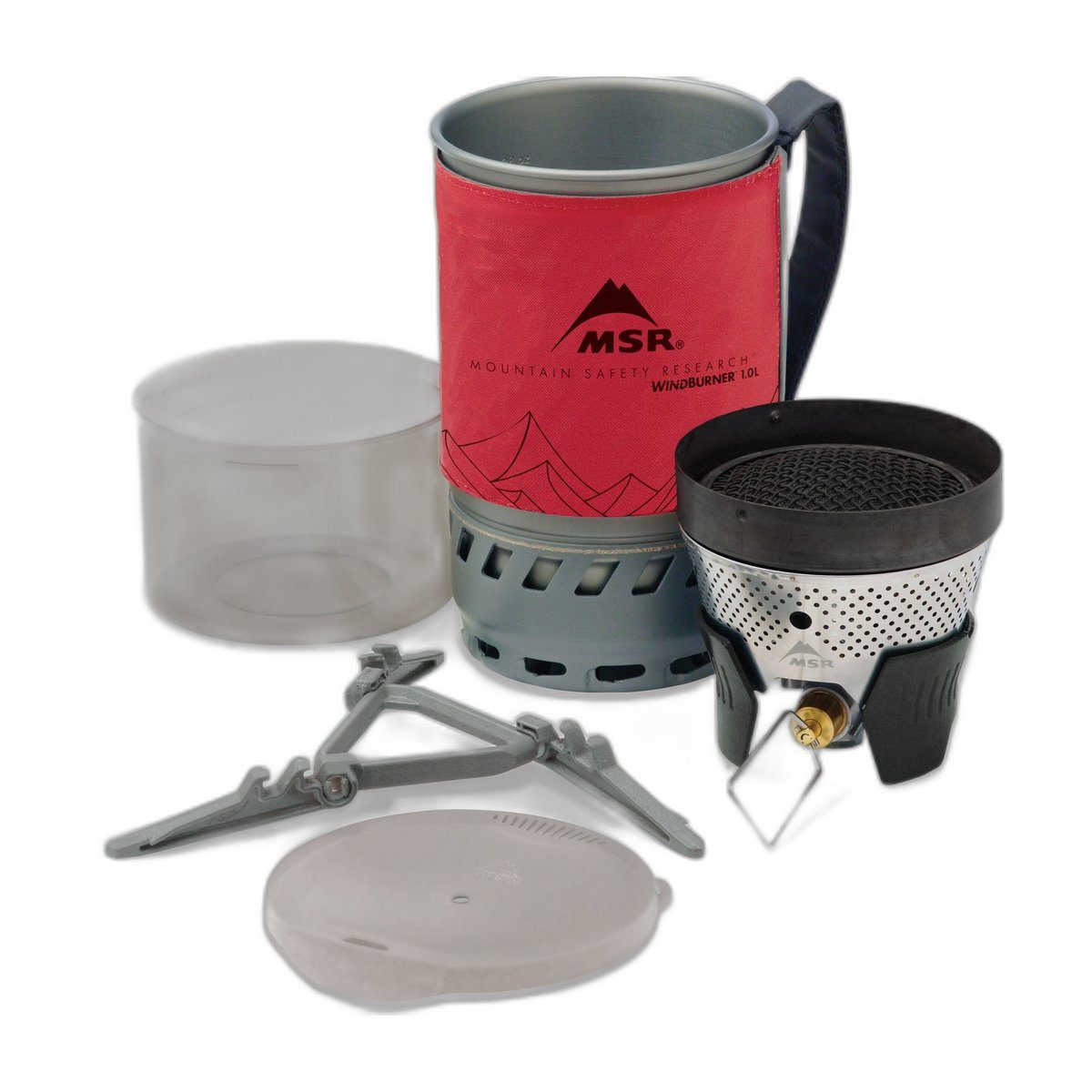
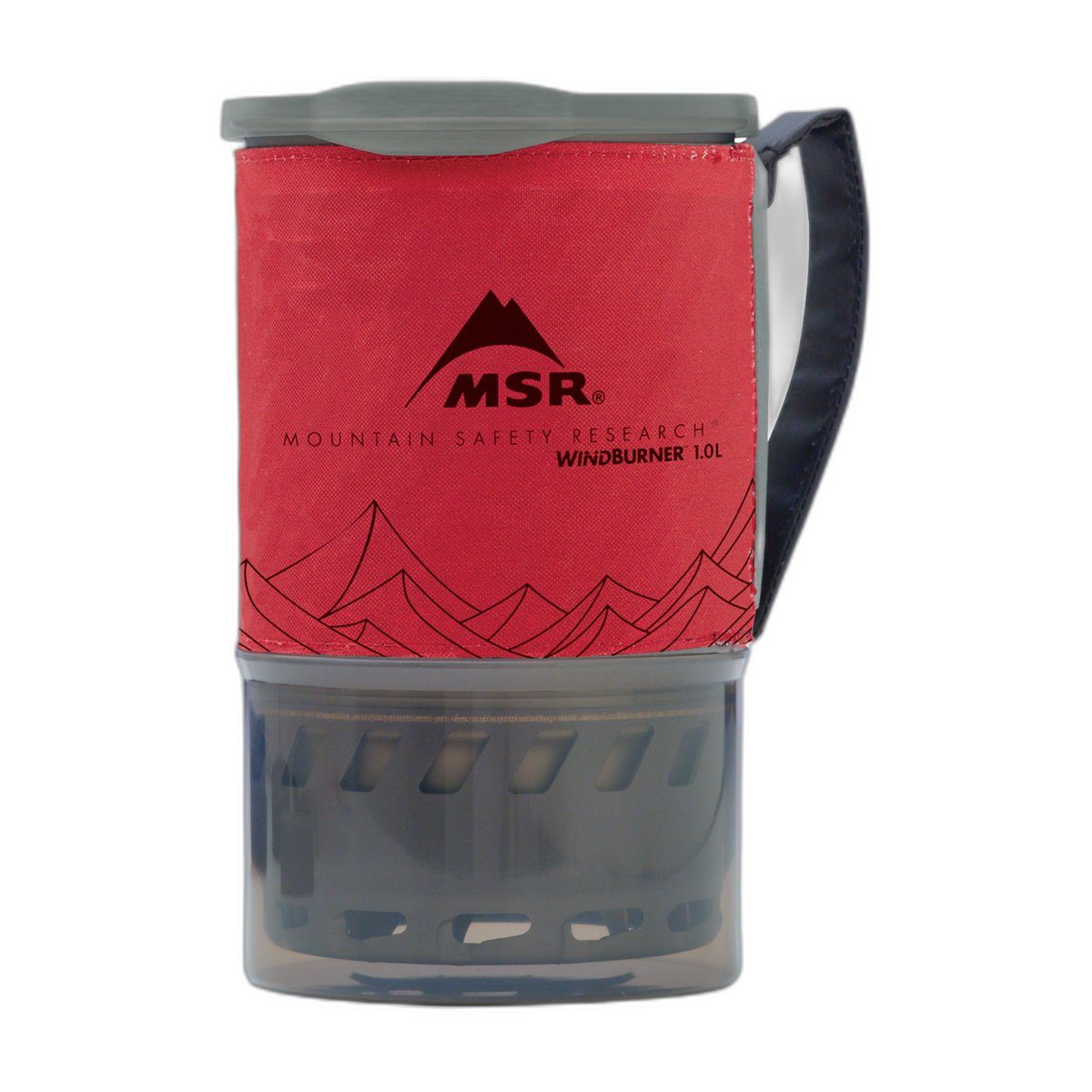
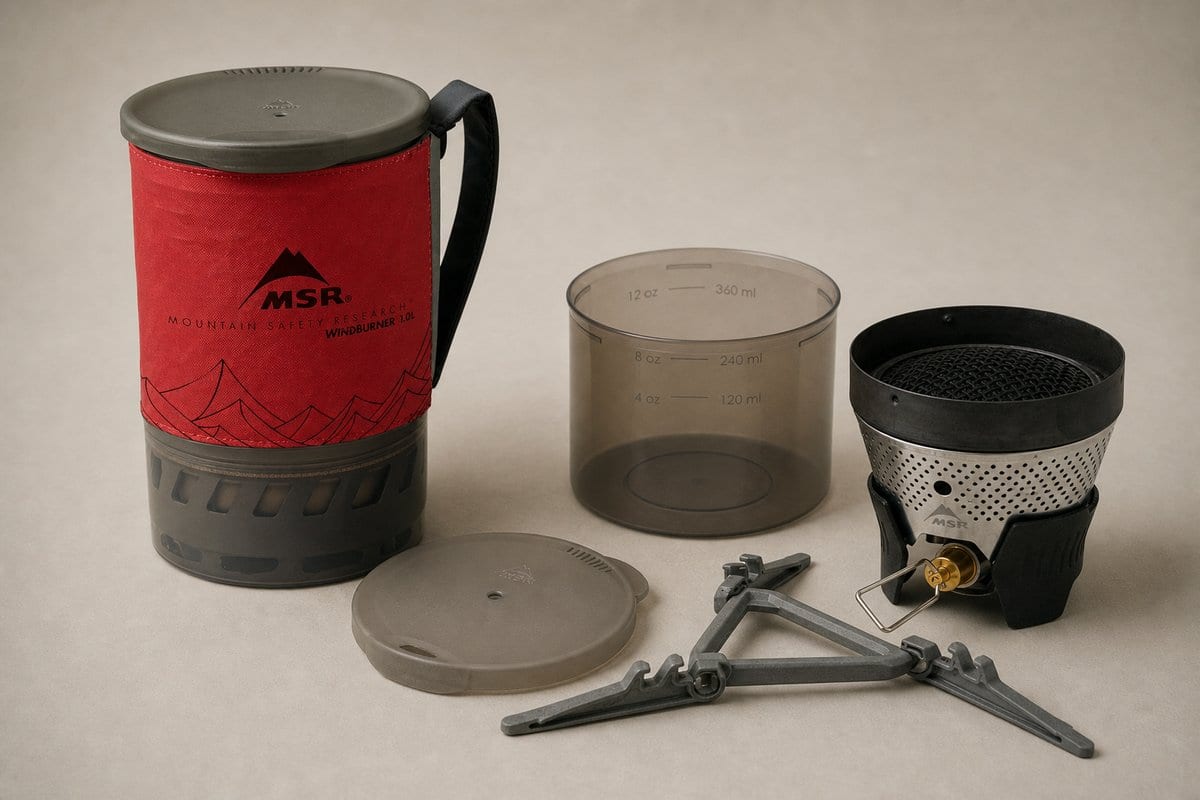
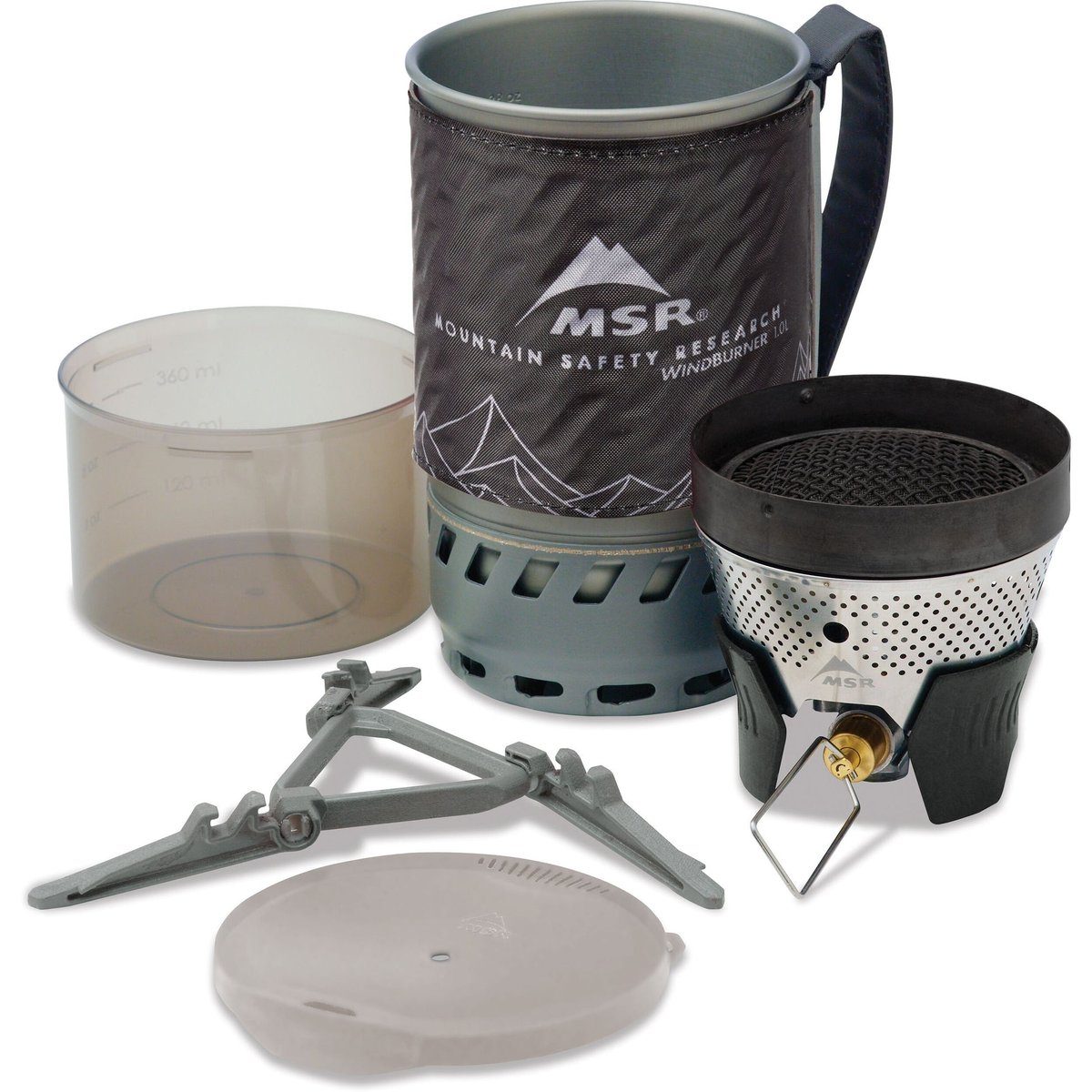
MSR designed it to pack small. It says everything nests in the 1.0 L pot, with room for an optional 4 oz canister, and lists the packed size as 4.5 by 4.5 by 7.1 inches. OutdoorGearLab went further and fit the stove and an 8 oz canister inside, in a pot it describes as just slightly larger than a Nalgene. Same pot. Twice the canister. Check the fit with your own can at home before a trip.
Here's the share at a light weekend load. At 20 lb, 15.3 oz is about 5% of what you carry. That's a real number for a stove, and it's the price of the windproof burner. I'd also count what comes in the box, per MSR: the pot with its insulated cozy, a lid, the burner, a canister stabilizer and a 0.5 L bowl that snaps onto the bottom. That's a whole kitchen, not just a burner.
Can you cook on it?
A little. MSR lists boil-to-simmer control. OutdoorGearLab scored simmering 5.1 out of 10, and says it was a boil-only stove for most of its testers, though they could cook from-scratch meals by holding the pot or skillet high enough above the flame.
The pot locks onto the stove and the canister, MSR says, and OutdoorGearLab calls the locking system great, and scored ease of use 8.0: the last thing you want is a pot of hot water tipping off the burner. The flip side is compatibility. MSR says it works only with compatible WindBurner cookware, such as the optional Duo pot, and not the WindBurner Stock Pot or Sauce Pot. Your own pans won't sit on it.
So I'd plan meals around boiling. Dehydrated dinners, oats, coffee, ramen. If your trip menu needs a real simmer for 10 minutes, OutdoorGearLab's 5.1 says look elsewhere.
How far does a canister go?
MSR's figures: a 4.5-minute boil for 1 liter, about 95 minutes of burn per 8 oz canister, 18 liters of water per 227 g canister, or 2.3 liters per ounce of fuel.
OutdoorGearLab measured about 0.21 oz of fuel per half-liter boil. Run it: 0.5 L over 0.21 oz is about 2.4 liters per ounce. MSR says 2.3. The maker and the lab agree to within about 4%, and I love when that happens. OutdoorGearLab scored its fuel efficiency 9.0 out of 10, top of the table, and timed half a liter at 2 minutes 34 seconds.
Here's the trip math I did with MSR's figure. Say you boil 2 liters a day for dinner, breakfast and coffee. At 18 liters per 227 g canister, that's about 9 days of boiling from one 8 oz can. A weekend uses roughly a quarter of it. That's why the weight hurts less than it looks on longer trips: you carry fewer ounces of fuel. On a 5-day trip, at 2 liters a day, that's 10 liters, a bit over half a can.
Plainly, for safety: MSR specifies its IsoPro threaded canisters, sold separately in 4 oz and 8 oz sizes. Use the canister upright and don't invert or refill it. Remove the bowl from the bottom of the pot before lighting. In real cold, OutdoorGearLab points to the Reactor as the stronger choice for melting snow.
What do owners say, and what else to look at?
Owners are happy. MSR's own site shows 4.6 stars from 232 reviews, and Amazon shows 4.4 from 27 ratings, both read on October 16, 2026. The price band ran $195-205 that day, with MSR's list price in it. The two samples are lopsided: 232 reviews on MSR's page, 27 on Amazon, so the maker's page carries almost nine times the voices. I weight the 4.6 more for that reason, and I still read the 4.4 as a happy crowd. That's 259 ratings in all.
The alternatives come from OutdoorGearLab. If weight is the biggest concern, the Jetboil Stash is lighter and very fuel efficient, but it doesn't lock to its burner. If you want the lock, its sibling the Jetboil Flash does. For heavy-duty snow melting, the MSR Reactor.
One stability note from Treeline Review: the 1.8 L WindBurner Duo uses a remote canister, which makes it more stable than the Personal, which sits on top of the canister. On uneven ground, give the Personal a flat spot.
Pros
- Top wind resistance (8.2) and fuel efficiency (9.0) in OutdoorGearLab's table
- About 2.3-2.4 L of water per ounce of fuel, by MSR's and OutdoorGearLab's figures
- Pot locks onto the stove and canister
- Nests inside the 1.0 L pot; made in the USA (MSR)
Cons
- 15.3 oz minimum (MSR); OutdoorGearLab's lowest weight score, 5.0
- Mostly boil-only: simmering scored 5.1 by OutdoorGearLab
- Works only with compatible WindBurner cookware
- Sits on the canister; less stable than the remote-canister Duo (Treeline)
Key Specifications
- Fuel
- MSR IsoPro threaded canister, sold separately
- Capacity
- 1 L
- Water boiled
- 18 L per 227 g canister (MSR)
- Minimum weight
- 15.3 oz / 433 g (MSR)
- Packaged weight
- 16.4 oz / 465 g (MSR)
- MSR claimed boil time
- 4.5 min per 1 L
Get one honest gear take every Friday.
One email a week: new reviews, one gear pick with my reasoning, and nothing sponsored. Confirm your address and you get my printable 2-page backpacking gear checklist.
You'll get a confirmation link first, and nothing else arrives until you click it. Every email has a one-click unsubscribe. How your email is handled
More from Backpacking Stoves
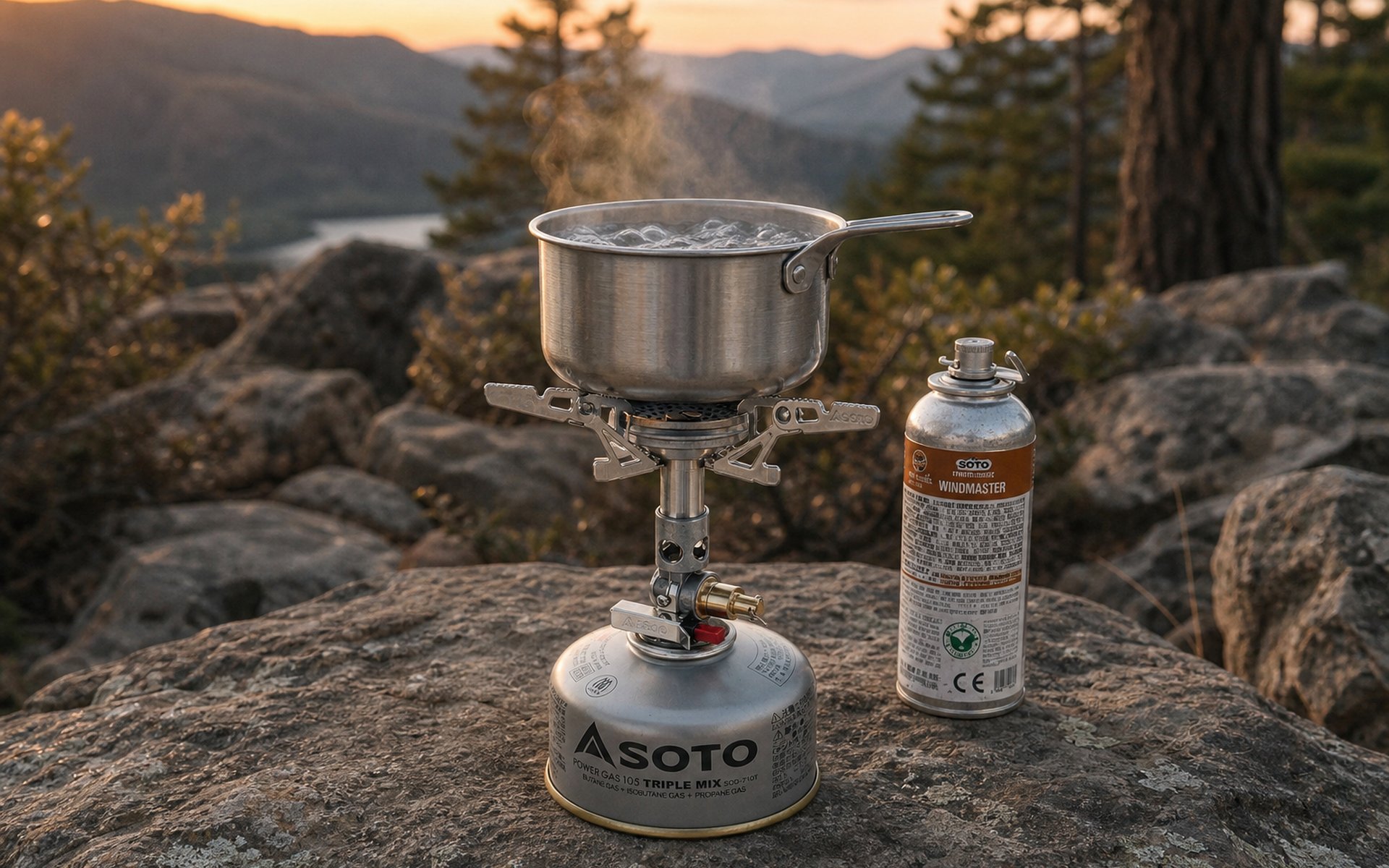
Best Lightweight Backpacking Stoves for 2026
Five lightweight backpacking stoves across canister, integrated, and windproof designs, ranked by weight, boil time, wind behavior, and fuel efficiency with a pick for each trip type.
 Brooke Wilder
10 min read
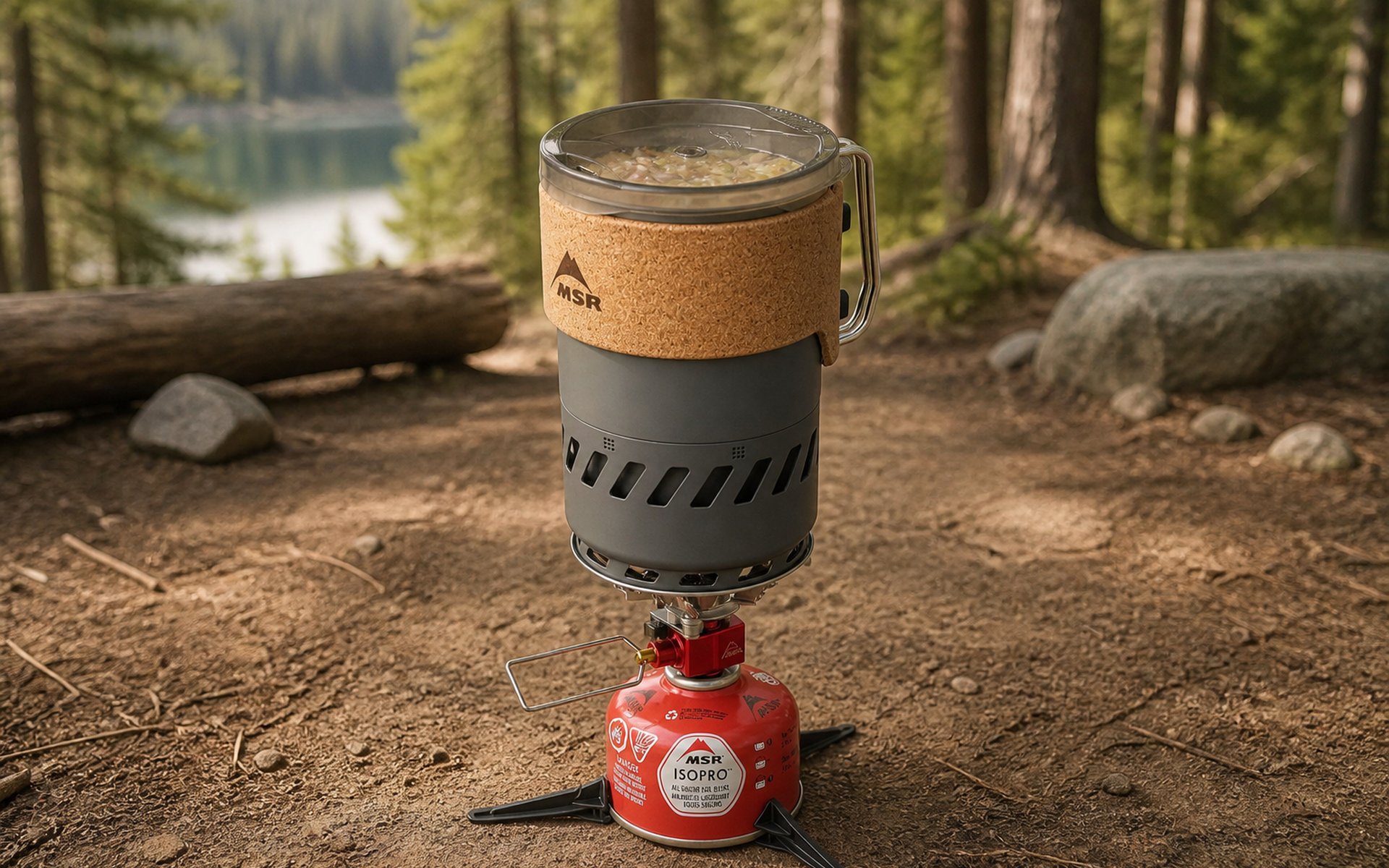
MSR Switch Stove System Review: Worth It for Real Trail Cooking?
The MSR Switch is a 13.8 oz system stove that can also simmer and take your own pots. Buy it if you cook; skip it if you only boil water.
Brooke Wilder
9 min read
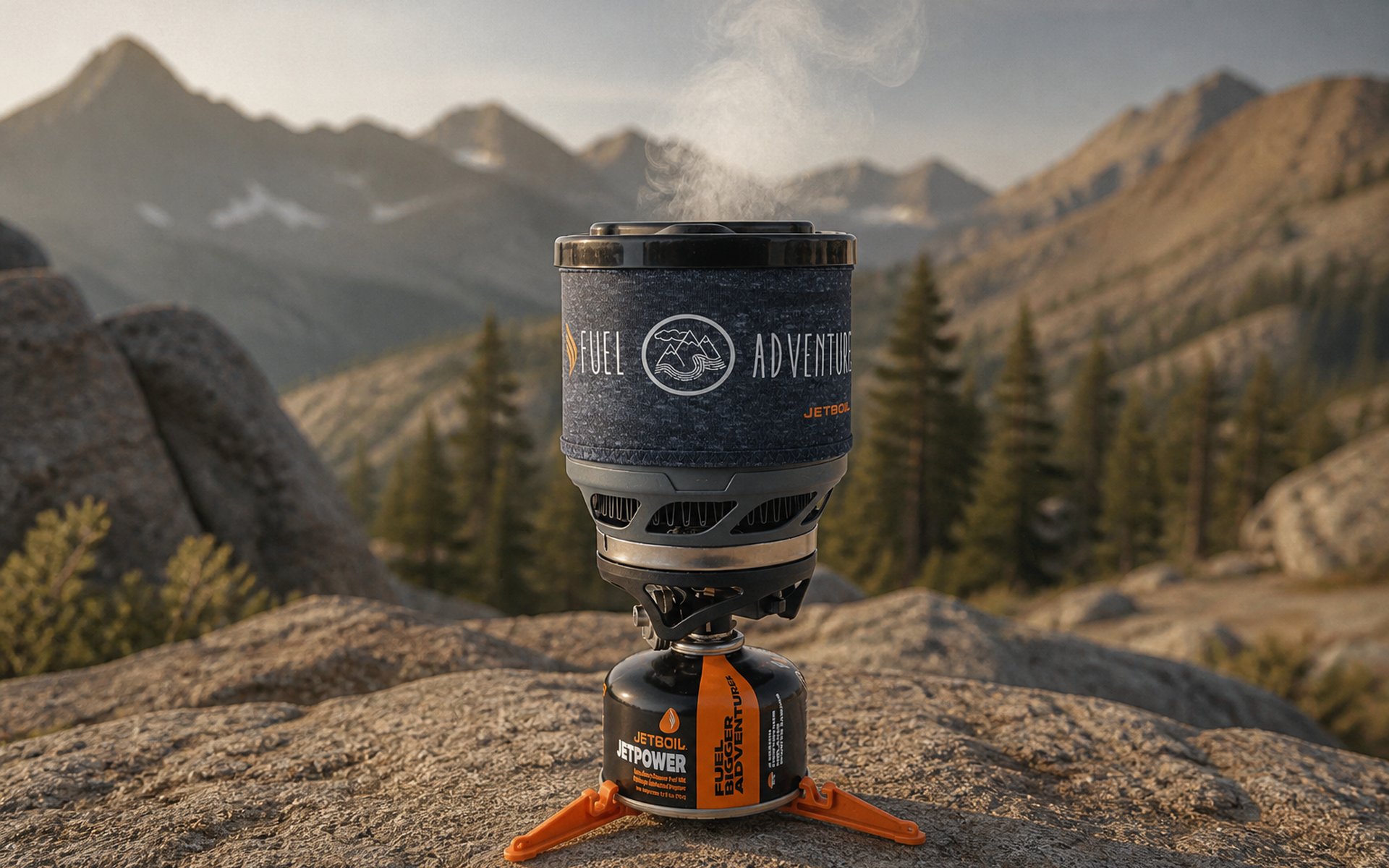
Jetboil MiniMo Cooking System Review
Jetboil MiniMo review: the integrated stove that simmers, top fuel efficiency in OutdoorGearLab's test, 14.6 oz. Now an outgoing model, and what to buy.
 Dhaval Parekh
8 min read
Why trust BestForBackpacking
Honest gear advice for backpackers, researched, weighed, and recommended.
Every pick is based on deep research: a synthesis of long-term owner reports, independent reviewer tests, and manufacturer specs, weighted by source independence, specificity, and use-case match. Brooke Wilder is our gear editor, the editorial persona who turns that research into a clear recommendation.