
Retailer links on this page are affiliate links. We may earn a commission if you buy, and your price doesn't change. How affiliate links work →
Backpacking Stoves
MSR Switch Stove System Review: Worth It for Real Trail Cooking?
Last updated:
The MSR Switch is a 13.8 oz system stove that can also simmer and take your own pots. Buy it if you cook; skip it if you only boil water.
Most stove systems do one thing: boil water fast. The MSR Switch is the rare one that also wants you to cook, and I'll admit that's exactly the kind of stove I like reading about.
My call, once. Buy it if dinner means real cooking, eggs or pasta or anything you stir, and you want one kit for that and for quick boils. Skip it if every meal is hot water poured into a pouch, or if you count ounces, because a bare burner and a light pot weigh far less. I give it 8.3 out of 10.
 By Brooke5 min read
Share this post
Send it to someone who's planning a trip.
Can it really simmer?
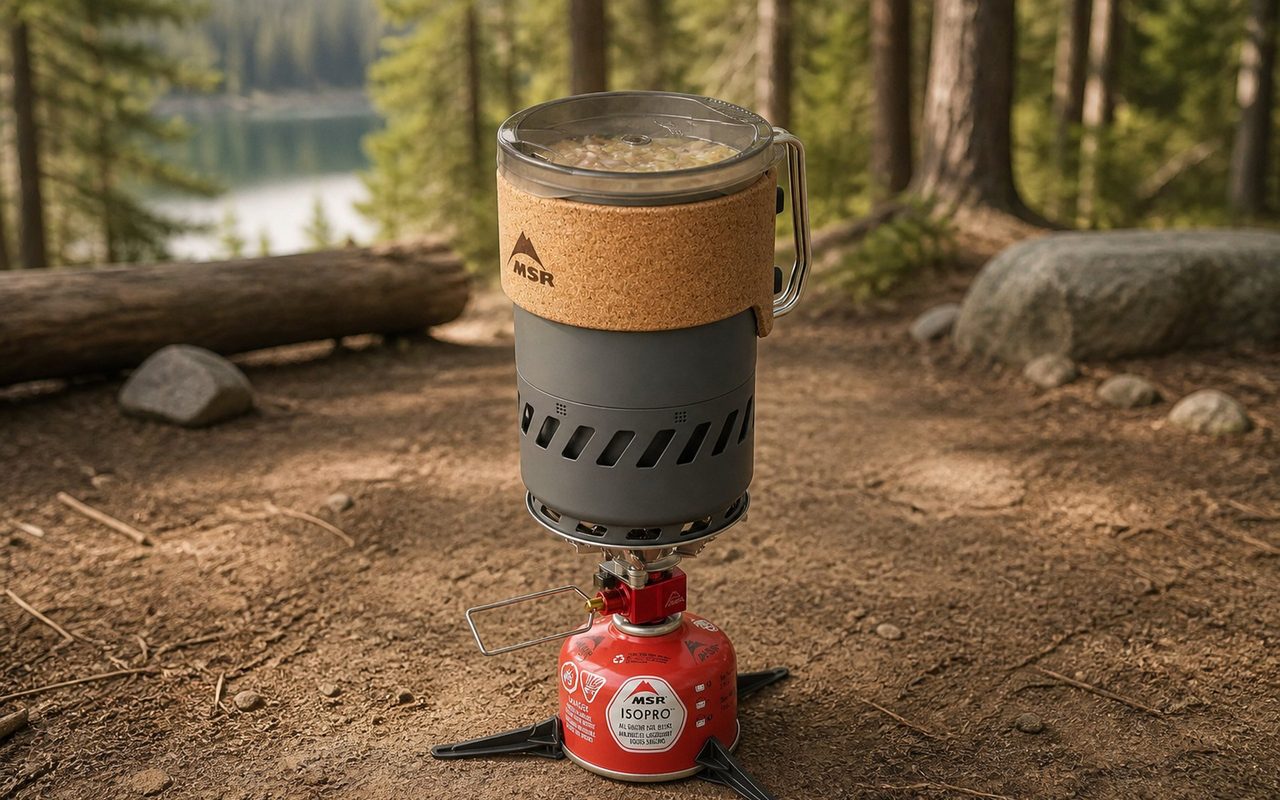
This is the reason to buy it. MSR builds in a pressure regulator, which it says is found on very few stoves in this class, and credits it with more precise flame control "for delicate foods like eggs". It also says the regulator lets the Switch perform consistently in colder temperatures and at altitude, and gets the most out of each canister. The flame you set is the flame you keep. That's the promise.
CleverHiker agrees, and goes further: some of the best flame control it has seen in a backpacking stove, from a full rolling boil to a low, steady simmer. It also says the Switch isn't meant for elaborate meals. Both can be true. Low flame for eggs and porridge, yes. A four-course dinner, no.
If every meal you make starts and ends with 2 cups of boiling water, you'd be paying for control you won't use.
What does "Switch" switch between?
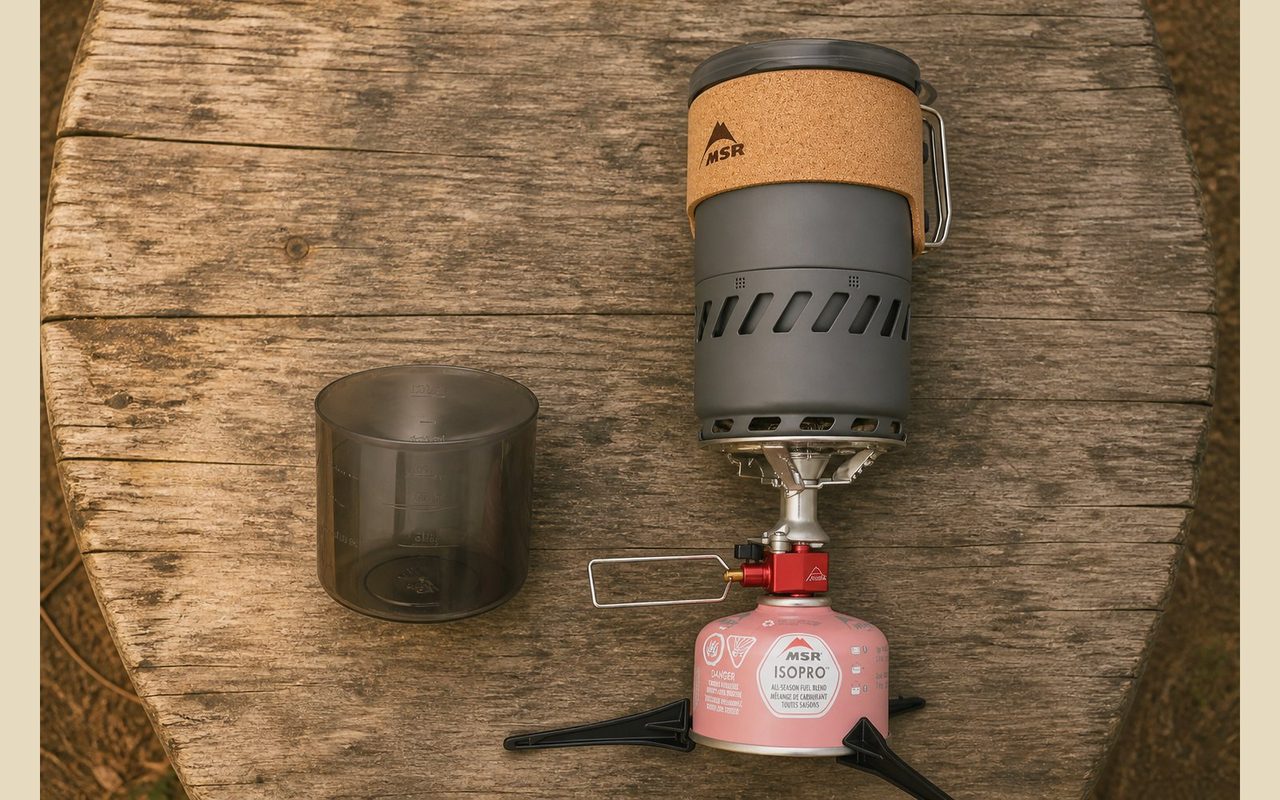
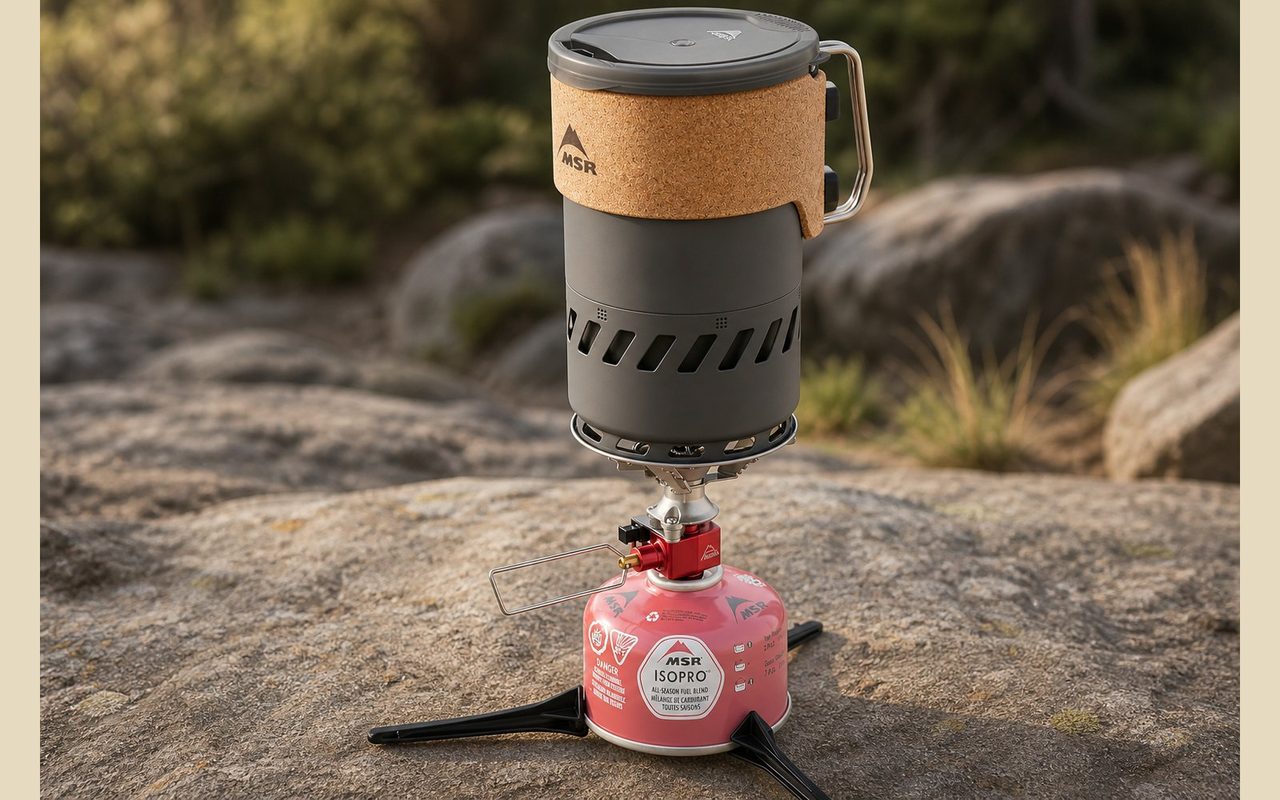
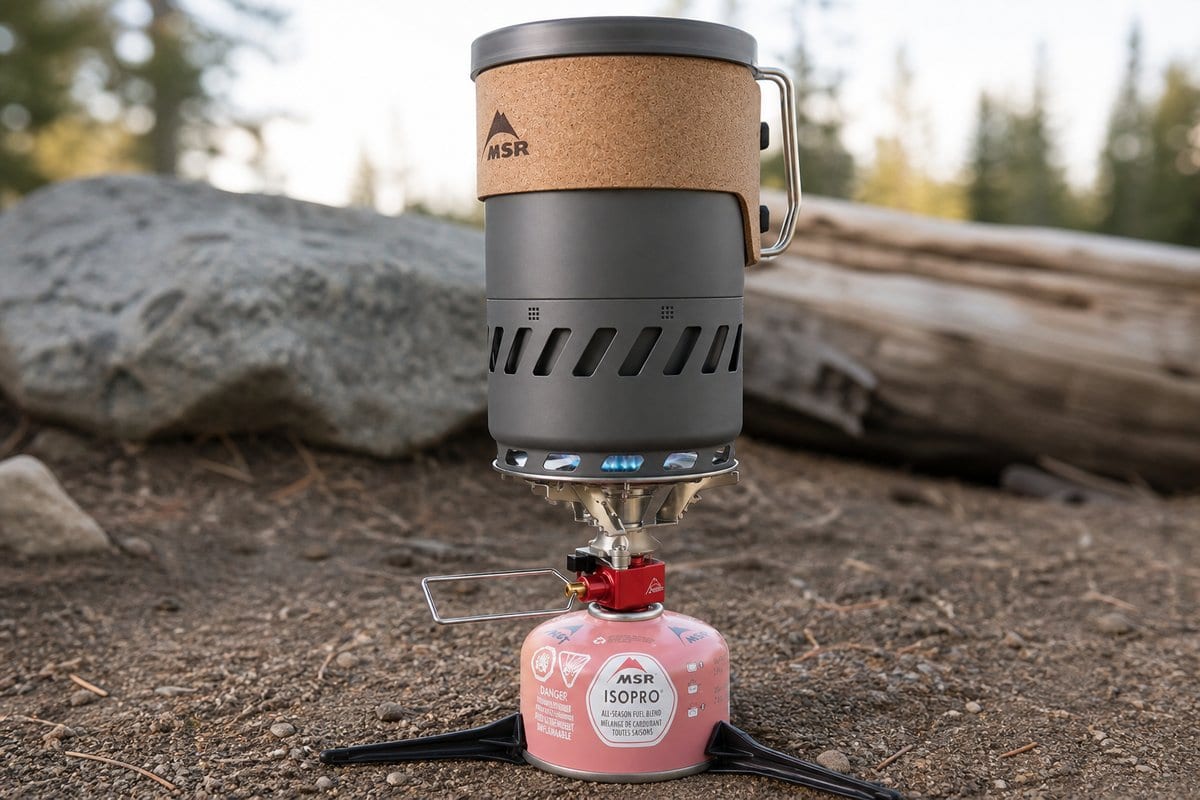
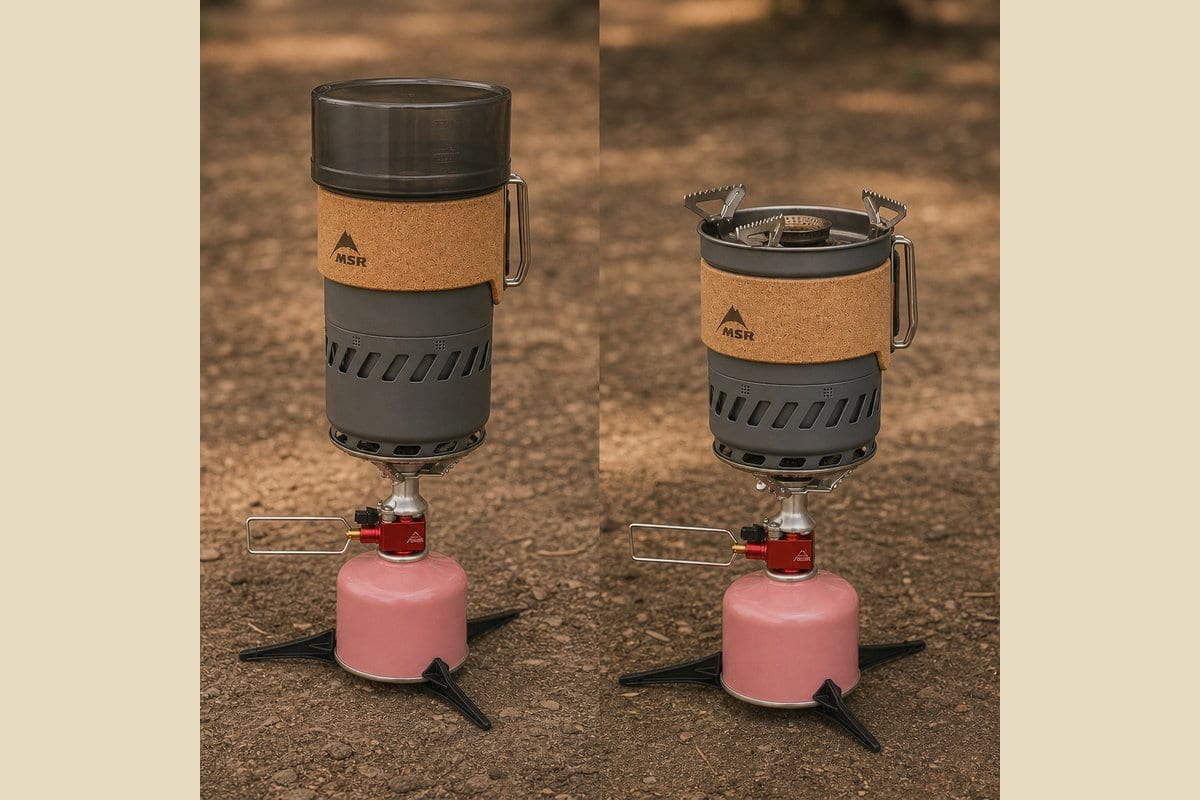
Two modes. The name is honest about it, which I appreciate in a product name. In system mode the included 1.0 L pot sits on a ring stand. Its bottom is rounded, hemispherical, and MSR says the flame wraps it evenly so it heats faster than a flat-bottom pot. The launch release adds a detail I didn't expect: the shape gives off much less carbon monoxide than a traditional heat exchanger.
Flip out the pot supports and you're in multi-pot mode, with your own cookware up to 8 in, or 20.3 cm, in diameter. MSR's examples are a big pot of pasta for a group or a non-stick skillet for eggs. One exclusion, in MSR's words: not compatible with other system pots.
CleverHiker notes the included pot doesn't lock to the stove, and says it feels very stable anyway and is easier to lift off with one hand.
2:30 or 3:00?
MSR claims 0.5 L boils in 2 minutes 30 seconds. CleverHiker timed 3 minutes in its test and 3 minutes 45 seconds in a steady wind, about 25% longer, which it puts in line with other top integrated systems. The maker's number is 30 seconds quicker than the reviewer's calm-air result. That's normal for a maker's figure.
The fuel numbers line up better, and I love it when that happens. MSR says the Switch boils 14 L from an 8-ounce canister, about 1.75 L per ounce. CleverHiker measured 0.3 oz of fuel per half liter, about 1.67 L per ounce. Two sources, a 5% gap. Small gap. Good sign.
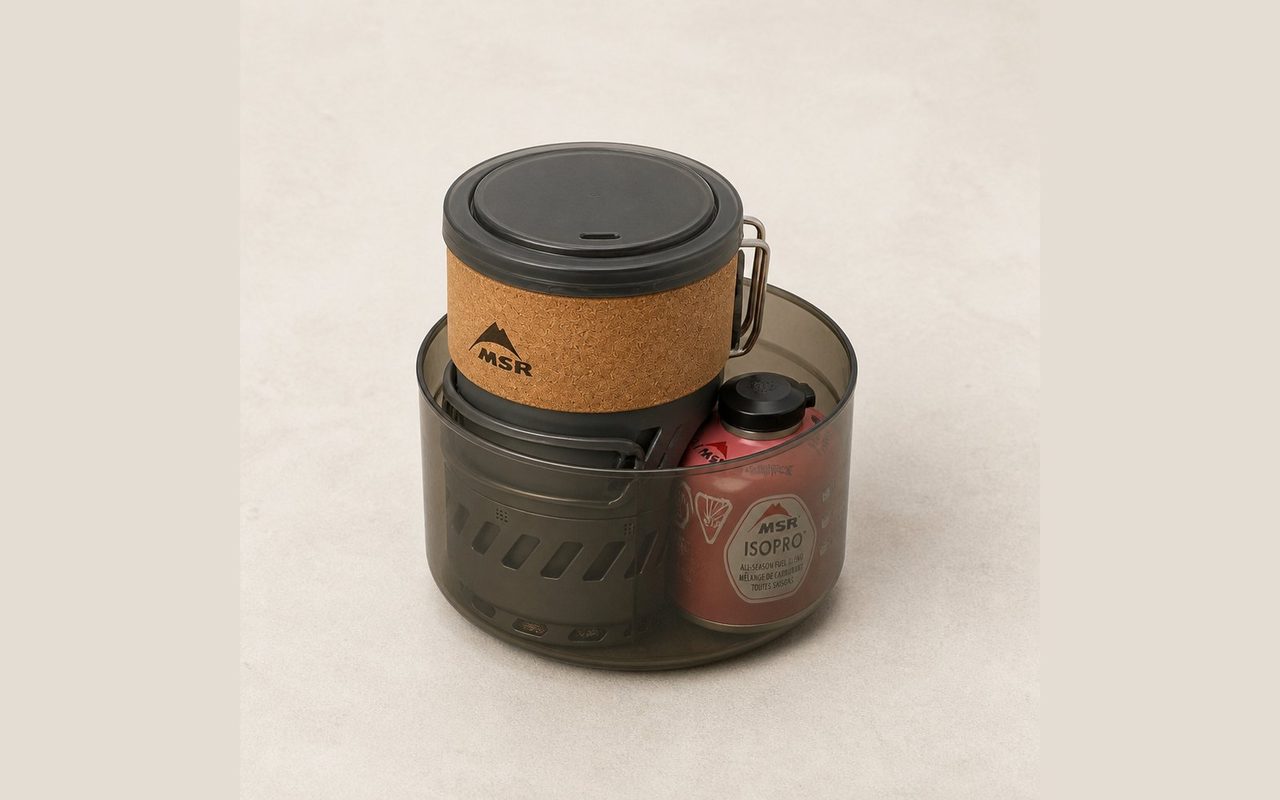
Now make it a trip. The pot nests a 4-ounce canister. At CleverHiker's rate that's about 13 half-liter boils, or 6 or 7 full liters. Cold and wind cut into that, so plan on fewer.
Where do the 13.8 ounces go?
MSR lists the complete system at 13.8 oz, 392 g. Burner weight: 4.1 oz, 117 g. CleverHiker's figures match.
Subtract and 9.7 oz is everything else: the 1.0 L pot with a strainer lid, the cork cozy, a plastic nesting bowl, the canister stand and a PackTowl cloth. The stove is under a third of the kit. If you already own a light pot, the burner alone is the 4.1 oz you'd carry. Not bad at all.
Put the two weights side by side and the choice gets simple. Carry the full 13.8 oz kit and you get the 1.0 L pot, the cozy and the bowl. Carry the 4.1 oz burner with a pot you already own, and you save the difference, minus whatever your pot weighs. Either way, it's 1 burner doing 2 jobs.
The cork cozy is my favorite part of the spec sheet. MSR says it's burn resistant, won't melt if it touches heat, and grips better when wet. CleverHiker calls the cork sleeve and the sturdy handle its favorite part too. The canister stand is the weak spot: CleverHiker says it's a cool design that can be tricky to install evenly.
What do owners say?
Amazon shows 4.6 stars from 12 ratings, and MSR's own site 4.3 from 25 reviews, as of October 16, 2026. That's 37 in all, a small crowd.
So I read the 10 most recent reviews on MSR's page. 10 reviews. 3 melted bowls. That's a pattern. Each came from leaving the plastic nesting bowl on the pot over the flame. MSR replies to those owners with an offer of a replacement. 2 others mention the piezo ignitor, one that took a few days to light reliably and one that broke on a first trip. One owner says the rounded pot dripped condensation onto the flame while melting snow, and MSR replied that a strong flame burns it off.
My read: take the bowl off the pot every time, and carry a lighter. MSR says the regulator helps in cold and at altitude. For snow camping, a stove built for an inverted canister or liquid fuel is still the safer bet.
A bit of product-line history. MSR announced the Switch in July 2024 for spring 2025, aimed, in its own words, at price-conscious backpackers. The same release says MSR's existing systems, the Reactor and the WindBurner, are not going anywhere. So the Switch is the cheaper, more flexible sibling, not a replacement.
If you only boil water, I'd look at a bare canister burner, or the Jetboil Flash, which CleverHiker names for a pot and stove that lock together.
Pros
- Pressure regulator; CleverHiker calls its flame control some of the best it has seen
- Use the 1.0 L pot or your own cookware up to 8 in (20.3 cm) across, 2 modes from 1 burner
- 13.8 oz complete; burner weight 4.1 oz (MSR)
- About 1.7 L of water per ounce of fuel, by both MSR's and CleverHiker's figures
- Cork cozy that MSR says won't melt; a 4 oz canister nests inside
Cons
- 9.7 oz of the 13.8 oz kit is pot and accessories
- The pot rests on a ring and doesn't lock in place, per CleverHiker and 1 of the 10 newest MSR owner reviews
- The canister stand is tricky to seat evenly, per CleverHiker
- 3 of the 10 newest owner reviews on MSR's site report melting the plastic nesting bowl
Key Specifications
- Fuel
- Threaded isobutane-propane canister
- Boil time
- 0.5 L in 2:30 (MSR); 3:00, 3:45 in wind (CleverHiker)
- Pot capacity
- 1.0 L, hemispherical
- Burner weight
- 4.1 oz (117 g)
- Complete weight
- 13.8 oz (392 g)
- Cookware support
- Your own pots up to 8 in (20.3 cm) across
Get one honest gear take every Friday.
One email a week: new reviews, one gear pick with my reasoning, and nothing sponsored. Confirm your address and you get my printable 2-page backpacking gear checklist.
You'll get a confirmation link first, and nothing else arrives until you click it. Every email has a one-click unsubscribe. How your email is handled
More from Backpacking Stoves
Best Lightweight Backpacking Stoves for 2026
Five lightweight backpacking stoves across canister, integrated, and windproof designs, ranked by weight, boil time, wind behavior, and fuel efficiency with a pick for each trip type.
 Brooke Wilder
10 min read
Brooke Wilder
10 min read
Jetboil MiniMo Cooking System Review
Jetboil MiniMo review: the integrated stove that simmers, top fuel efficiency in OutdoorGearLab's test, 14.6 oz. Now an outgoing model, and what to buy.
 Dhaval Parekh
8 min read
Dhaval Parekh
8 min read
MSR WindBurner Personal Stove System Review: Built for Wind, Not Flexibility
MSR WindBurner Personal review: 15.3 oz, top wind and fuel scores in OutdoorGearLab's test, mostly boil-only. The fuel math, and who should skip it.
Brooke Wilder
9 min read
Why trust BestForBackpacking
Honest gear advice for backpackers, researched, weighed, and recommended.
Every pick is based on deep research: a synthesis of long-term owner reports, independent reviewer tests, and manufacturer specs, weighted by source independence, specificity, and use-case match. Brooke Wilder is our gear editor, the editorial persona who turns that research into a clear recommendation.