
Guide
Backpacking with a Partner: How to Plan Your First Trip Together
Last updated:
Plan your first backpacking trip with a partner without the predictable fights: pick a route you can both enjoy, split the gear fairly, set the pace around the slower feet, and tell someone where you're going.
 By Brooke6 min read
Share this post
Send it to someone who's planning a trip.
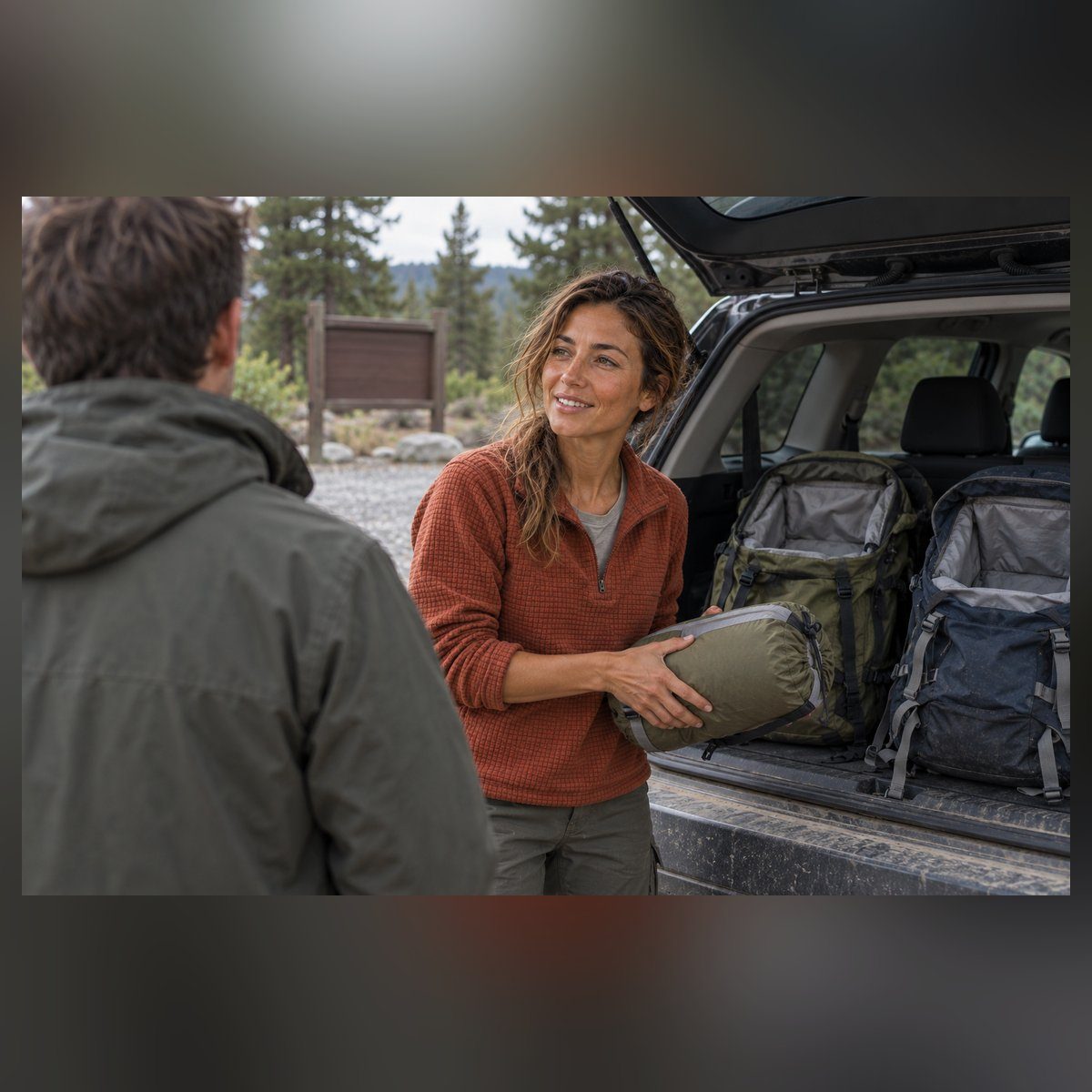
1. Pick a route the slower hiker can actually enjoy
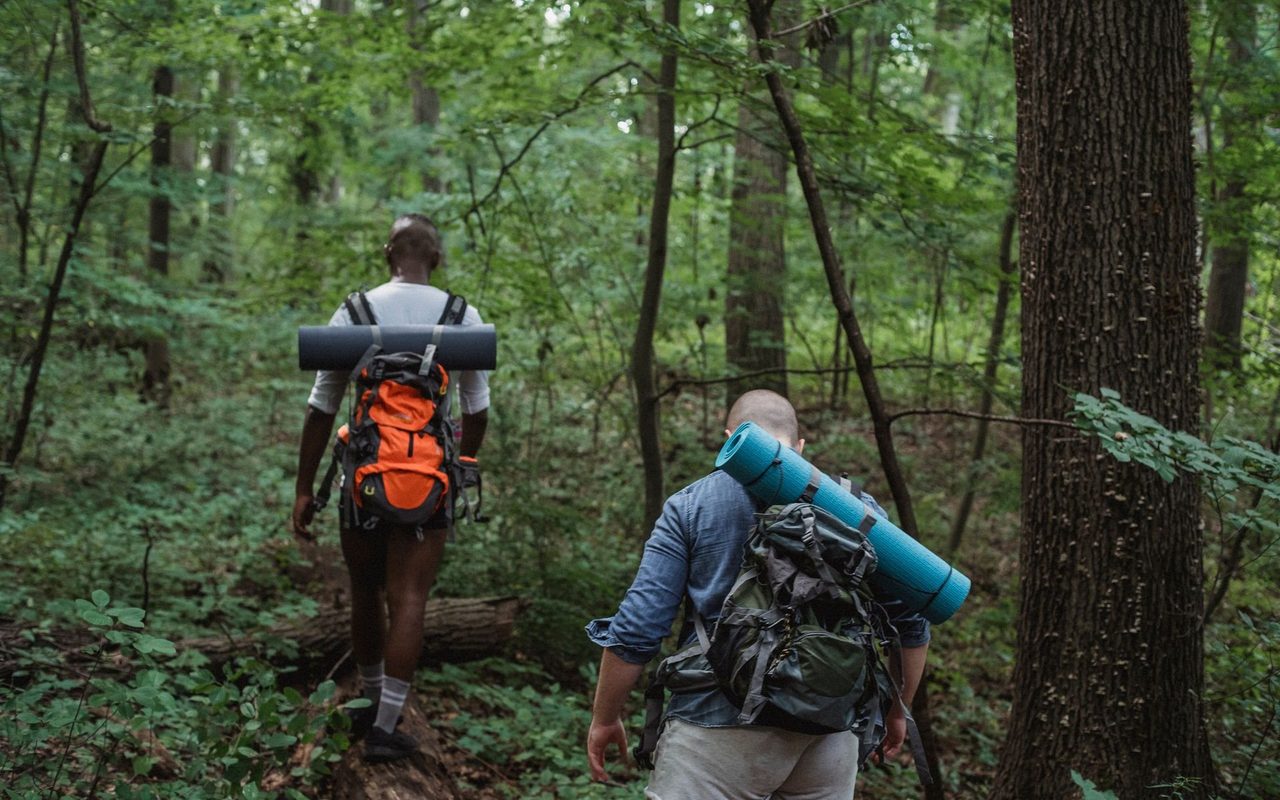
Plan the trip around the least experienced hiker, not the more excited one. That sounds obvious. It is the single most skipped step in first partner trips.
For a first overnight together: a first day of 5 to 8 miles, roughly 1,500 to 2,000 ft of total climb, and a trail that has a bailout, a cut-off alternate, or a road crossing within reach. An out-and-back or a loop where you can turn around early beats a point-to-point that commits you on day one.
Test the route first as a day hike with your packs loaded close to real weight. Two loaded day hikes tell you more about pacing and each other than any spreadsheet of stats. If one of you is miserable by mile 3 on the test day, cut the plan, don't push the plan.
2. Share gear, but split the weight fairly
Two people sharing a tent, a stove, and a water filter means you each carry roughly half the gear a solo hiker carries. That is the whole point of partner backpacking.
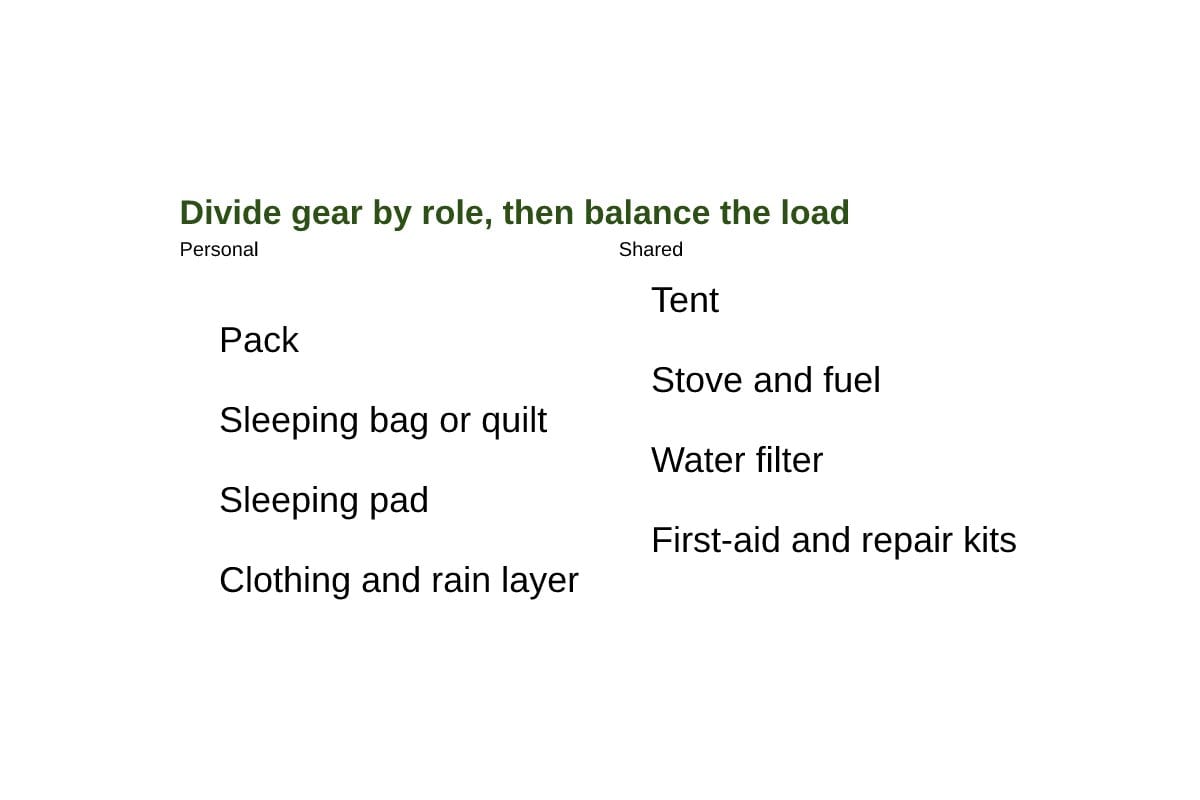
Share as a pair: tent (about 3 to 5 lb), stove and fuel (1 to 1.5 lb), water filter (about 0.5 lb), first-aid kit, repair kit, and a bear canister when the area requires one.
Carry personally: your own pack, sleeping bag or quilt, pad, clothing, rain layer, headlamp, medications, and personal items.
Split the shared items roughly half and half, then adjust for fitness, not feel. Aim for each loaded pack around 20 to 25% of that person's body weight, less on a first trip. If one of you sits at 30% and the other at 17%, move the tent or the bear canister over. Watch volume too: a bulky bear canister might fit better in the taller pack even when it is heavier, because balance matters as much as the number on the scale.
3. Plan the pace around the slower feet
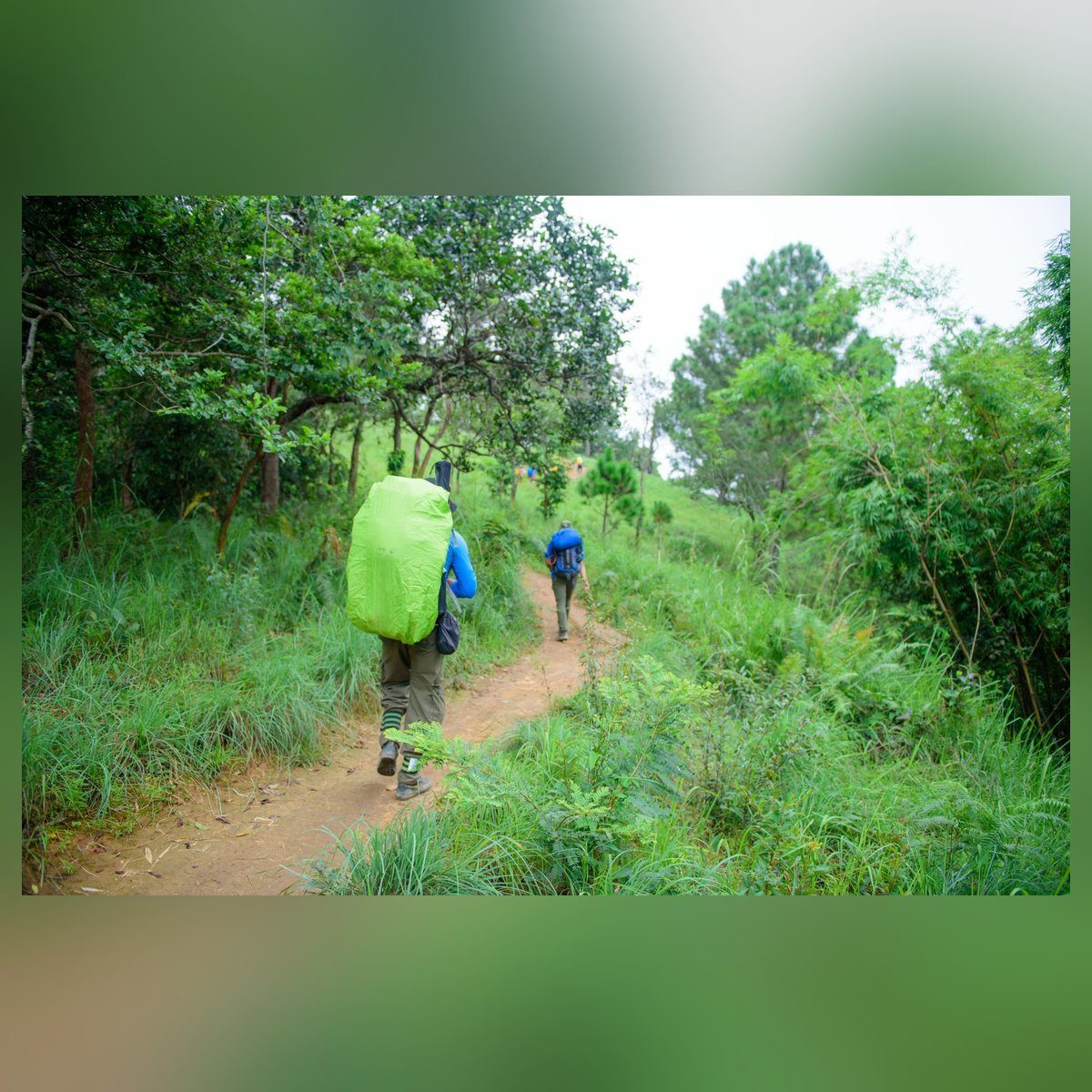
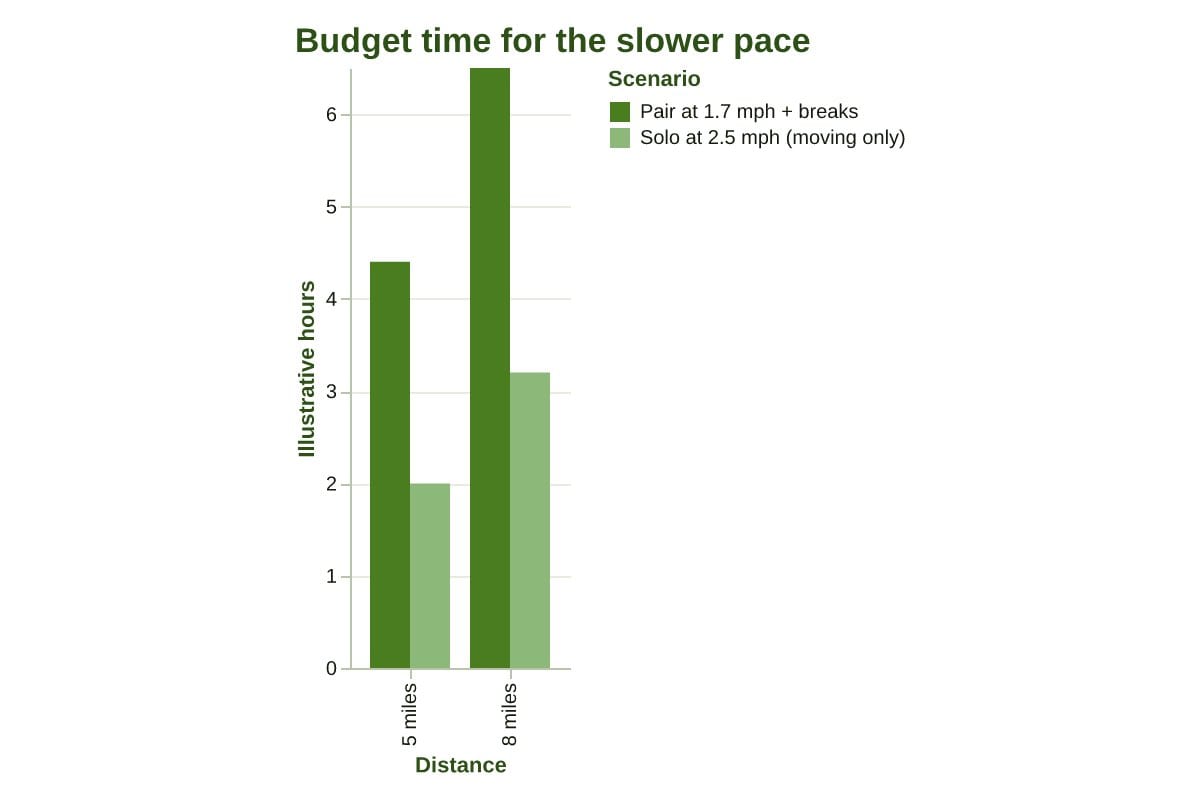
A mixed-ability pair with packs moves at the slower partner's comfortable pace, typically 1.5 to 2 mph including rests. The math matters more than pride: at 1.7 mph, a 5-mile day with breaks runs 4 to 5 hours, and an 8-mile day runs 6 to 7. Budget for those numbers and you finish early. Budget for the faster partner's pace and you finish arguing.
Take a real break every 60 to 90 minutes, meaning sit down, eat, drink, shed a layer. Set a turnaround time (say 2pm) and treat it as a law, not a suggestion. The first day should end early enough that the slower partner feels strong, because that feeling is what buys you day two.
The faster partner still gets their legs. Once camp is set and the chores are done, a side trip from camp is a fine outlet. Stay in earshot and never split up on unfamiliar trail.
4. Write the trip plan and leave it with someone
With two of you, you are each other's field safety. The person who knows where you are is your trip plan recipient, and they are not on the trip.
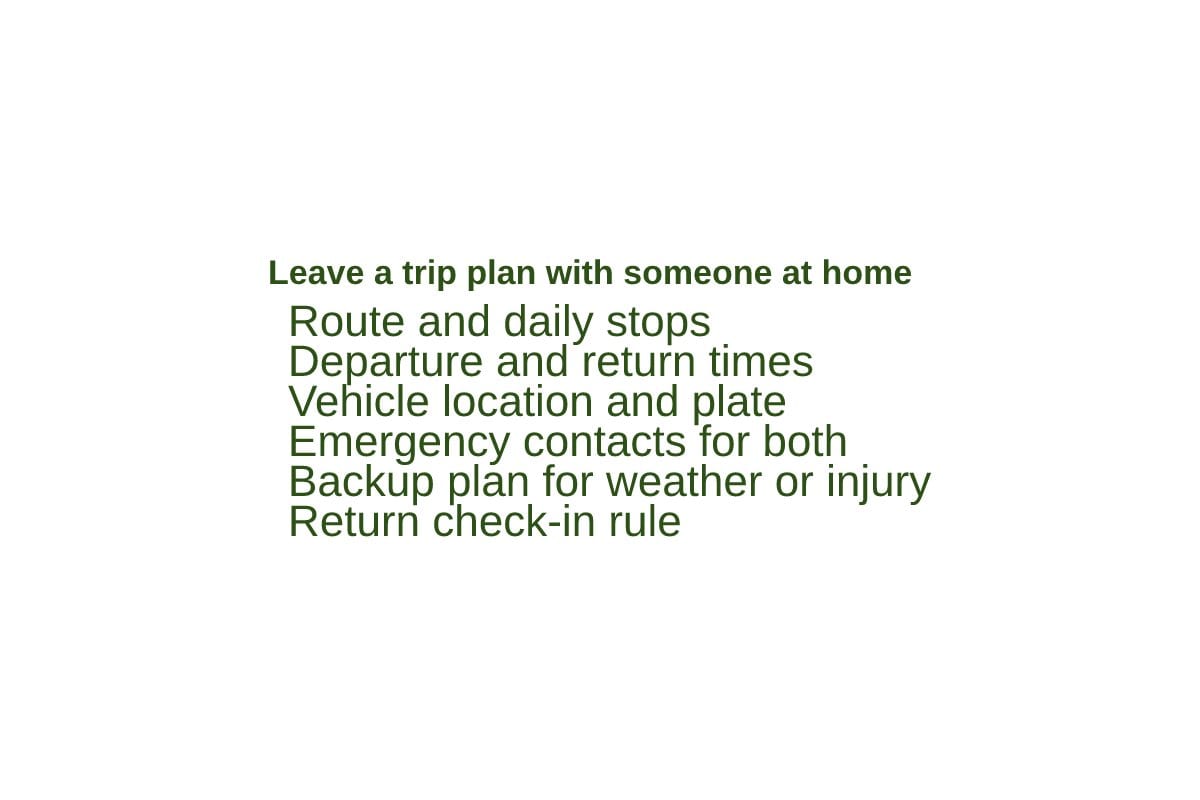
The National Park Service's trip planning guidance asks for the essentials, and it is the right bar for a party of two: the route and your intended daily stops, expected departure and return dates and times, vehicle location and plate, emergency contacts for both of you, and the backup plan for weather or injury. The NPS publishes a fillable planning worksheet you can adapt.
Hand the plan to someone you trust, and agree on the rule before you go: if you haven't checked in by a set time and they cannot reach you, they call for help. Leave the same sheet in the car. A two-person party has no margin for a search that starts late, because there is no one left behind to raise the alarm.
5. Divide camp jobs before anyone is tired
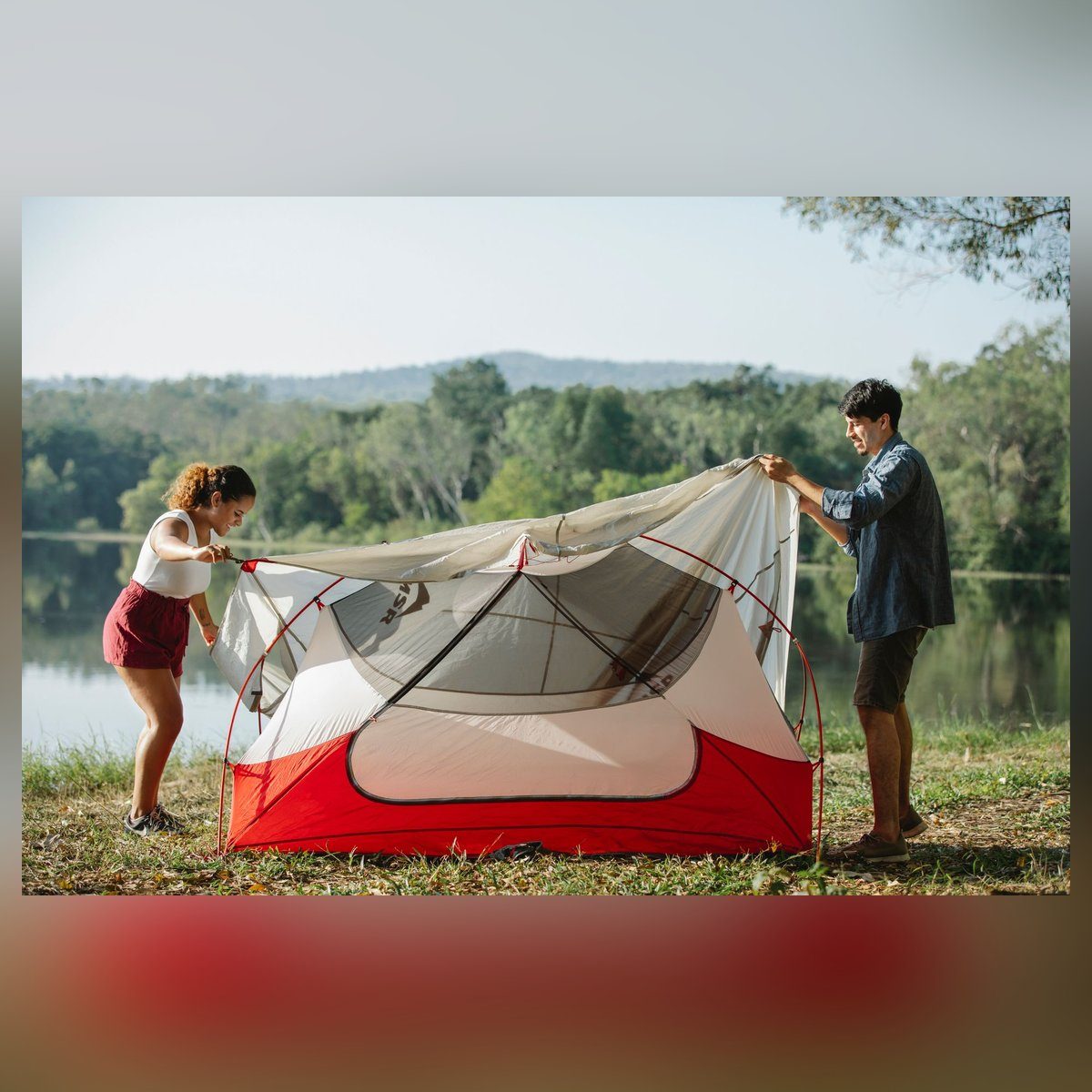
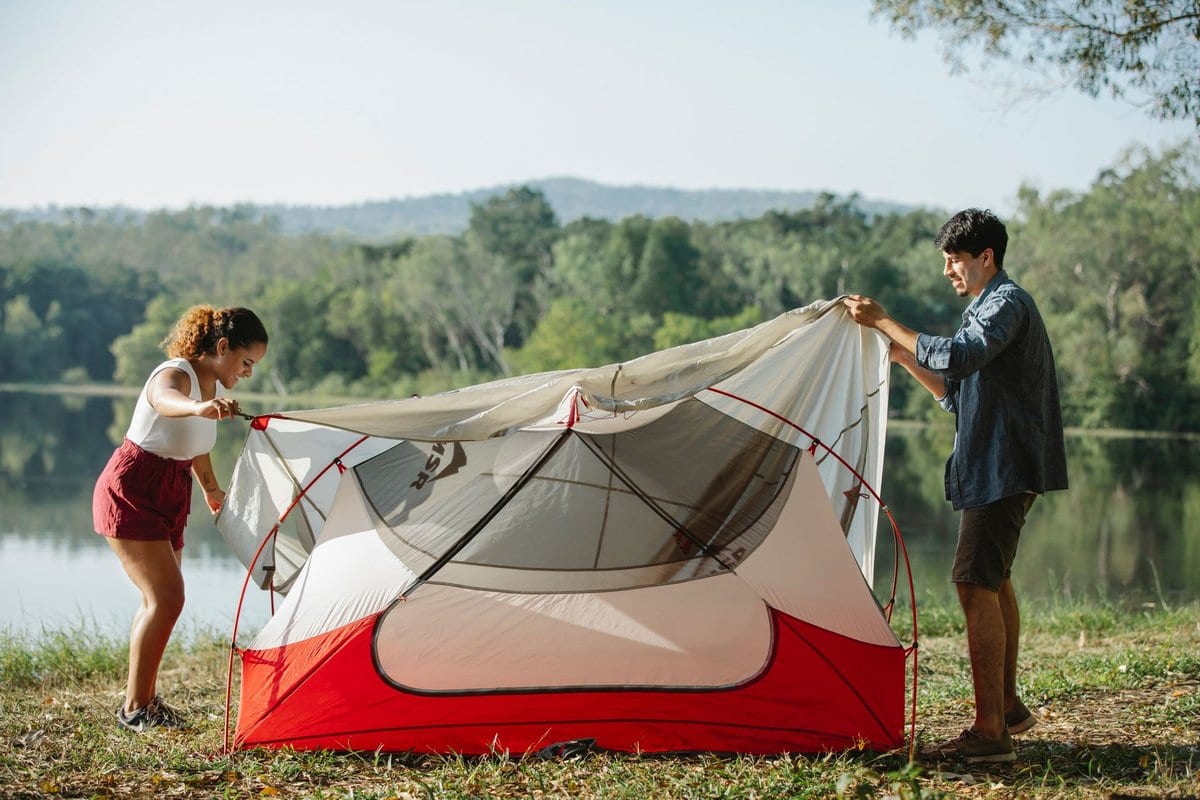
The fastest way to sour an evening is to both stand in the drizzle discussing whose job the tent is. Decide the division in the car, before the pack comes off.
A working default: one person stakes and pitches the shelter while the other filters water and starts the stove. One-pot dinners cut cleanup to a single pot and a spoon each. In the morning, one person breaks down the shelter and sleep gear while the other packs the kitchen and food bag; whoever is slower at breakfast takes the smaller overnight chore.
Apply the standard campsite rules as a pair, not a soloist: flat ground, clear of dead standing timber, at least 200 ft from water, and out of the obvious wind line. Picking a bad site together is a shared choice. Picking a good site together is the first win of the evening.
6. Name the predictable friction points before you go
Nobody fights for the first time because the trail was hard. The friction is predictable, and it is all planning-shaped. There is no support forum data we can cite for this, so take it as earned backpacking sense.
Pace mismatch is the big one. One partner walks 2.5 mph, the other 1.6, and by noon nobody is talking. Fix it with the itinerary, not the hike: the numbers in section 3 are the itinerary.
Morning and evening energy rarely match. The early riser is ready to move by 7am and the night owl would rather sleep in. Agree the wake time the night before, and give the slow starter the smaller morning chore.
Tent space shrinks once two pads, two packs, and a night of weather all come in. The two-person tent that felt roomy in the store floor is 30 cu ft of shared envelope at midnight. Choose a tent that is genuinely happy with two pads, and practice the pitch at home.
Food and directions: decide dinner together instead of assuming, and decide before the day's first fork who reads the map that day. Assuming either one is how you eat a dinner you both disliked next to a lake you both weren't sure you meant to reach.
7. Set the check-in signal before anyone needs it
Strong communication on trail is logistics, so it belongs in a planning guide. Agree the signals before the first steep mile, not during it.
Decide a break signal in advance and make it judgment-free. Either person can call it, no explanation required, no reasons audited at the time. On the tougher sections, agree a check-in cadence, for example every 30 minutes on the climbs, just a word or a wave so nobody carries worry silently.
When one of you is struggling, do the practical things in order: stop, shed a layer, drink, eat something with salt, then take weight off the pack. The stronger partner slows down, stays in visual range, and can offer to carry one shared item such as the tent for the next hour. Offer, do not recount. And hold the line that matters most: never leave a struggling partner alone, and never blow past the agreed turnaround time to make up the clock.
Get one honest gear take every Friday.
One email a week: new reviews, one gear pick with my reasoning, and nothing sponsored. Confirm your address and you get my printable 2-page backpacking gear checklist.
You'll get a confirmation link first, and nothing else arrives until you click it. Every email has a one-click unsubscribe. How your email is handled
More from Guides
Best Lightweight Backpacking Stoves for 2026
Five lightweight backpacking stoves across canister, integrated, and windproof designs, ranked by weight, boil time, wind behavior, and fuel efficiency with a pick for each trip type.
 Brooke Wilder
10 min read
Best Headlamps for Backpacking 2026
Five current generation headlamps, matched to the trips you actually take: a balanced all-rounder, a waterproof wet-weather pick, a long-endurance color accurate lamp, a high-output trail runner, and a proven budget buy.
Brooke Wilder
10 min read
Essential Backpacking Gear for Solo Female Travelers
A practical, no-nonsense kit for the woman backpacking alone: satellite communication, spray you can legally carry, door locks and alarms that do a real job, theft-proof organization, and a headlamp you can trust in the dark.
Brooke Wilder
10 min read
Why trust BestForBackpacking
Honest gear advice for backpackers, researched, weighed, and recommended.
Every pick is based on deep research: a synthesis of long-term owner reports, independent reviewer tests, and manufacturer specs, weighted by source independence, specificity, and use-case match. Brooke Wilder is our gear editor, the editorial persona who turns that research into a clear recommendation.