
Retailer links on this page are affiliate links. We may earn a commission if you buy, and your price doesn't change. How affiliate links work →
Ultralight Tents
Six Moon Designs Lunar Solo Review: 26 Ounces, 26 Square Feet, One Catch
Last updated:
The Lunar Solo is 26 oz for 26.25 sq ft, and the scales agree with the maker. Buy it for solo trips in dry country; condensation and the pitch are the catch.
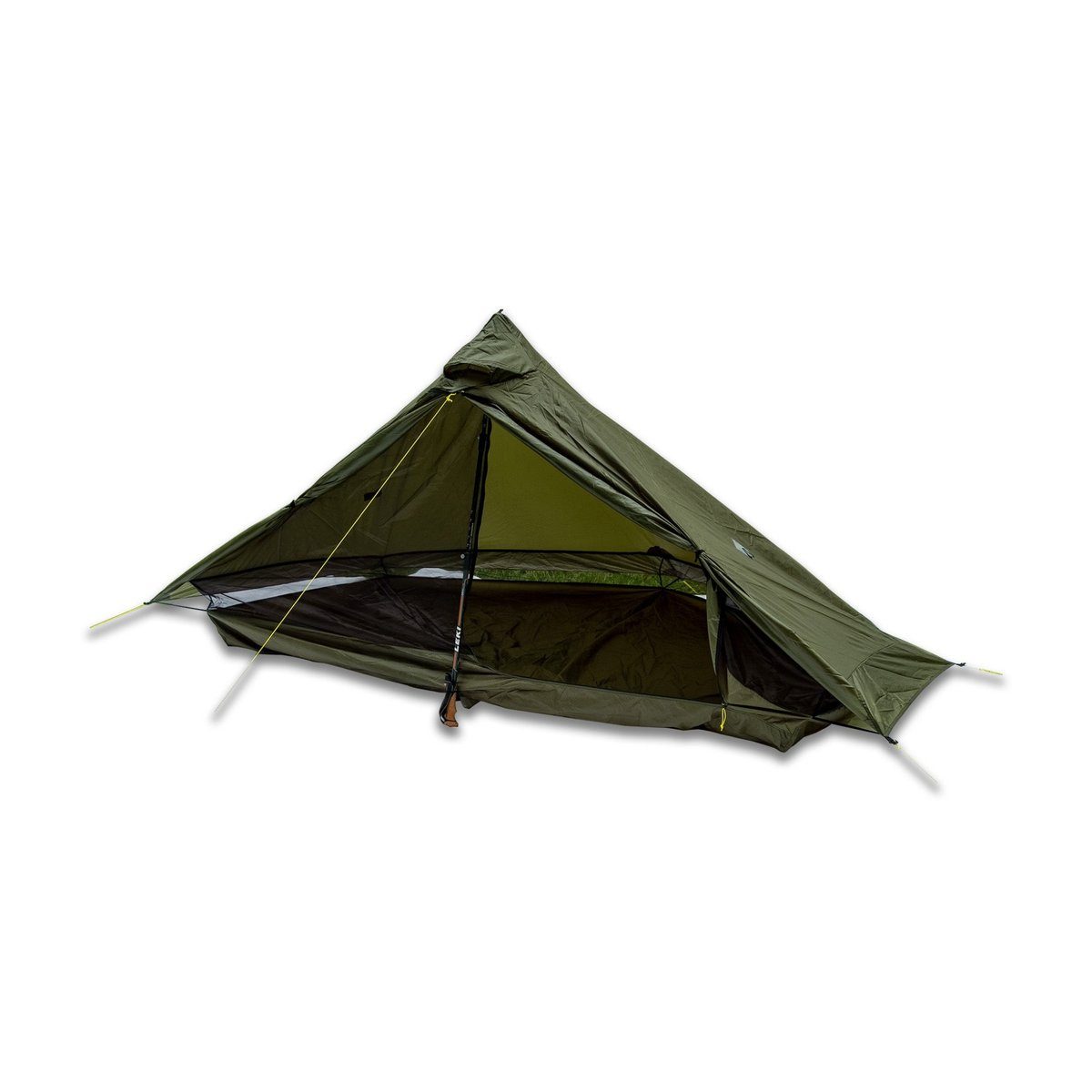
26 ounces, 26 square feet. The Lunar Solo's whole pitch fits on a sticky note, and the funny part is that the sticky note is accurate.
My call, once. Buy it if you hike solo, mostly in dry country, and you'll learn a trekking pole pitch. Skip it if you camp somewhere humid, if you want a tent that stands up on its own on rock, or if this is your first tent. I give it 8.2 out of 10.
 By Brooke5 min read
Share this post
Send it to someone who's planning a trip.
Does 26 oz hold up?
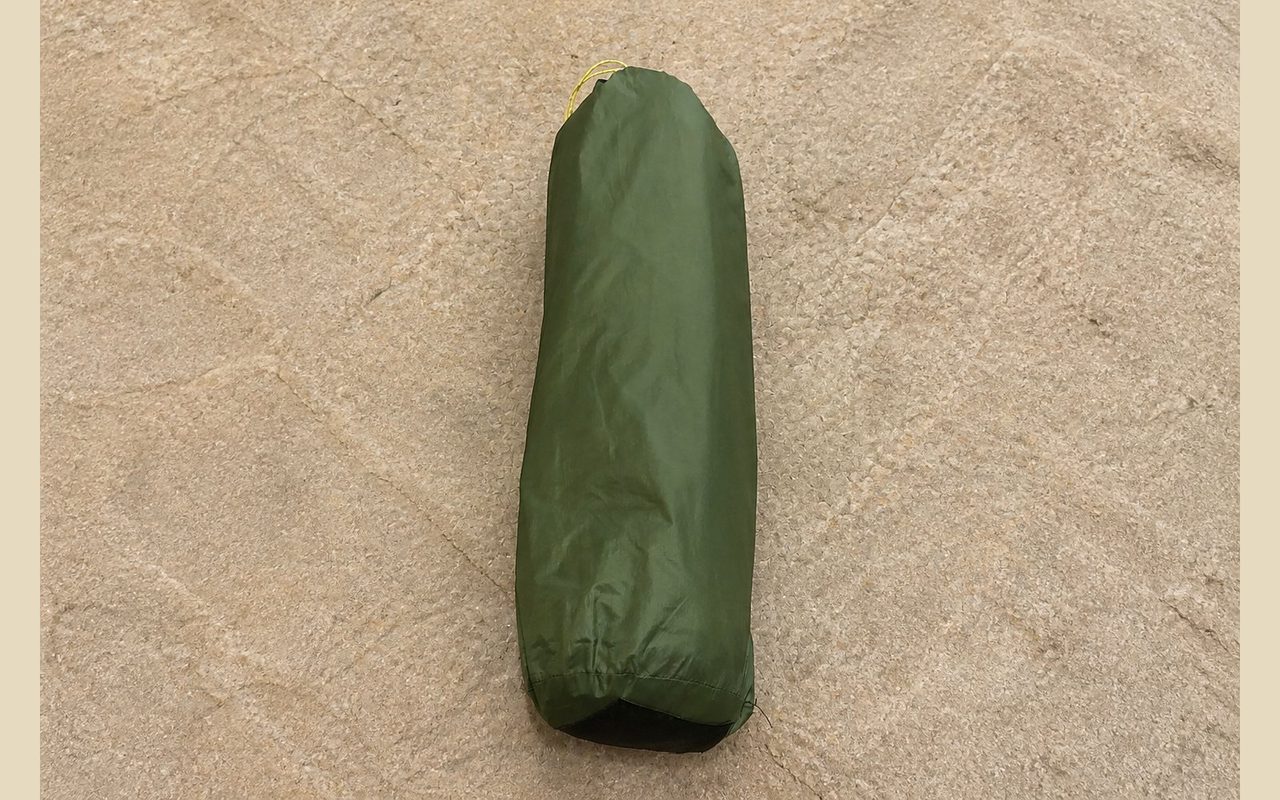
Six Moon Designs prints 26 oz, 740 g, and says plainly that it doesn't include stakes or poles. Backpacking Light weighed it at 26.2 oz. CleverHiker got 1 lb 10 oz, which is 26 oz. So the maker's number holds, to within a fifth of an ounce.
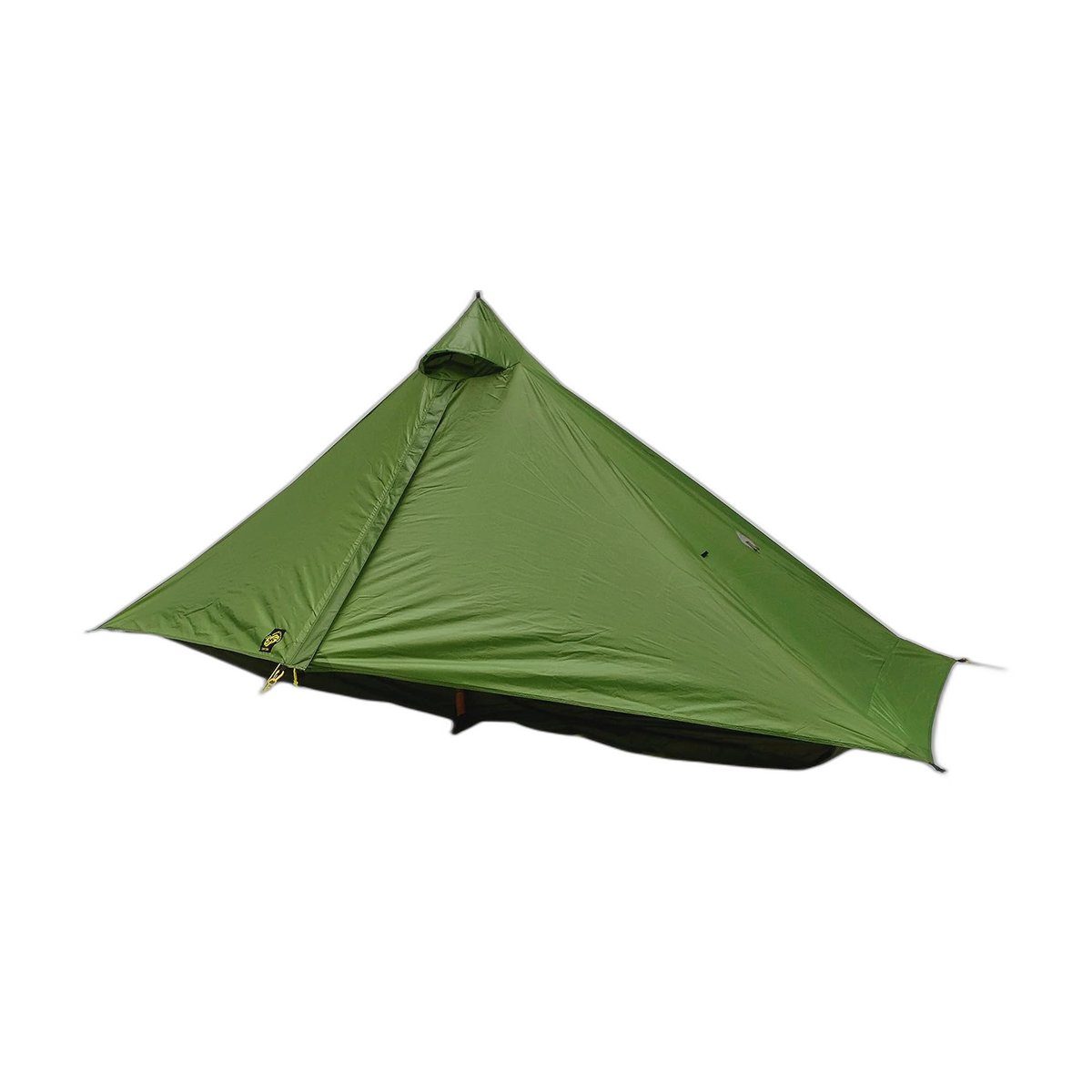
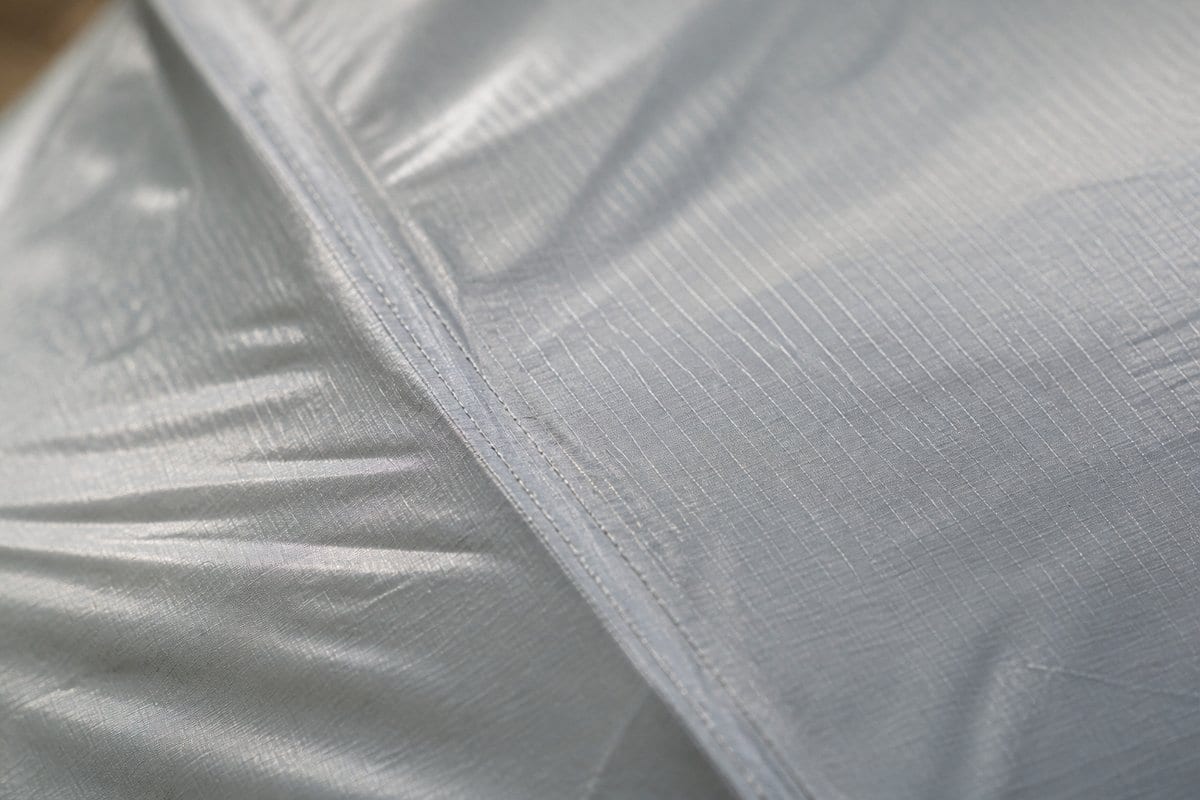
Here's what the 26 oz buys, by the maker's figures: 26 sq ft of living space, an 8.5 sq ft vestibule, a 49 in peak, and a packed size of 11 x 4.5 in. The canopy is 20D silicone-coated polyester. Backpacking Light and CleverHiker list a 40D floor and a 90 x 48 in footprint.
Now the sum. Backpacking Light gives the floor as 26.25 sq ft. Divide by 26 oz and it's about 1 sq ft per ounce of tent. That's the whole design in one ratio.
And the real carry weight, which The Radavist added up for me: 740 g for the tent, about 90 g for a folding alloy pole, and 60 to 80 g for 6 to 8 stakes. The Radavist's all-in total comes to about 900 g, or 2 lb. If you already hike with trekking poles, drop the 90 g.
How bad is the condensation?
It's a single-wall tent, 1 layer of 20D fabric between you and the weather. The canopy is the only wall, so there's no inner tent to catch the moisture from your breath.
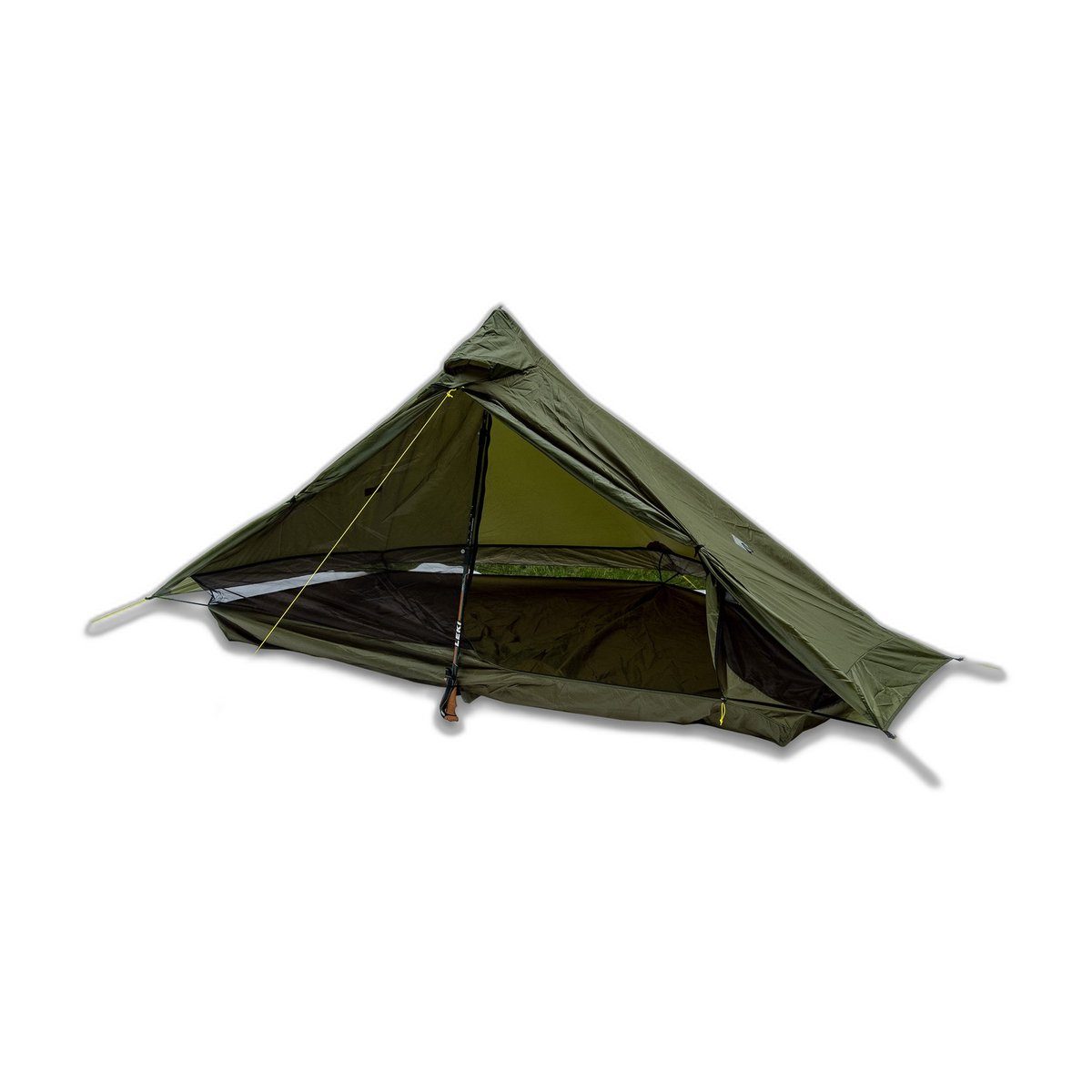
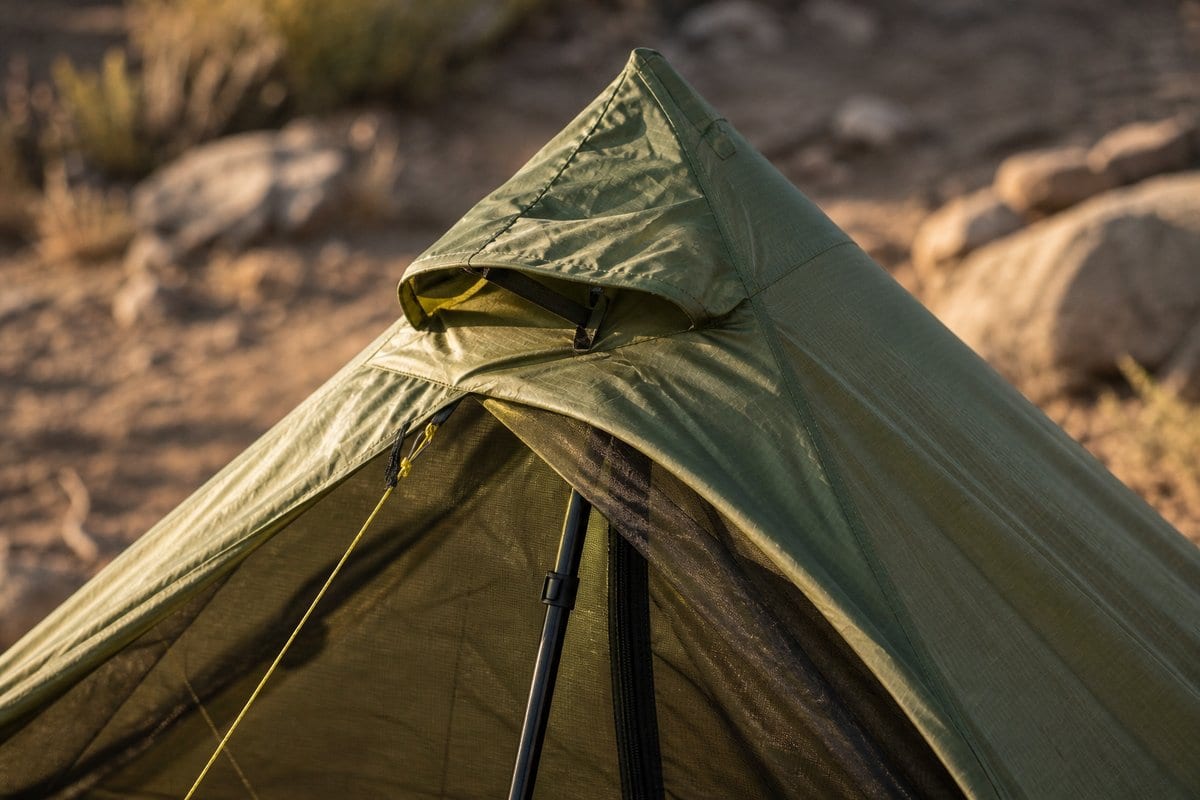
The design fights it with airflow. Wired lists a vent at the top of the vestibule, an all-mesh door, and mesh around the whole base, and says the fly stops short of the floor. SectionHiker and The Radavist both note the vestibule can be pitched higher to let in more air.
Does it work? Partly. Bikepacking.com tried a run of single-wall tents and says every one of them, at least some of the time, had condensation on the inner walls overnight. Wired's tester mostly kept it under control, except one night when hours of rain were followed by wind, which shook drops off the walls onto the sleeping bag. Wired's verdict is that it depends entirely on conditions. Carry a small towel. Wired's tester did, and wiped the walls down with it. A few grams of microfiber against 26 oz of tent.
So I'd pick it for dry places, where condensation is the exception. For a humid summer or a wet season, a double-wall tent is the better call.
How hard is the pitch, and how does it handle wind?
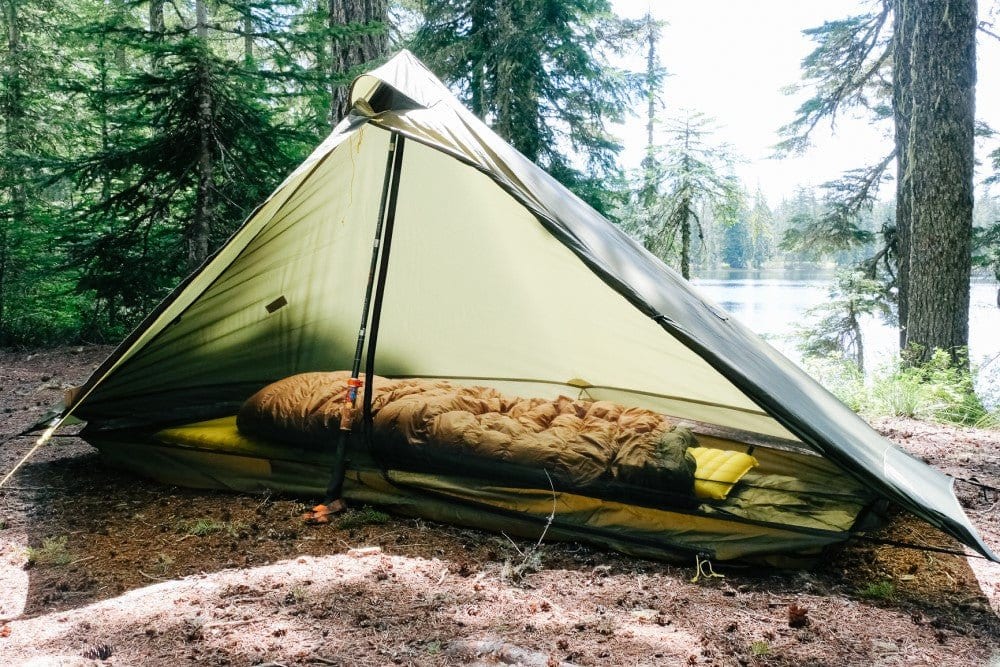
One pole at 49 in, 6 stakes minimum and 8 at most, by Backpacking Light's count. No stakes in the box. Bikepacking.com lists the options: a stake set, a carbon pole and a seam-sealing service, each sold separately.
CleverHiker says that once you learn the steps you can pitch it in about two minutes, and that it's hard on uneven terrain, rock-hard ground or in wind. Bikepacking.com agrees it isn't easy to get a good pitch, and that it needs suitable ground, and quite a lot of it, to stake properly.
On wind, Backpacking Light's tester had near-constant evening winds of 10 to 15 mph with gusts up to 25 mph in the Pioneer Mountains. SectionHiker calls the pyramid shape quite wind-worthy and notes you can lower the peak in bad weather. The Radavist found its carbon pole started to bend before the pitch was tight enough for wind and swapped to a beefier one, so if you buy the carbon pole, keep that in mind.
And one splash warning from Bikepacking.com: the vestibule doesn't reach the ground, so with heavy rain coming from the front, gear stored there can get wet.
What do owners say, and what's the fine print?
Amazon shows 3.9 stars from 56 ratings as of October 16, 2026. That's a small crowd, so I weight the long-term reviews more. Bikepacking.com's tester used it on three continents for nearly a year, more than 75 nights, and couldn't find any concerning wear.
The fine print is seam sealing. Six Moon Designs says its shelters need sealer on the seams to repel water completely, and sells the job as a service for around thirty dollars, per Backpacking Light and Bikepacking.com. SectionHiker recommends letting Six Moon do it. The Radavist sealed its tent and had no leaks afterwards.
The weak point, by more than one account, is the zippers. The Radavist calls small #3 zippers on ultralight tents ticking time bombs. Wired says it would happily carry a couple of extra ounces for heavier ones. Two reviewers, same complaint. I'd treat the inner zips as a wear item.
Nerd corner: 48 or 49 inches, and what about the X-Mid 1?
A tiny whose-number moment that made me happy. Six Moon Designs prints a 49 in peak. Backpacking Light and SectionHiker both list 48 in. The answer is in the maker's own wording: you pitch it with a trekking pole set to 49 in. Set the pole to 49 and the fabric peak sits a touch lower. One inch. Both are right.
Now the rival, and this corrects the old version of this review. SectionHiker's table lists the Durston X-Mid 1 at 25.7 oz, 0.3 oz lighter than the Lunar Solo, and it's double-wall, so the condensation story changes. Wired says it needs two poles and tops out at 41 in, against the Lunar Solo's 49. Roughly the same weight. Eight inches less headroom, and a drier interior. That's the real trade.
The other name is the Zpacks Plex Solo, in DCF. CleverHiker says it weighs over a pound less than the Lunar Solo, and Wired puts the Plex Solo Lite at more than twice the price.
Pros
- 26 oz by Six Moon's figure, 26.2 oz on Backpacking Light's scale
- 26.25 sq ft floor and an 8.5 sq ft vestibule, about 1 sq ft per ounce
- 49 in peak; Wired notes the X-Mid 1 tops out at 41 in
- Packs to 11 x 4.5 in; Bikepacking.com found no concerning wear after 75+ nights
Cons
- Single-wall: condensation on the inner walls, by Bikepacking.com's and Wired's accounts
- Non-freestanding; CleverHiker says it's hard to pitch on rock-hard or uneven ground
- Not seam-sealed; Six Moon sells the service for around thirty dollars
- Stakes and pole sold separately; #3 zippers are the weak point, per The Radavist and Wired
Key Specifications
- Pitch
- 1 pole at 49 in, 6-8 stakes (sold separately)
- Materials
- 20D silpoly canopy, 40D silpoly floor
- Floor area
- 26.25 sq ft (Backpacking Light); 26 sq ft living space (maker)
- Peak height
- 49 in pole setting (maker); 48 in apex (Backpacking Light)
- Floor dimensions
- 90 x 48 in
- Weight (manufacturer)
- 26 oz / 740 g, no stakes or pole
Get one honest gear take every Friday.
One email a week: new reviews, one gear pick with my reasoning, and nothing sponsored. Confirm your address and you get my printable 2-page backpacking gear checklist.
You'll get a confirmation link first, and nothing else arrives until you click it. Every email has a one-click unsubscribe. How your email is handled
More from ultralight-tents
Big Agnes Copper Spur UL2 vs NEMO Dragonfly OSMO vs Tiger Wall UL2 vs Hornet OSMO 1P: The Best Ultralight Backpacking Tents of 2026
Copper Spur UL2, Dragonfly OSMO, Tiger Wall UL2, Fly Creek UL1 and Hornet OSMO 1P compared on weight, space, setup, storm readiness and price. Different hikers walk away with different winners.
 Brooke Wilder
10 min read
Lunar Solo vs Lunar Duo Outfitter vs Lanshan 1 vs Lanshan 2: Best Trekking Pole Tents You Can Buy in 2026
The best trekking pole tents you can actually buy today: Six Moon Designs Lunar Solo and Lunar Duo Outfitter lead the list, with the 3F UL Gear Lanshan 1 and 2 as the budget bets.
Brooke Wilder
12 min read
Why trust BestForBackpacking
Honest gear advice for backpackers, researched, weighed, and recommended.
Every pick is based on deep research: a synthesis of long-term owner reports, independent reviewer tests, and manufacturer specs, weighted by source independence, specificity, and use-case match. Brooke Wilder is our gear editor, the editorial persona who turns that research into a clear recommendation.