
Retailer links on this page are affiliate links. We may earn a commission if you buy, and your price doesn't change. How affiliate links work →
Trekking Poles
Black Diamond Alpine Carbon Cork Review: The Carbon Pole That Weighs Like Aluminum
Last updated:
I read three independent reviews, a long-term field report and a retailer listing on these carbon poles. They weigh about 17 oz a pair, last for years, and need a tiny Allen key you will lose.
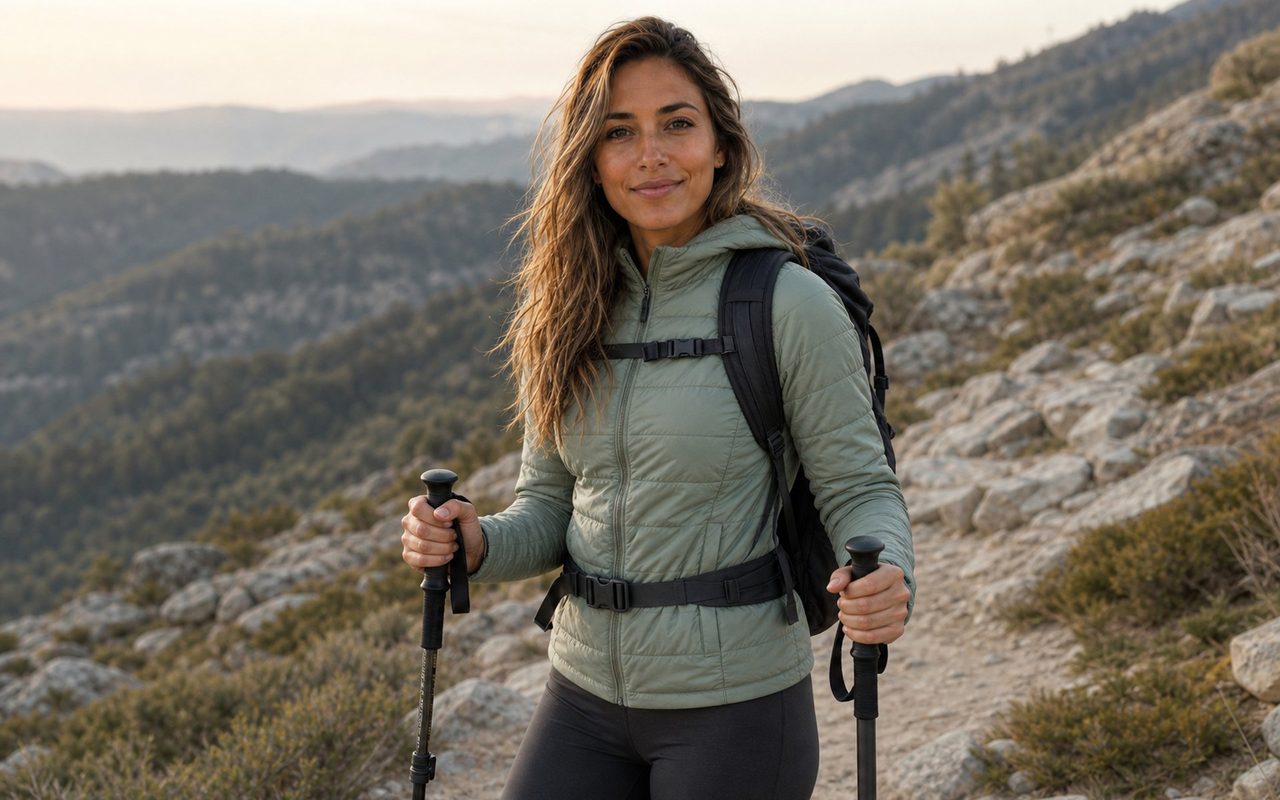
I expected a lighter carbon pole. The maker's figure says otherwise. The Black Diamond Alpine Carbon Cork weighs 17.1 oz a pair by the maker's figure, and a pair of carbon poles at that weight is the first thing I want you to know. Here's my call, made once. If you're an ultralight hiker, a trail runner, or someone who hikes a few times a year, skip them. If you want a durable, comfortable pole for rugged terrain, year-round use and heavy loads, buy them, with two catches: carbon can chip if you smack it hard against rock, and the locks need a 1.5 mm Allen key most hikers don't carry. The reason I'm comfortable saying that is a number I'll get to in a minute: one tester used a pair for more than seven years.
 By Brooke6 min read
Share this post
Send it to someone who's planning a trip.
What do the numbers actually say?
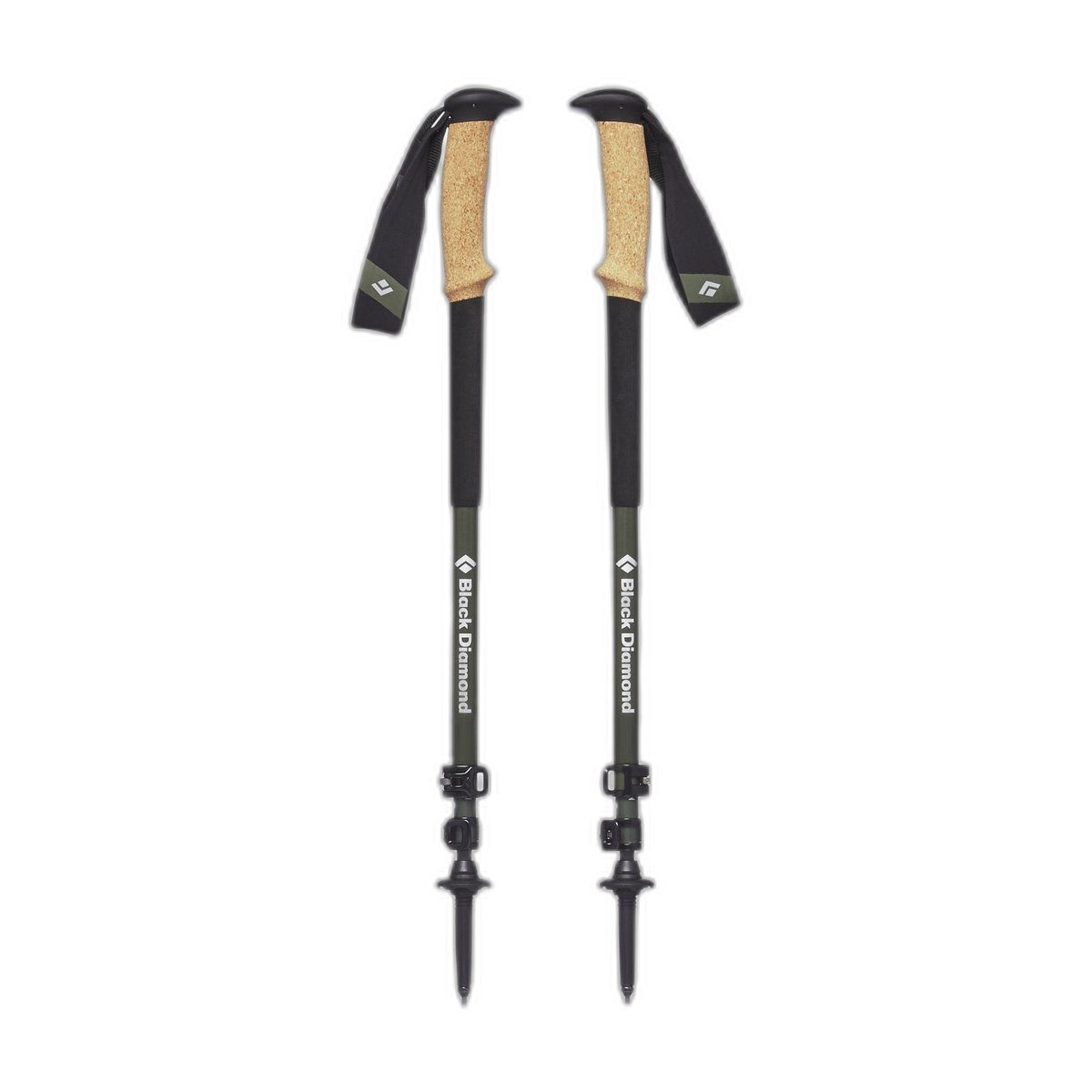
Start with weight, because it's the number people argue about. Black Diamond lists 17.1 oz (486 g) per pair. OutdoorGearLab measured 17.0 oz per pair. CleverHiker measured 1 lb 1.1 oz, which is also 17.1 oz. Three sources, one figure, within a tenth of an ounce. All of them are per pair, with straps and baskets, not per pole. That agreement made this an easy weight to pin down.
The sources call that mid-pack for carbon, and the brief frames it as heavier than many carbon rivals. So you're not buying this to save ounces.
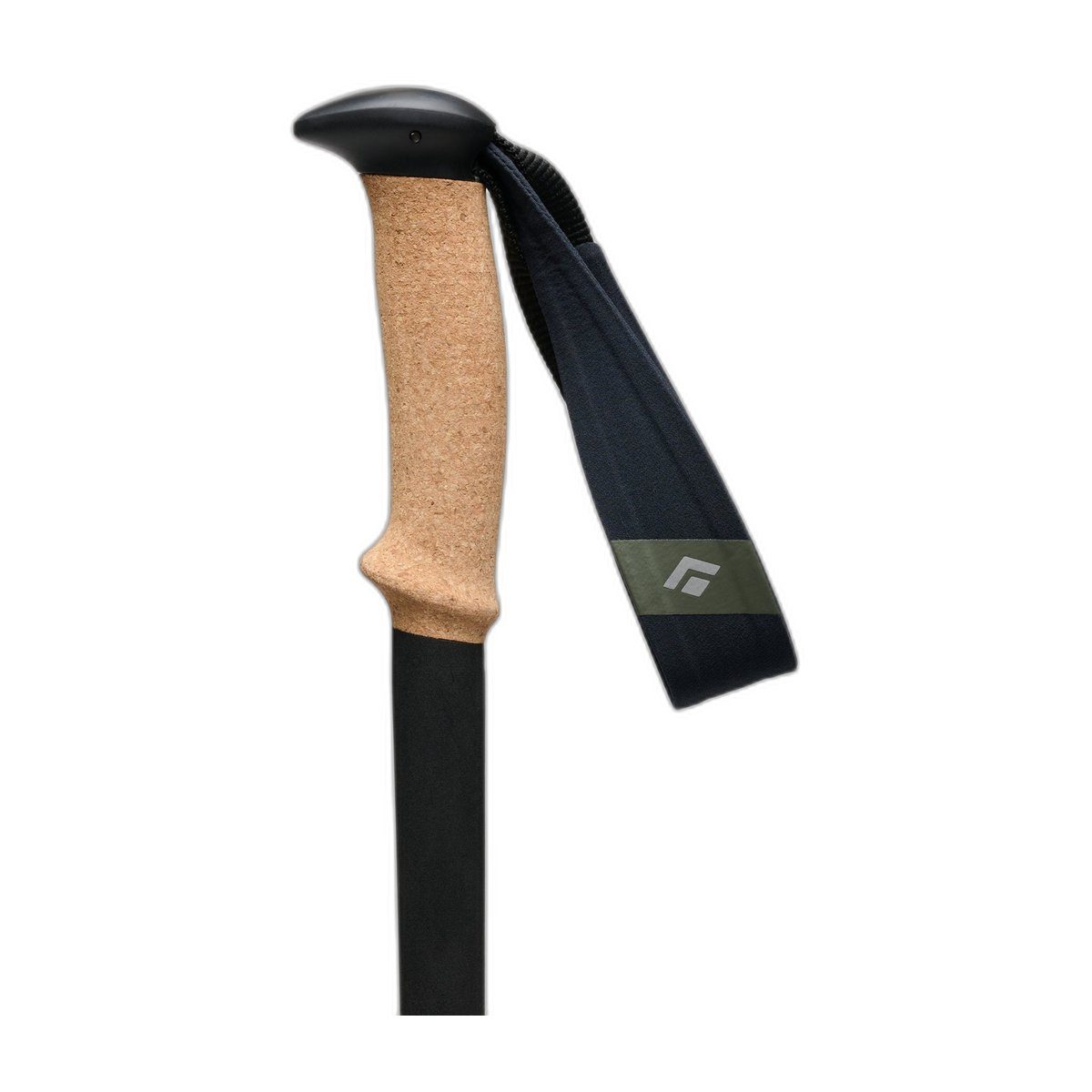
The other specs, from SectionHiker and the retailer listing: carbon fiber shaft, full cork grip with a foam extension below it, a FlickLock Pro lever in aluminum, and replaceable carbide tips. Length runs 100-130 cm (39-51 in), and the pole collapses to 61 cm (24 in). CleverHiker measured 25.5 in collapsed, likely counting the tip. One source, Better Trail, lists a minimum of 39.4 in, which is 100 cm in inches, so it matches the maker's usable range rather than the collapsed length.
A version note I can only half close. SectionHiker and Andrew Skurka both describe this as the Gen 3, released in spring 2019, with the FlickLock Pro redesigned from stainless steel to aluminum for easier operation. What changed in the shaft, I couldn't confirm. No source I read mentions a newer model.
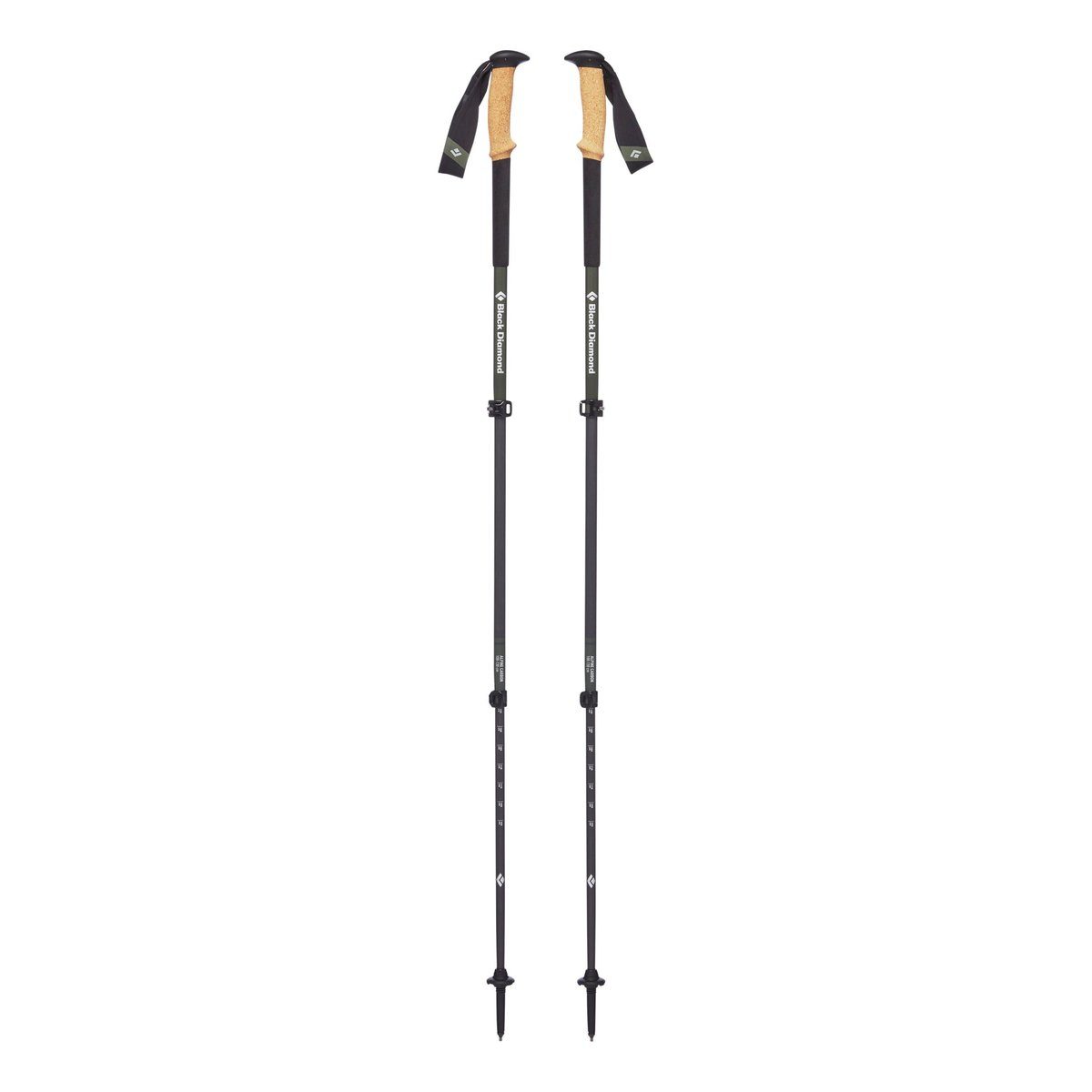
Is 17 ounces worth it? The sum.
Here's the sum I care about. The pair weighs 17.1 oz by the maker's figure. Divide by two and each pole is about 8.6 oz. Now set that against a 35 lb load, which is 560 oz (35 times 16). The poles are about 3 percent of what you carry. At 50 lb, which is 800 oz, they drop to about 2 percent. At those loads, the ounces you'd save moving to a lighter carbon pole are a rounding error against the rest of your pack.
Now the other side of the sum. If you carry a 10 lb base weight, which is 160 oz, the same poles are about 11 percent of everything on your back. That is why I tell ultralight hikers to skip them: the poles stop being a rounding error and start being a line item.
What the ounces buy is the case for them. Thick shafts and metal locks that OutdoorGearLab and others rate as tough for carbon. Grips that don't need replacing. A lock that, per the sources, holds under full descent load. If you think of the extra weight as a durability fee, the fee is about 3 percent of a loaded pack.
How do these poles hold up over years?
This is where I got properly delighted, and the detail comes from the reviews rather than the spec sheet. One OutdoorGearLab tester used a pair for more than seven years. Andrew Skurka logged 450 days over 8 seasons on his. Those are the kind of numbers that make a carbon pole's usual risk, a sudden snap instead of a progressive bend, feel like a theoretical worry rather than the headline. That longevity is my favorite thing on the whole research file.
I still want the catch stated plainly. Carbon fails by snapping, not bending. These poles use thick shafts and are described by reviewers as very hard to break for carbon, but carbon can still chip if you smack it hard against rock, and the shafts scratch easily. The scratches are cosmetic, per the sources.
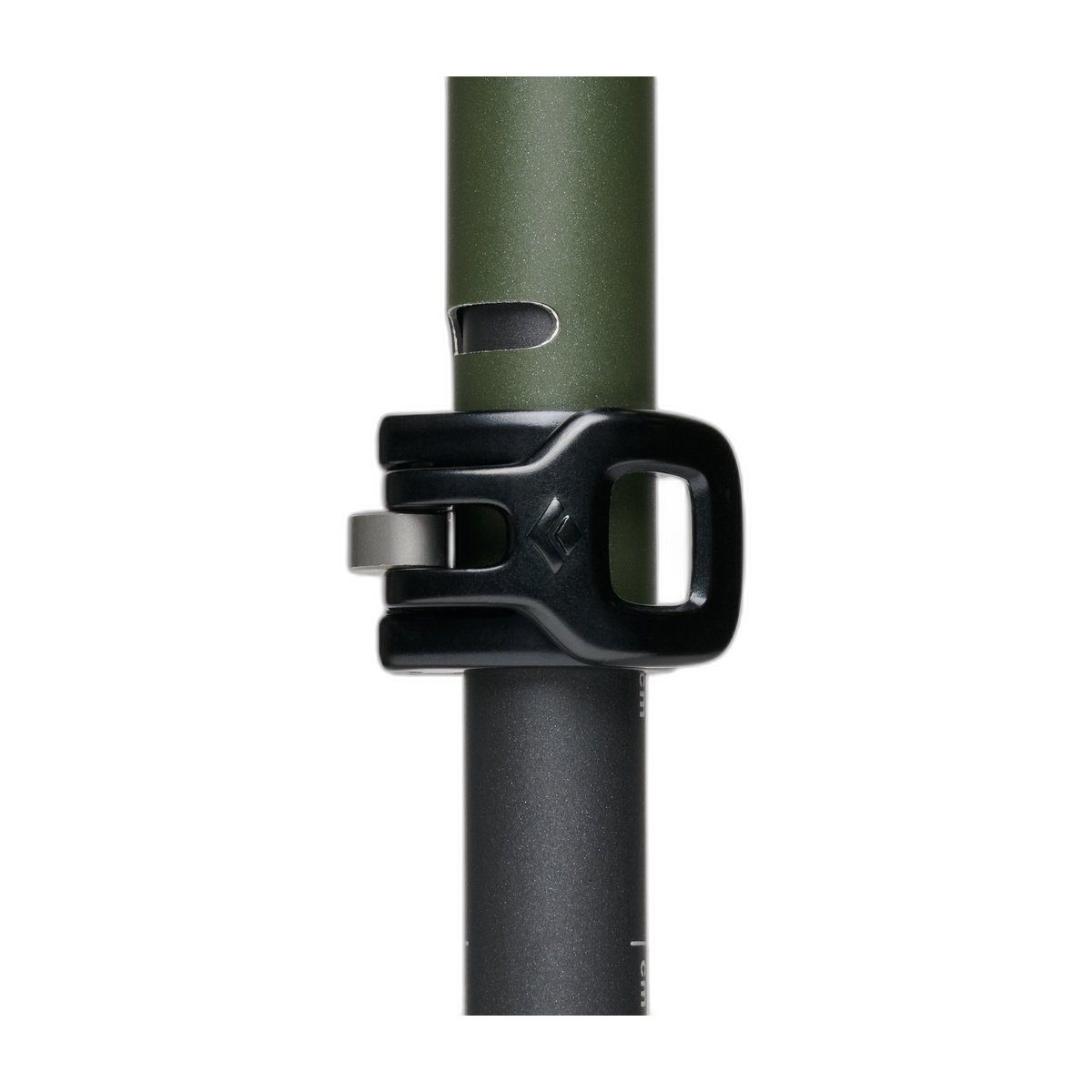
The lock is the other durability story. The FlickLock Pro is all metal, and the sources report it doesn't slip or creep on descents. To adjust its tension you need a 1.5 mm Allen key, and most hikers don't carry one. One more thing owners on the Bergfreunde page raise: some find the adjustment mechanism temperamental. The warranty is one year per SectionHiker, and replacement parts are available from Black Diamond.
What do owners say, and when?
Here is the owner count, with its date. The Amazon listing showed 4.5 out of 5 from 420 ratings as of 2026-10-22, and the Bergfreunde listing, which I read on 2026-10-17, showed 4.4 out of 5 from 9 ratings. Across both that's about 4.5 out of 5, or 9.0 out of 10, and with hundreds of ratings behind the bigger count I read it as a real signal. My sources also include critic scores that point the same way: CleverHiker gives it 4.5 out of 5 and Better Trail 4.3 out of 5. I didn't get a count of ratings behind those, so I'm not treating them as owner data.
The themes across reviewers match the spec story. Praise for comfortable cork grips, durability and reliable locks. Complaints about weight, packed size and the Allen key. Nobody I read says the poles fail. The complaints are all about convenience and ounces.
Nerd corner: whose number is 17 ounces?
Whose number is it? In this case, three of them, and they agree. Black Diamond says 17.1 oz. OutdoorGearLab, a lab-style review site, measured 17.0 oz. CleverHiker measured 17.1 oz. When a maker's figure and two independent measurements land within a tenth of an ounce, I stop worrying about the weight and start thinking about what else on the sheet might be softer.
The softer figure is the length range. SectionHiker gives 100-130 cm (39-51 in) for the unisex pole and notes the women's version extends to 125 cm. Better Trail's 39.4 in minimum is 100 cm in inches, the maker's usable lower bound, so it never conflicted with the 24 in collapsed length; the pole just folds down to that. It probably matters if you plan to pitch a trekking-pole shelter on these. I can't confirm the pitch height from what I read, so I wouldn't buy them for a shelter without checking the maker's page first.
The Allen key detail is the fine print. Black Diamond's own FlickLock Pro needs a 1.5 mm hex key to adjust tension, while the Black Diamond Pursuit, an aluminum sibling that one source recommends as better value, has an integrated hex tool. That's a small point about two poles in the same family that I'd want settled before I paid for the pricier one.
Pros
- Durable for a carbon pole: thick shafts and metal locks that reviewers compare to aluminum
- Cork grips with a foam extension for choking up on steep climbs
- FlickLock Pro locks that reviewers report don't slip or corrode
- Long track record: one tester logged 7+ years, another 450 days over 8 seasons
Cons
- 17.1 oz a pair is heavier than many carbon rivals
- 24 in collapsed, longer than folding Z-poles
- Needs a tiny 1.5 mm Allen key to adjust lock tension, easy to lose
- Carbon scratches easily and can chip if smacked hard
- Priced above its aluminum sibling
Key Specifications
- Lock
- FlickLock Pro, aluminum lever
- Price
- Typically $225-250 as of 2026-10-17, a retailer range not an Amazon-issued band
- Length range
- 100-130 cm (39-51 in)
- Shaft and grip
- Carbon fiber shaft, cork grip with foam extension
- Collapsed length
- 61 cm (24 in)
- Weight (maker, per pair)
- 17.1 oz (486 g)
Get one honest gear take every Friday.
One email a week: new reviews, one gear pick with my reasoning, and nothing sponsored. Confirm your address and you get my printable 2-page backpacking gear checklist.
You'll get a confirmation link first, and nothing else arrives until you click it. Every email has a one-click unsubscribe. How your email is handled
Why trust BestForBackpacking
Honest gear advice for backpackers, researched, weighed, and recommended.
Every pick is based on deep research: a synthesis of long-term owner reports, independent reviewer tests, and manufacturer specs, weighted by source independence, specificity, and use-case match. Brooke Wilder is our gear editor, the editorial persona who turns that research into a clear recommendation.