
Camping Chairs
Helinox Chair Zero vs Naturehike YL08 vs ONETIGRIS Tigerblade: Which Ultralight Camping Chair Should You Carry?
Last updated:
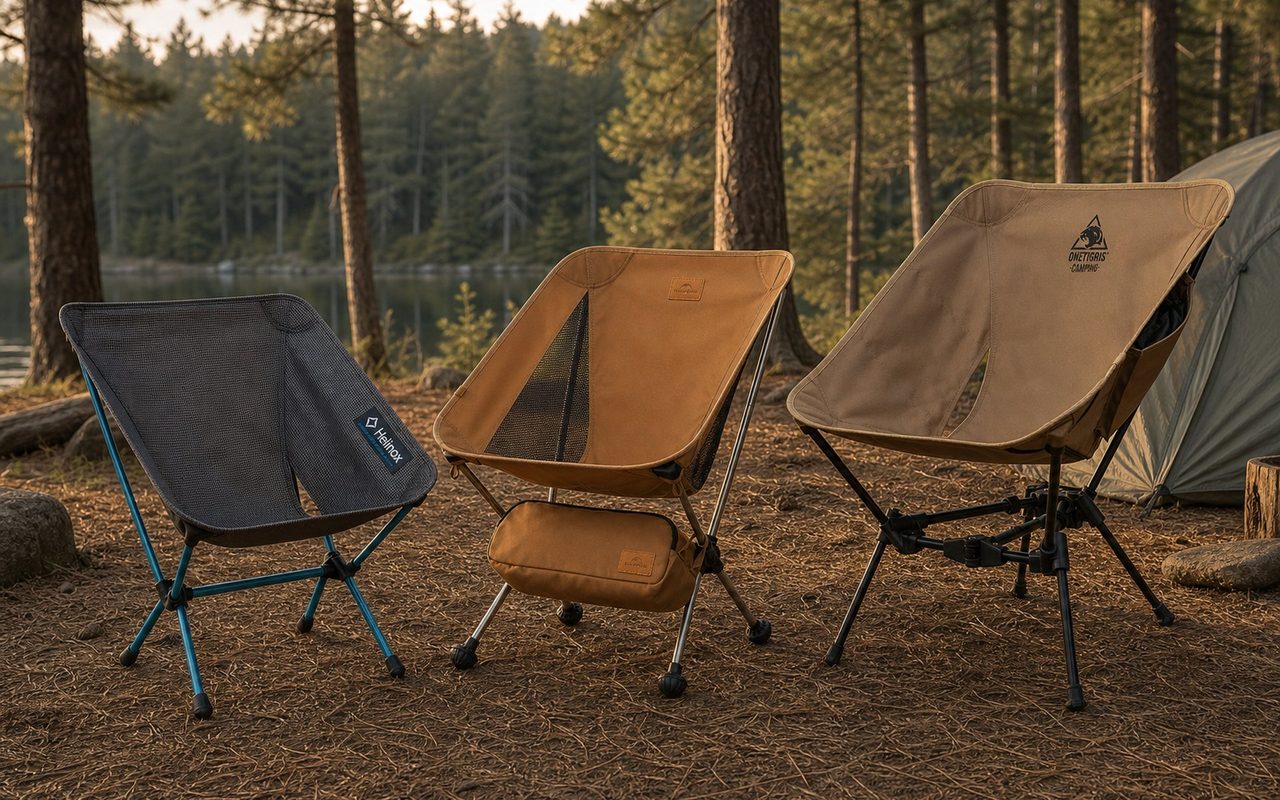
Three packable camp chairs from value clone to proven original. Which one earns its weight in your pack depends on how much comfort you need and how much weight you are willing to carry.
 By Brooke5 min read
Share this post
Send it to someone who's planning a trip.
Retailer links on this page are affiliate links. We may earn a commission if you buy, and your price doesn't change. How affiliate links work →
Quick picks
My picks at a glance
| Pick | Product | Where to look |
|---|---|---|
| Overall pick | Helinox Chair Zero | Check price at Amazon → |
| For budget hikers who want camp chair function without the premium price tag, and who can live with the weight penalty | Naturehike YL08 | Check price at Amazon → |
| For larger hikers and anyone who needs upper-back support at camp | ONETIGRIS Tigerblade | Check price at Amazon → |
Full reasoning for each pick is further down the page.
At a glance
The contenders
Helinox Chair Zero
~$90–140typical
- Weight
- 1 lb 2 oz (509 g)
- Capacity
- 265 lb / 120 kg
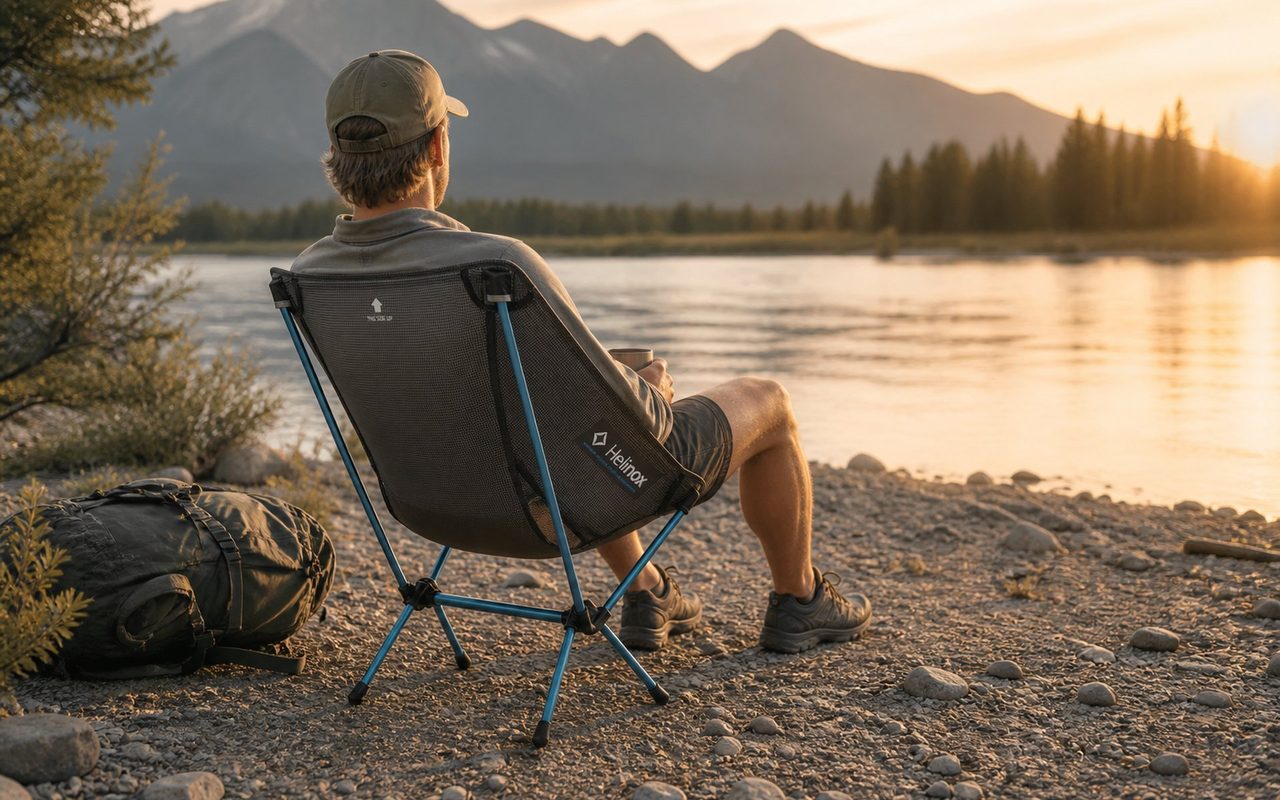
The ultralight pack chair at 1 lb 2 oz (509 g) assembled, with a DAC aluminum frame, 100D aramid ripstop seat, and a 5-year warranty, all per Helinox's official spec. More than 2,300 Amazon ratings (4.7/5) back the linked standard model.
Naturehike YL08
~$30–45typical
- Weight
- 2 lb 2 oz (960 g) without feet; about 2 lb 7 oz (1.10 kg) with the detachable anti-sink feet
- Capacity
- 265 lb / 120 kg
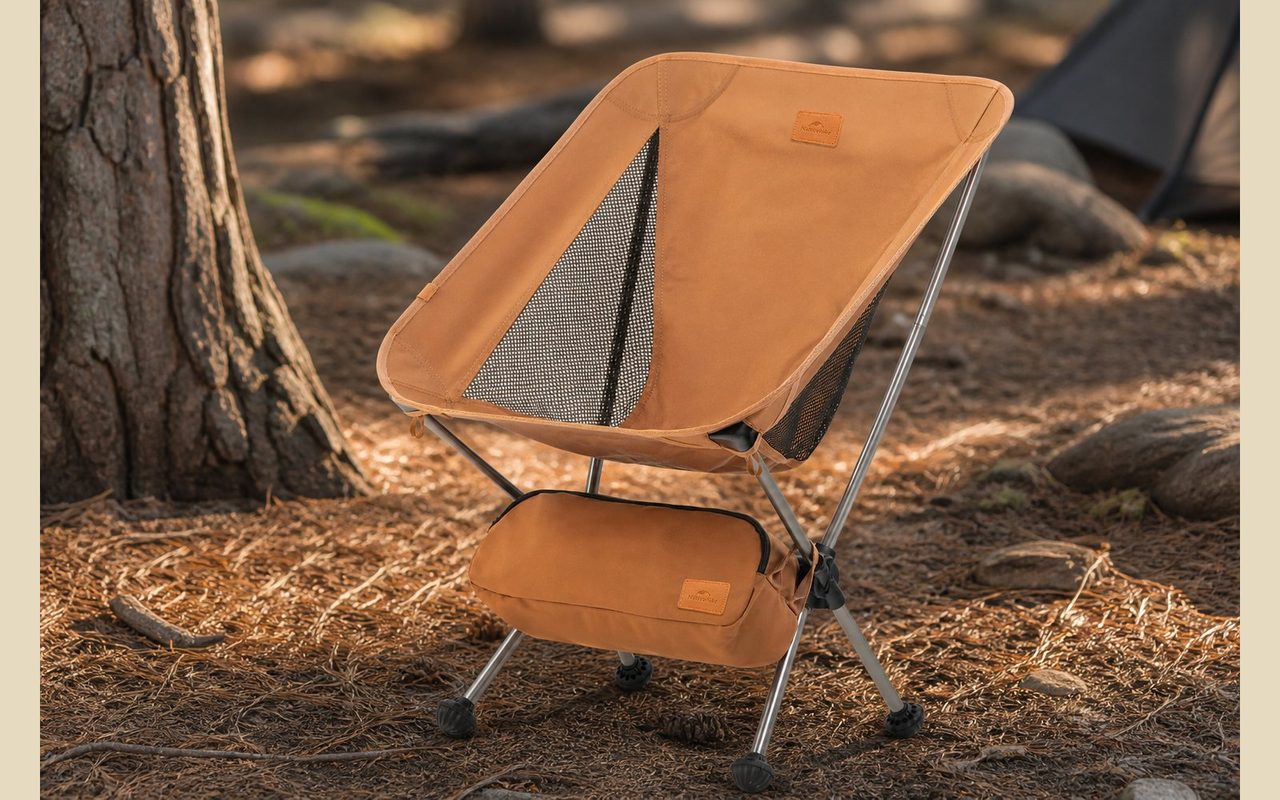
A lightweight clone of the Helinox design at a fraction of the price. Detachable anti-sink feet and a breathable side panel. Heavier at 2 lb 2 oz without its feet, about 2 lb 7 oz with them fitted, but functional for the budget backpacker.
ONETIGRIS Tigerblade
~$35–55typical
- Weight
- 2 lb 14 oz (1.34 kg)
- Capacity
- 330 lb / 150 kg
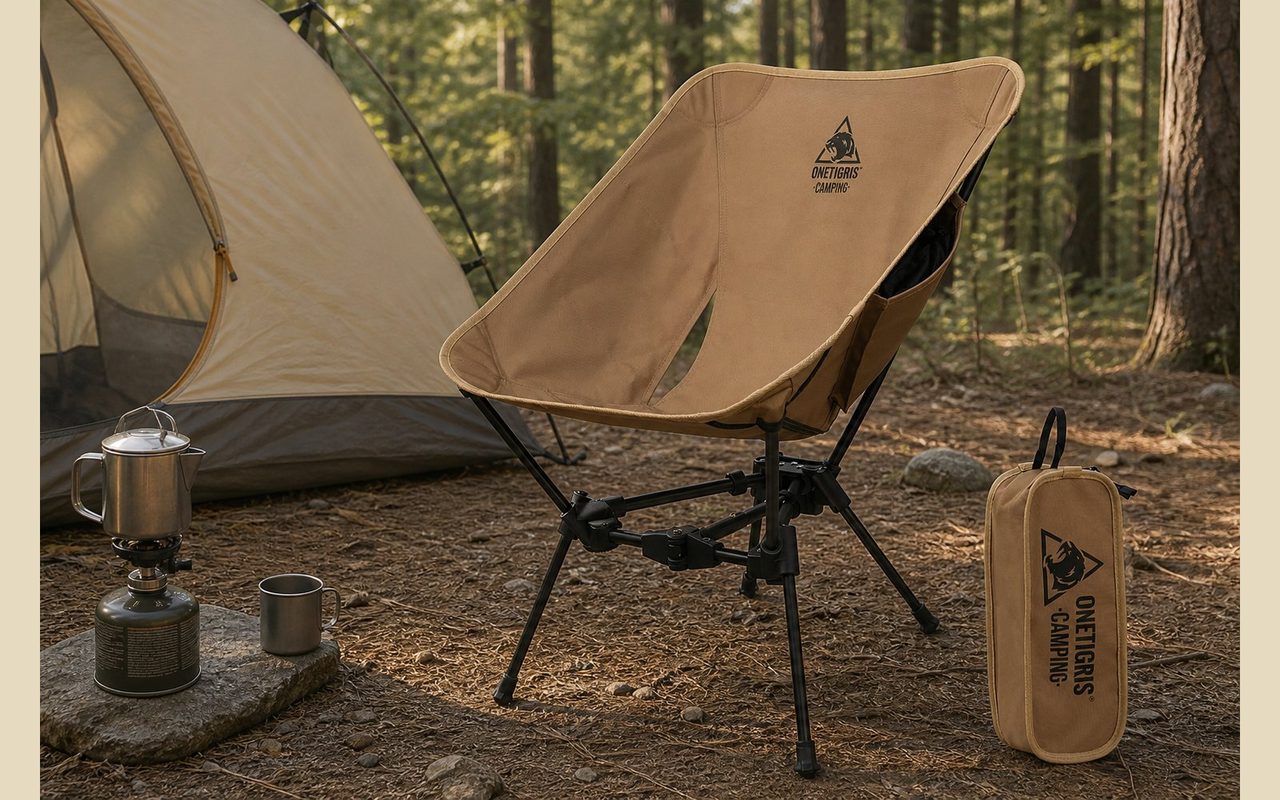
The heaviest chair here at 2 lb 14 oz and the only one with a tall high-back sling. 7075 aluminum frame rated to 330 lb. Best for the hiker who wants real chair comfort and is willing to carry the grams for it.
Spec check
How they stack up at a glance
| Product | Weight | Packed Size | Seat Type | Capacity | Frame Material | Typical Price | Amazon Rating | Buy |
|---|---|---|---|---|---|---|---|---|
| Helinox Chair Zero | 1 lb 2 oz (509 g) | 14 x 4 x 4 in | Low sling (25 in tall) | 265 lb / 120 kg | DAC aluminum alloy | ~$90–140 | 4.7 / 5 (2,322 ratings) | Check price → |
| Naturehike YL08 | 2 lb 2 oz (960 g) without feet; about 2 lb 7 oz (1.10 kg) with the detachable anti-sink feet | 14.6 x 3.6 in carry bag | Standard sling | 265 lb / 120 kg | 7075 aluminum alloy | ~$30–45 | 4.3 / 5 (1,482 ratings) | Check price → |
| ONETIGRIS Tigerblade | 2 lb 14 oz (1.34 kg) | 5.9 x 5.1 x 13 in | High-back sling (25.6 in tall), seat height 13 in | 330 lb / 150 kg | 7075 aluminum | ~$35–55 | 4.5 / 5 (1,677 ratings) | Check price → |
Helinox Chair Zero
★ Top pick- Weight
- 1 lb 2 oz (509 g)
- Packed Size
- 14 x 4 x 4 in
- Seat Type
- Low sling (25 in tall)
- Capacity
- 265 lb / 120 kg
- Frame Material
- DAC aluminum alloy
- Typical Price
- ~$90–140
- Amazon Rating
- 4.7 / 5 (2,322 ratings)
Naturehike YL08
★ Top pick- Weight
- 2 lb 2 oz (960 g) without feet; about 2 lb 7 oz (1.10 kg) with the detachable anti-sink feet
- Packed Size
- 14.6 x 3.6 in carry bag
- Seat Type
- Standard sling
- Capacity
- 265 lb / 120 kg
- Frame Material
- 7075 aluminum alloy
- Typical Price
- ~$30–45
- Amazon Rating
- 4.3 / 5 (1,482 ratings)
ONETIGRIS Tigerblade
★ Top pick- Weight
- 2 lb 14 oz (1.34 kg)
- Packed Size
- 5.9 x 5.1 x 13 in
- Seat Type
- High-back sling (25.6 in tall), seat height 13 in
- Capacity
- 330 lb / 150 kg
- Frame Material
- 7075 aluminum
- Typical Price
- ~$35–55
- Amazon Rating
- 4.5 / 5 (1,677 ratings)
Pick by scenario
Who This Comparison Is For
Jump straight to the winner for how you hike.
| Scenario | Best pick |
|---|---|
| Ultralight | Helinox Chair Zero |
| Budget-conscious | Naturehike YL08 |
| Bigger-hiker | ONETIGRIS Tigerblade |
| Weekender | Helinox Chair Zero |
Ultralight
Helinox Chair Zero
Budget-conscious
Naturehike YL08
Bigger-hiker
ONETIGRIS Tigerblade
Weekender
Helinox Chair Zero
How we compared these chairs
Each chair was evaluated against manufacturer specifications, live retailer pricing and availability data from Amazon, and aggregated owner reviews from Amazon and Reddit communities (r/Ultralight, r/Backpacking).
We did not field-test any of these chairs. The comparison rests on published specs and the convergence of owner reports, a different evidence standard from a single editor's trip diary. Where owner reports diverge significantly on a dimension, we flag it.
Affiliate links are clearly marked. Commission rates do not influence our recommendations; see Affiliate Disclosure for full detail.
The honest calculus: is a chair worth carrying at all?
Before you weigh ounces between these three chairs, this is the honest question: would you be happier with a sit pad?
A sit pad weighs 1-2 oz and costs a fraction of the least expensive chair here. It keeps your butt dry and moderately cushioned. It has no failure modes. You strap it to the outside of your pack and forget about it.
A camping chair at 1-3 lb changes your camp experience meaningfully. You sit upright. You lean back. You cook dinner at a comfortable angle instead of hunched over. But 1-3 lb is a real chunk of your base weight, especially in the ultralight range.
Carry a chair if your trip has long camp hours, you have back or knee concerns that make ground sitting legitimately uncomfortable, or you are basecamping and the carry distance is short.
Skip a chair if you are pushing big miles, your base weight is already under 10 lb, or you have never wished for a chair at camp after a long day. The sit pad covers most of the comfort gap for none of the weight.
Hub durability: what breaks and when
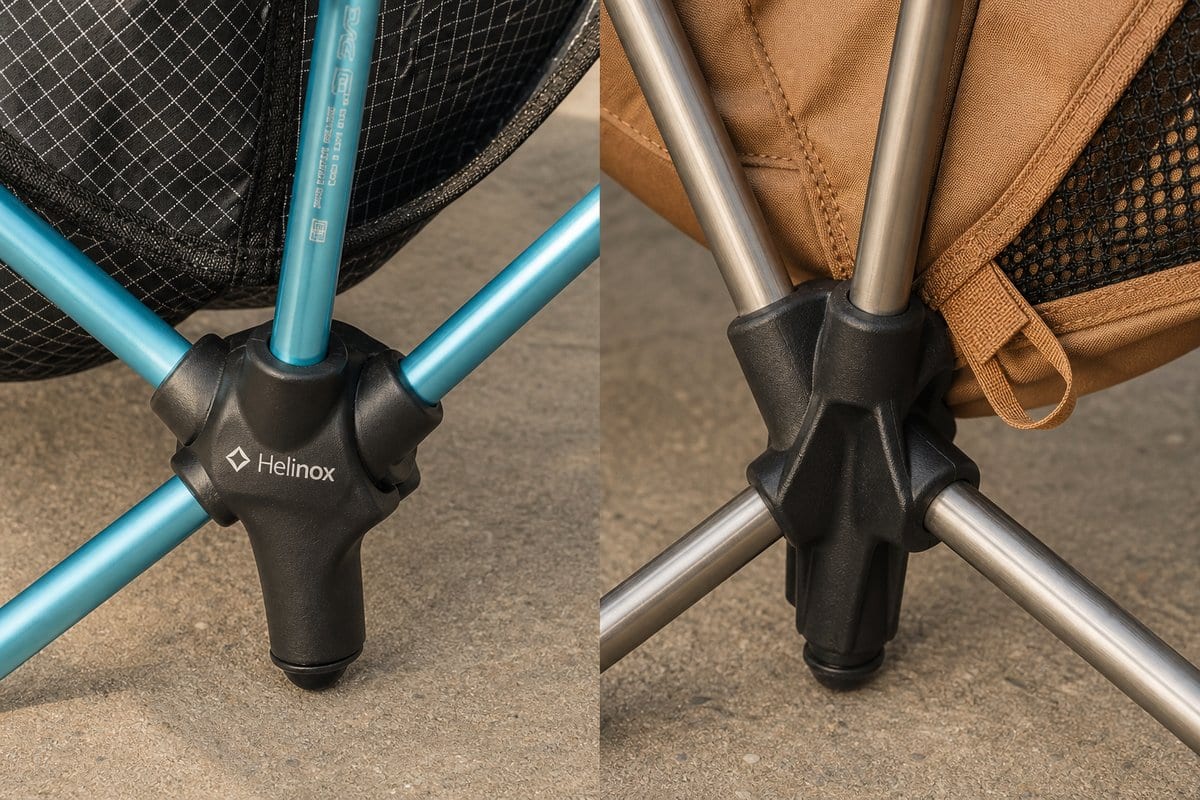
All ultralight hubbed chairs share the same failure point: the hubs where the aluminum poles meet. The frame relies on plastic hubs under tension, and off-axis loading (leaning sideways, shifting weight) stresses the rear hub most.
The Helinox Chair Zero uses green anodized DAC aluminum alloy poles and proprietary nylon resin hubs, per Helinox's official spec (https://helinox.com/products/chair-zero), which also covers manufacturing defects under a 5-year warranty.
The Naturehike YL08 and ONETIGRIS Tigerblade use 7075 aluminum alloy frames; Naturehike lists the YL08 frame as 7075 aluminum alloy on its listing (https://www.amazon.com/dp/B0DGPK31R1). Both budget brands publish warranty terms: OneTigris states a 14-month hassle-free warranty on the Tigerblade product page and a one-year return-and-warranty policy (https://camping.onetigris.com/products/tigerblade-camping-chair), while Naturehike's refund policy gives a 2-year free replacement-parts warranty excluding misuse (https://www.naturehike.com/policies/refund-policy). Helinox's 5-year manufacturer warranty is still the longest. There is no reliable failure-rate data to compare the three brands head to head, so no durability ranking is claimed here. A replacement is cheap when the chair itself costs a fraction of the Helinox, but a failure on day 3 of a 10-day trip is a different story.
The data point that matters: the linked Helinox model carries 2,322 Amazon ratings (rating and count read live 2026-10-06 on https://www.amazon.com/dp/B01M07GTOE), against 1,482 for the YL08 (4.3/5) and 1,677 for the Tigerblade (4.5/5) (all counts read live on the linked ASINs, 2026-10-07). A bigger owner history is a bigger evidence base, not proof of a lower failure rate. For a single weekend trip this probably does not matter. For a thru-hike it should be part of the decision.
Stability on real ground
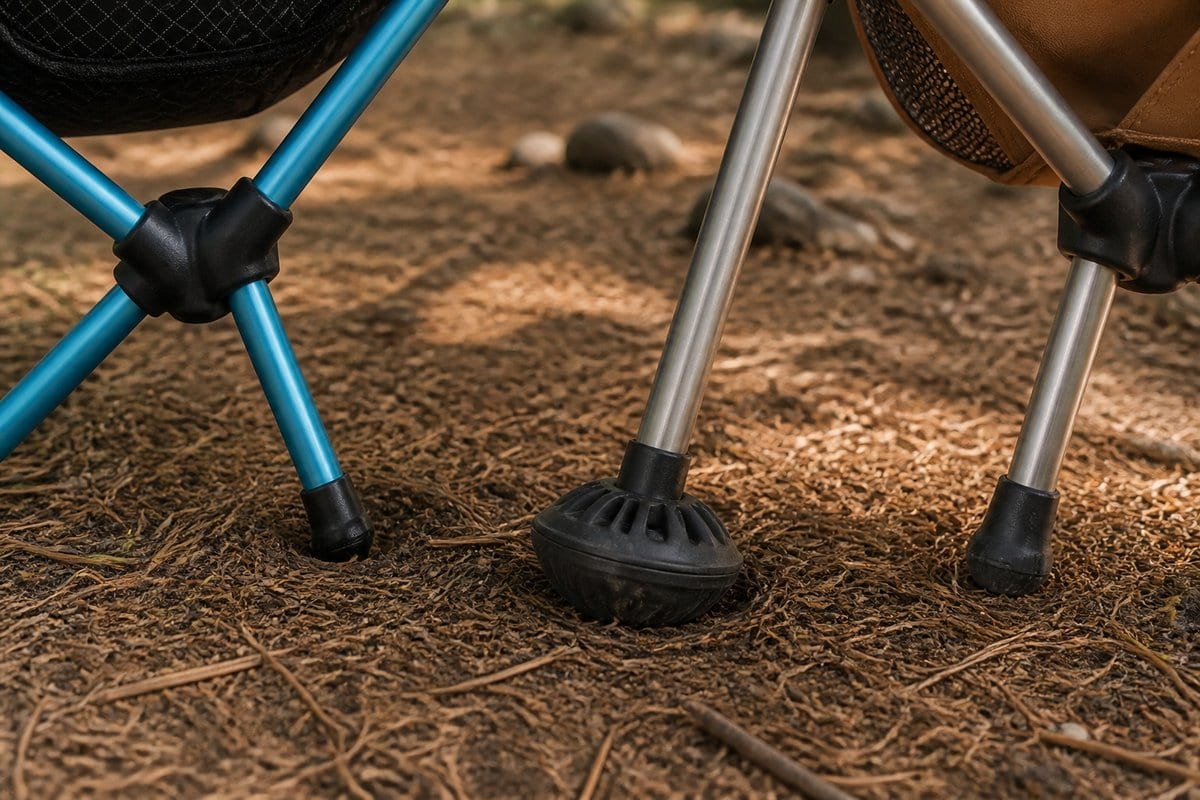
Spec sheets show chairs on concrete. Real campsites have sand, duff, pine needles, and hard-packed dirt with a side slope.
The foot designs differ: the Naturehike YL08 ships with detachable anti-sink foot covers and weighs 2 lb 2 oz (0.96 kg) without them or about 2 lb 7 oz (1.10 kg) with them fitted, per its listing (https://www.amazon.com/dp/B0DGPK31R1). The Helinox Chair Zero has rubber feet per its official spec (https://helinox.com/products/chair-zero); they grip hard surfaces but still sink into soft ground. The Tigerblade's feet are also rubberized, with star-shaped positioning that OutdoorGearLab credits with helping the chair resist sinking in sand or mud (https://www.outdoorgearlab.com/reviews/camping-and-hiking/camping-chair/onetigris-tigerblade).
On sand or soft duff, all three sink a little and can tip backward when they do. A ground sheet or a manufacturer footplate helps. This is the category's most common day-one disappointment regardless of chair brand, and it is worth knowing before your first trip with any of them.
Packed size and pack integration
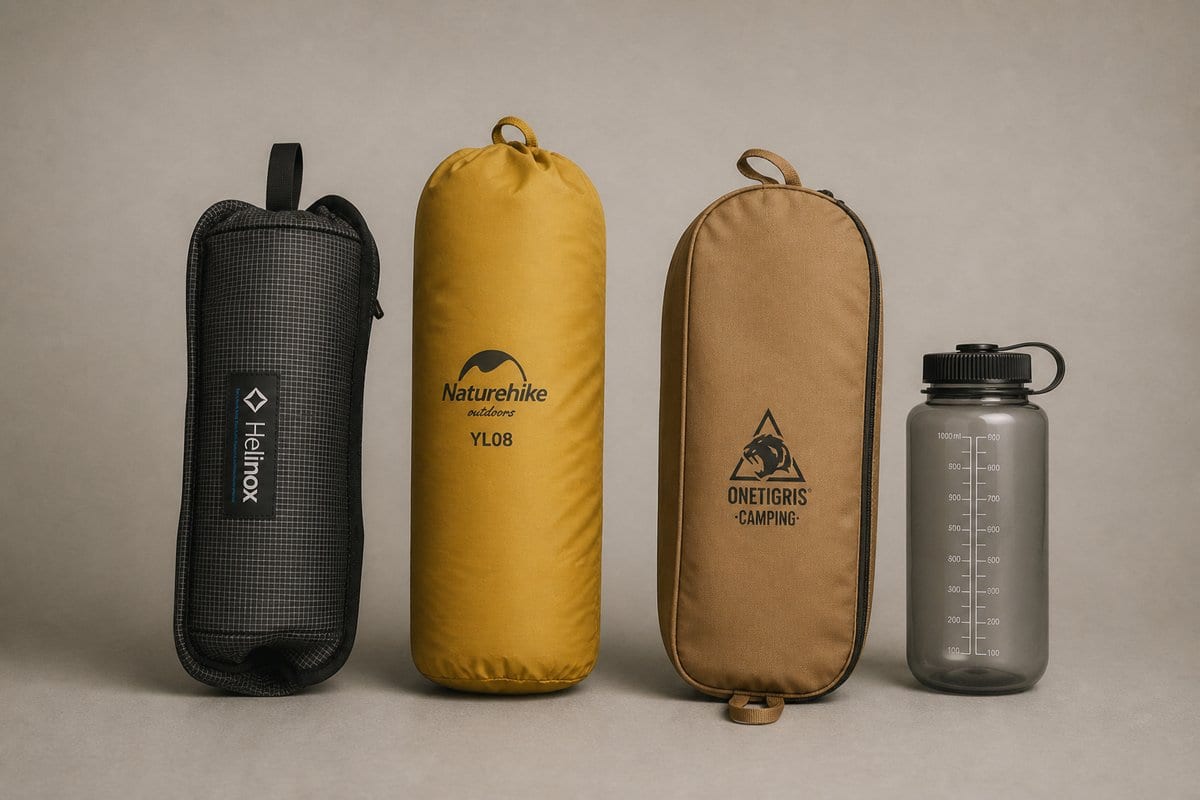
The Helinox packs to 14 x 4 x 4 in. That fits inside a 50L pack or straps neatly to the outside. The carry bag is the smallest of the three.
The Naturehike packs into a compact 14.6 x 3.6 in carry bag (included), per its listing (https://www.amazon.com/dp/B0DGPK31R1).
The Tigerblade folds to 5.9 x 5.1 x 13 in, which is wider but shorter than the other two. It is harder to slide into a pack pocket and more likely to ride strapped to the outside.
Across the three, the Helinox packs to 14 x 4 x 4 in, the Naturehike to a compact column, and the Tigerblade to 5.9 x 5.1 x 13 in, so the Tigerblade is the widest and shortest while the other two are slim columns.
All three use shock-cord frame assembly that takes 30-60 seconds to set up. The sling tensioning step is the part owners complain about in cold weather regardless of brand.
Get one honest gear take every Friday.
One email a week: new reviews, one gear pick with my reasoning, and nothing sponsored. Confirm your address and you get my printable 2-page backpacking gear checklist.
You'll get a confirmation link first, and nothing else arrives until you click it. Every email has a one-click unsubscribe. How your email is handled
More from camping-chairs

Helinox Chair Zero Review: Is It Worth Carrying?
The Helinox Chair Zero is a real seat for 17-18.5 oz. Worth it if you linger at camp; the 9 in seat height and soft ground are the catch.
 Brooke Wilder
8 min read
Why trust BestForBackpacking
Honest gear advice for backpackers, researched, weighed, and recommended.
Every pick is based on deep research: a synthesis of long-term owner reports, independent reviewer tests, and manufacturer specs, weighted by source independence, specificity, and use-case match. Brooke Wilder is our gear editor, the editorial persona who turns that research into a clear recommendation.