
Retailer links on this page are affiliate links. We may earn a commission if you buy, and your price doesn't change. How affiliate links work →
Sleeping Bags
Western Mountaineering UltraLite Review
Last updated:
This is my favorite review on the site to have fixed, because it's about one number on the bag, 20°F, and an earlier version of this page got the story behind it wrong.
My call, once. Buy the UltraLite if you're a warm or average sleeper, you hike three seasons in mostly dry places, and you'll use it for years. Skip it if you're a cold sleeper who needs comfort at 20°F, if your trips are wet for days at a time, or if the price is a stretch. I give it 8.5 out of 10.
 By Brooke5 min read
Share this post
Send it to someone who's planning a trip.
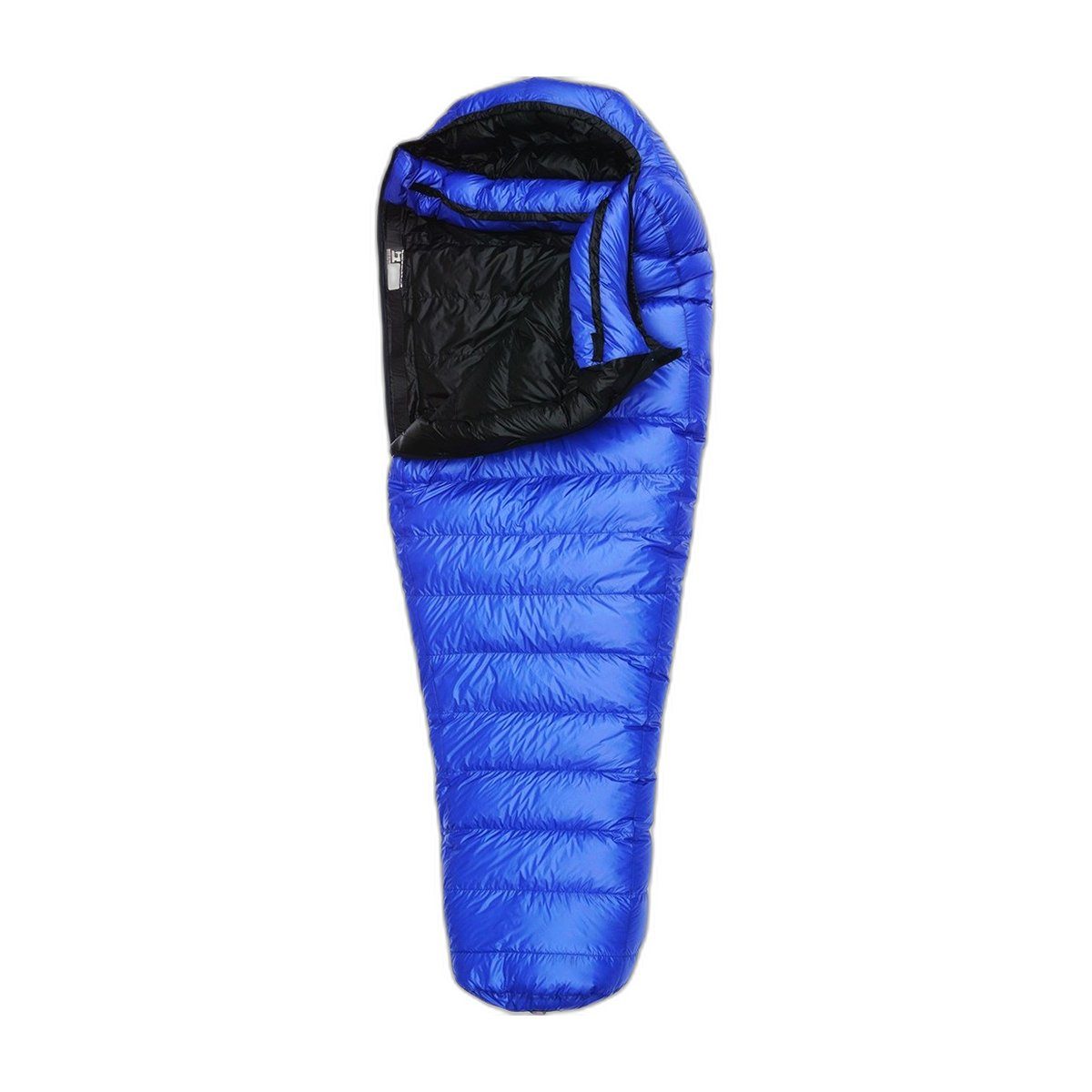
20°F according to whom?
Western Mountaineering prints 20°F, or -7°C. That's the maker's own rating.
The bag also has EN ratings, and an earlier version of this review said it didn't. SectionHiker lists them: comfort 24.8°F, lower limit 14°F, extreme -20°F. OutdoorGearLab gives the same pair rounded, comfort 25°F and lower limit 14°F, and points out that Western Mountaineering doesn't advertise them on its website.
So read the label as sitting between the two standard numbers. On the EN scale the comfort figure is the warmer one, meant for a cold sleeper, and the lower limit is the colder one, meant for a warm sleeper. The maker's 20°F is 4.8 degrees colder than the comfort rating and 6 degrees warmer than the limit.
What that means for you. You run warm: 20°F is a working number. You run cold: plan around 25°F, or carry a warmer layer. OutdoorGearLab scored its warmth 10 out of 10 and calls it one of the warmest 3-season bags it has tested.
And the extreme figure, -20°F? On the EN scale that's a survival line, not a number to plan a trip around. I mention it only so it doesn't catch your eye on a spec sheet and make the bag sound warmer than it is. Ignore it. Plan on the other two.
Where do the 29 ounces go?
Western Mountaineering lists the 6'0" at 1 lb 13 oz total, which is 29 oz, with 16 oz of 850+ fill goose down inside. SectionHiker's figures match.
Run the share. 16 of 29 ounces is down. That's 55% of the bag. Everything else, the 12D ripstop nylon shell and liner, the zipper, the draft tube, comes to 13 oz. That ratio is why a bag this warm weighs this little, and it's the sum I'd show anyone who asks what the price buys.
Here's a whose-number moment I enjoyed. OutdoorGearLab's own table lists 16.0 oz of fill, and its text says 17. The maker's 6'6" has 17 oz, so my guess is the text slipped to the long size. I'm going with 16 for the 6'0".
Packed, the maker lists a 7 x 13 in XS stuff size, and SectionHiker puts the compressed volume at 6 to 7 liters.
One real limit. OutdoorGearLab marks the down as not hydrophobic. Down that gets wet loses loft, so for days of rain or heavy condensation this is the wrong bag.
Which size, and how roomy?
Three lengths: 5'6", 6'0" and 6'6". The size names are heights, which I appreciate: you pick by how tall you are, and there's nothing to decode. Western Mountaineering lists the inside girth at shoulder, hip and foot as 59/51/38 in for the two shorter sizes and 60/52/38 in for the 6'6".
Weights by size, from the maker: 1 lb 12 oz, 1 lb 13 oz and 1 lb 15 oz, with 15, 16 and 17 oz of down. The 6'6" adds 2 oz of total weight and 1 oz of down over the 6'0".
A 59 in shoulder girth is a fitted mummy. If you're broad in the shoulders, compare it with a bag you already own before you buy. A cut that squeezes you compresses the down where it touches, and compressed down is thinner insulation. The zipper comes in right or left hand, per SectionHiker.
What's it made of?
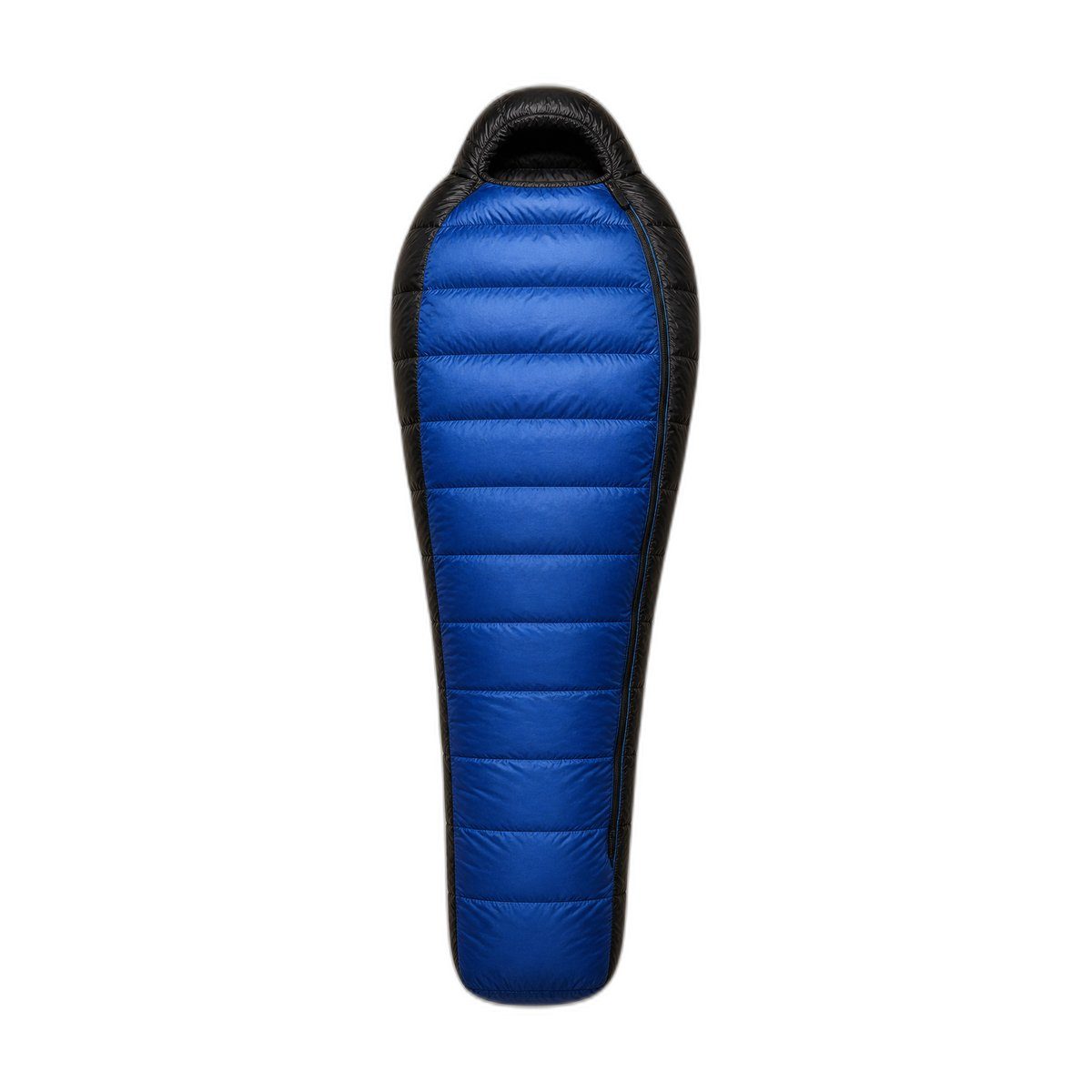
The shell is Western Mountaineering's ExtremeLite, a 12D ripstop nylon that the maker describes as tightly woven to keep moisture out while letting humidity escape. The loft is listed at 5.5 in, and SectionHiker measured about 5.
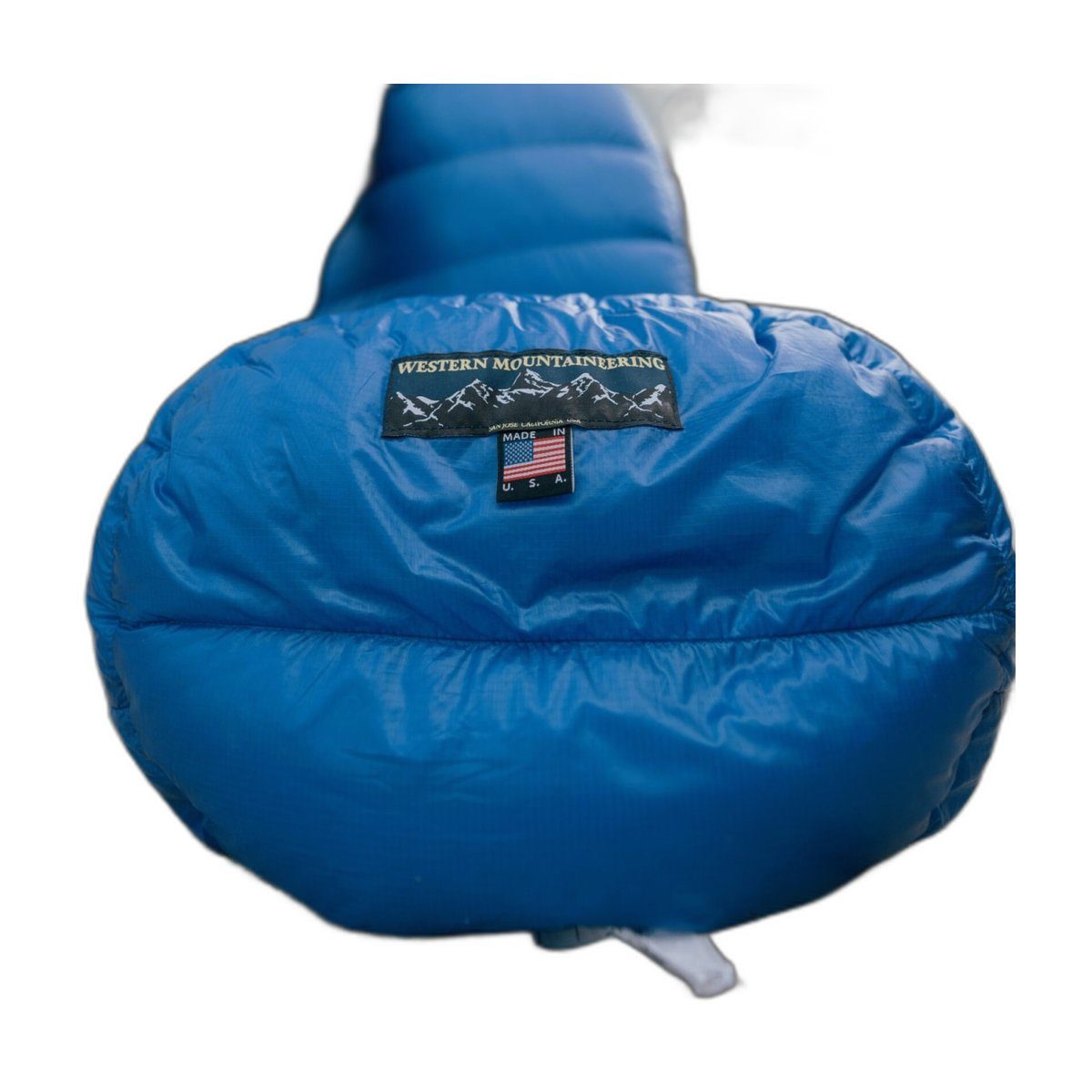
The maker's feature list names continuous baffles, a full down collar and an insulated draft tube along the zipper, and the hood cinches down. It's made in the USA.
A small detail on the maker's page that made me smile: the shop sells a 2 oz down overfill for its bags. If you love the UltraLite's cut and want it warmer, that's an option worth asking about. I couldn't confirm from the page whether it applies to this model in particular, so ask before you order.
Is it worth the price?
Western Mountaineering lists it at $660-705, depending on size. That's a lot for a sleeping bag.
The sum that changes how it looks is cost per night. Say 30 nights a year for 15 years. That's 450 nights. Divide the bottom of the price band by 450 and it comes to about a dollar and a half a night. Stretch it to 20 years, 600 nights, and it's about a dollar ten. Use it for 5 nights a year and the same bag costs around nine dollars a night over 15 years. Same price, different deal.
A bit of product-line history. Western Mountaineering's page still carries OutdoorGearLab's Editors' Choice badge from 2015. That's more than 10 years of the same basic design earning the same kind of praise, and I find that more reassuring than any new feature.
So it's a bag for someone who'll use it a lot. Owners are few but happy: Amazon shows 5.0 stars from 10 ratings as of October 16, 2026. That's too small a crowd to lean on, so I lean on the reviewers. SectionHiker says the author's own bag, years after buying it, is still as warm as ever.
Western Mountaineering suggests it for the John Muir Trail and the Colorado Trail. Dry, high, three-season routes. That's the right fit.
Pros
- 29 oz total with 16 oz of 850+ fill down, 55% of the weight (6'0", maker)
- EN comfort 24.8°F and lower limit 14°F (SectionHiker); OutdoorGearLab scored warmth 10/10
- Continuous baffles, full down collar, insulated draft tube; made in the USA
- Three lengths, right or left zip
Cons
- $660-705 at Western Mountaineering's listed prices
- Down is not hydrophobic, per OutdoorGearLab; wrong bag for days of rain
- Cold sleepers should plan around the 25°F comfort rating, not the 20°F label
- 59 in shoulder girth is a fitted mummy
Key Specifications
- Shell
- 12D ripstop nylon (ExtremeLite)
- Fill Power
- 850+ goose down
- Fill Weight
- 16 oz / 455 g, 6'0" (maker)
- Total Weight
- 29 oz / 820 g, 6'0" (maker)
- Sizes Available
- 5'6", 6'0", 6'6"
- Temperature Rating
- 20°F maker; EN comfort 24.8°F, lower limit 14°F (SectionHiker)
Get one honest gear take every Friday.
One email a week: new reviews, one gear pick with my reasoning, and nothing sponsored. Confirm your address and you get my printable 2-page backpacking gear checklist.
You'll get a confirmation link first, and nothing else arrives until you click it. Every email has a one-click unsubscribe. How your email is handled
More from Sleeping Bags
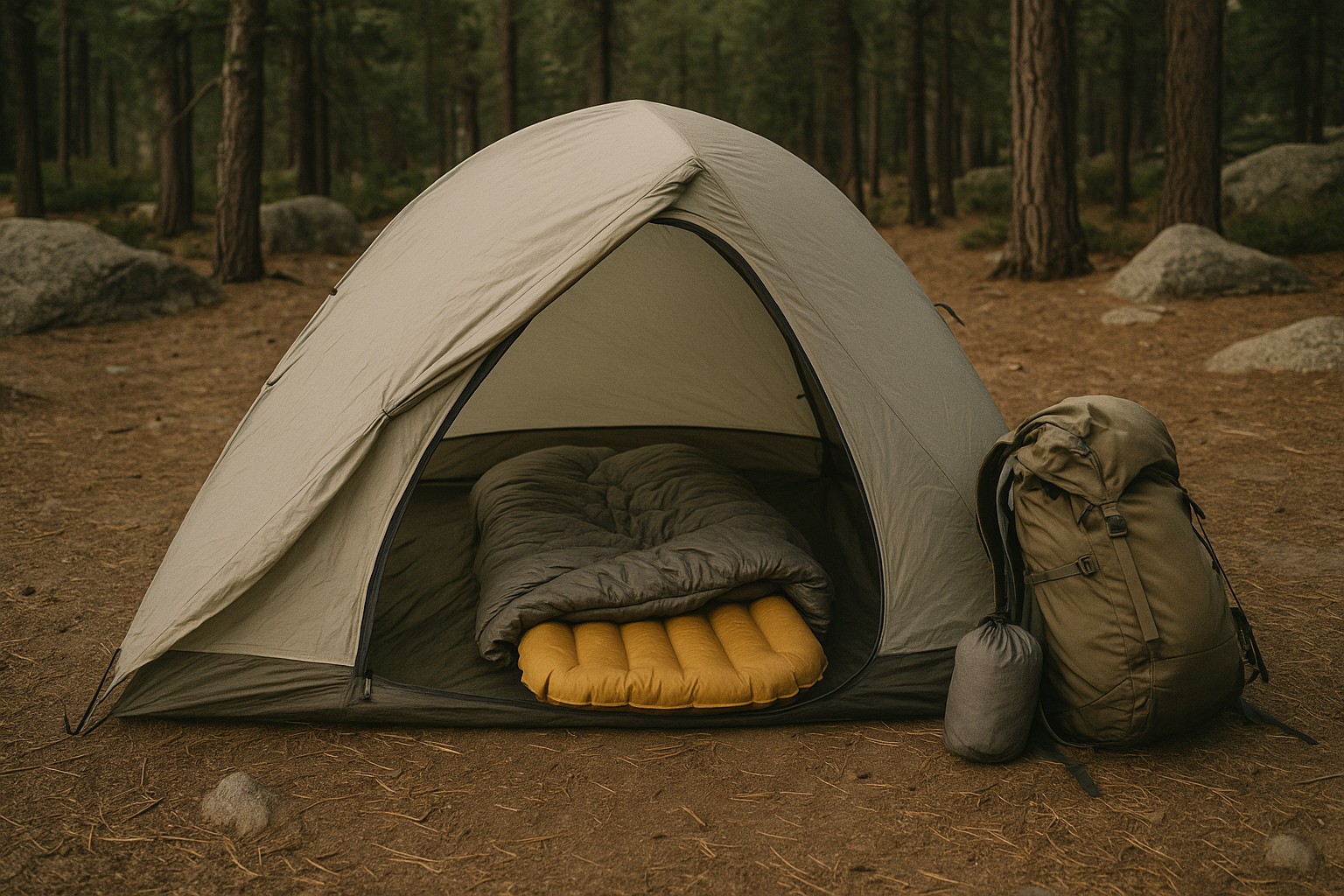
Best Winter Backpacking Sleeping Pads
These four insulated pads solve different winter backpacking problems, from safest all-around warmth to comfort-first cold-weather sleep and better value.
 Brooke Wilder
6 min read
Brooke Wilder
6 min read
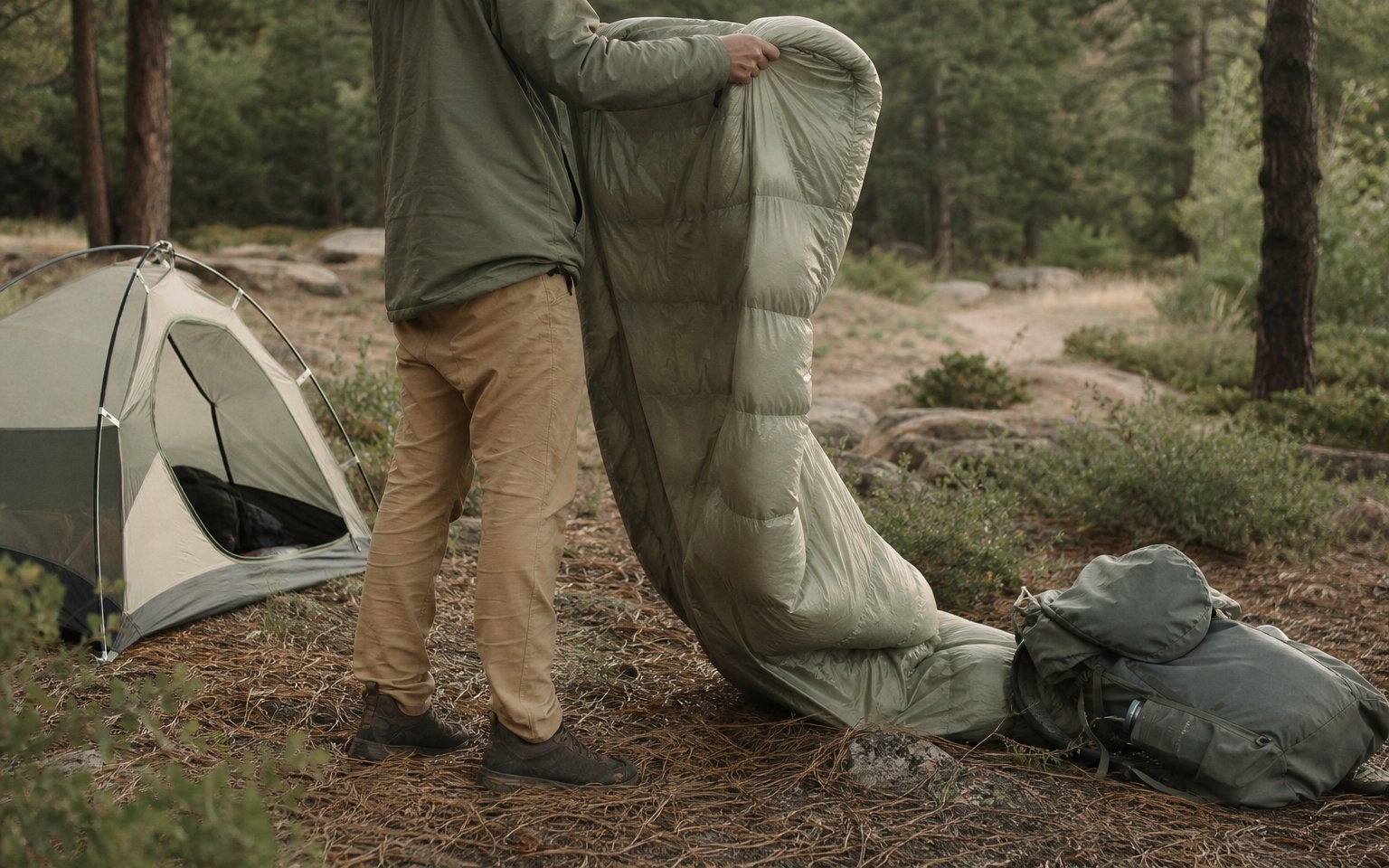
Best Ultralight Sleeping Bags for Backpacking
My picks for the best ultralight backpacking sleeping bag start with the Sea to Summit Spark 15 and Therm-a-Rest Parsec 20. Read the comfort rating first.
Brooke Wilder
7 min read
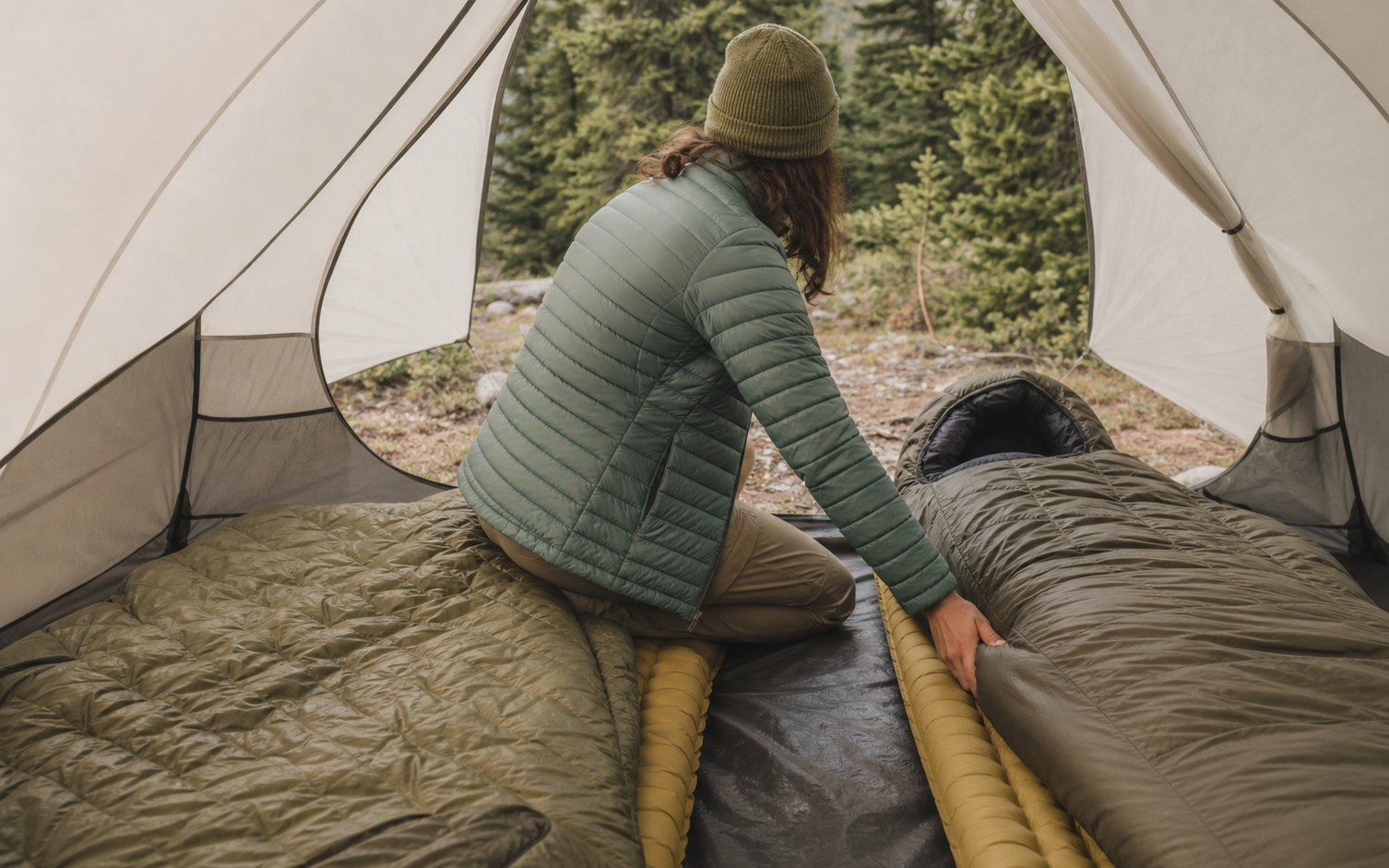
Sleeping Bag vs Quilt for Backpacking: Which Sleep System Fits You?
A quilt is not just a lighter sleeping bag with the back removed. It asks more from your sleeping pad, your head insulation, and your tolerance for drafts. This guide is for the hiker still choosing the system, not the person already shopping quilt models.
Brooke Wilder
7 min read
Why trust BestForBackpacking
Honest gear advice for backpackers, researched, weighed, and recommended.
Every pick is based on deep research: a synthesis of long-term owner reports, independent reviewer tests, and manufacturer specs, weighted by source independence, specificity, and use-case match. Brooke Wilder is our gear editor, the editorial persona who turns that research into a clear recommendation.