
Sleeping
Sleeping Bag vs Quilt for Backpacking: Which Sleep System Fits You?
Last updated:
 By Brooke6 min read
Share this post
Send it to someone who's planning a trip.
The quick answer
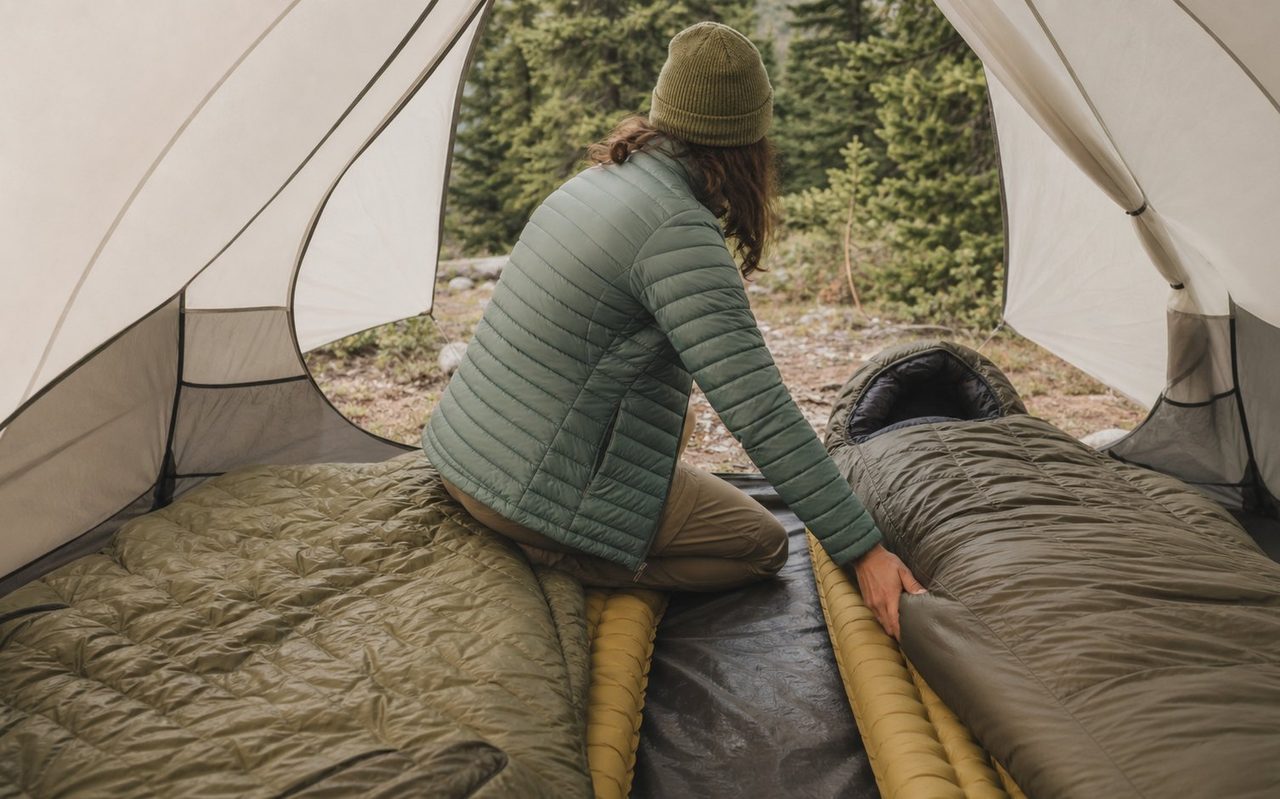
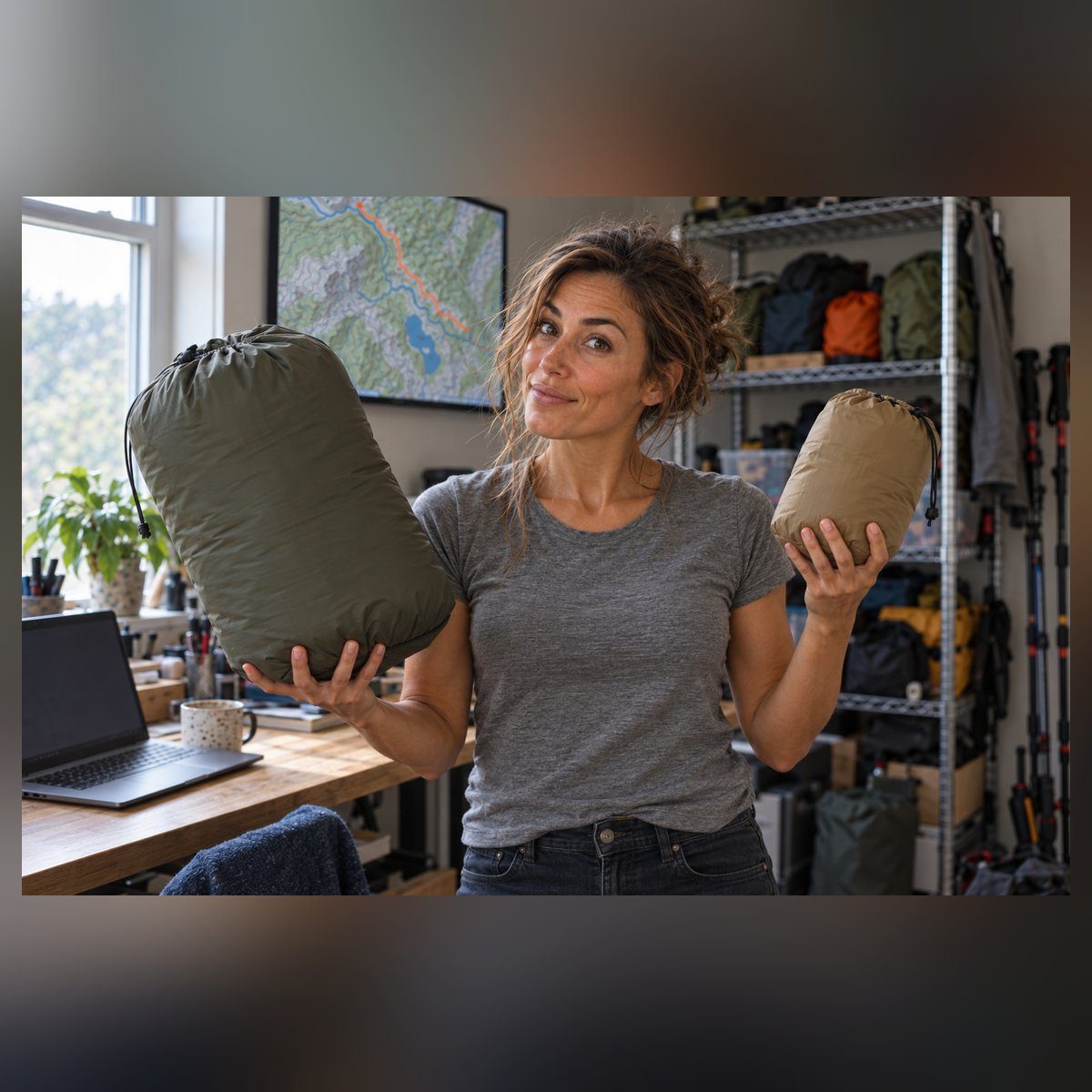
Choose a hooded sleeping bag if you sleep cold, camp near the temperature rating, or want the least setup friction. The hood, draft collar, zipper draft tube, and full enclosure make a bag the conservative answer when warmth margin matters.
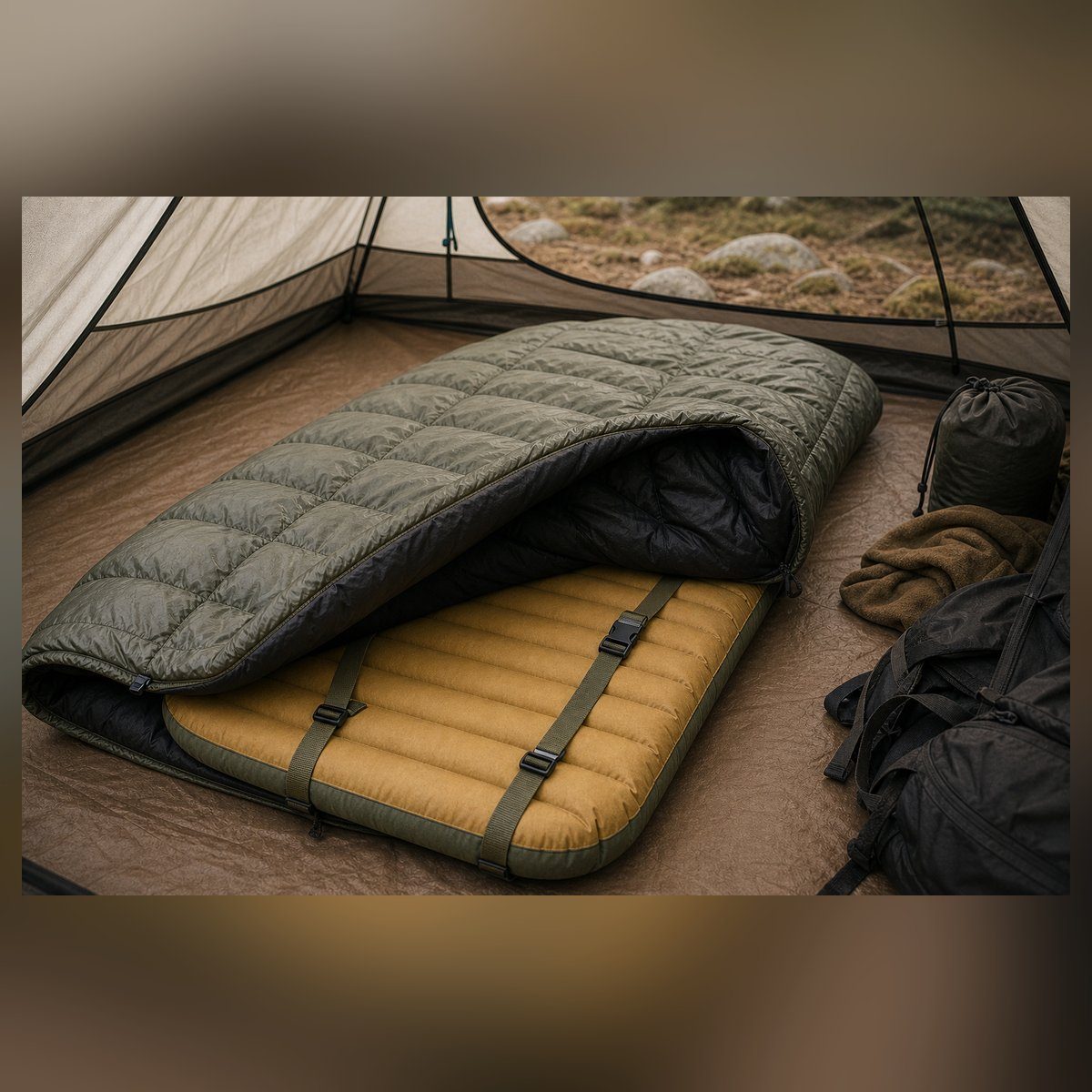
Choose a backpacking quilt if you sleep warm or average, care about packed weight, move around at night, and already own a pad warm enough for the conditions. A quilt can be excellent, but it works as a system, not as a standalone blanket.
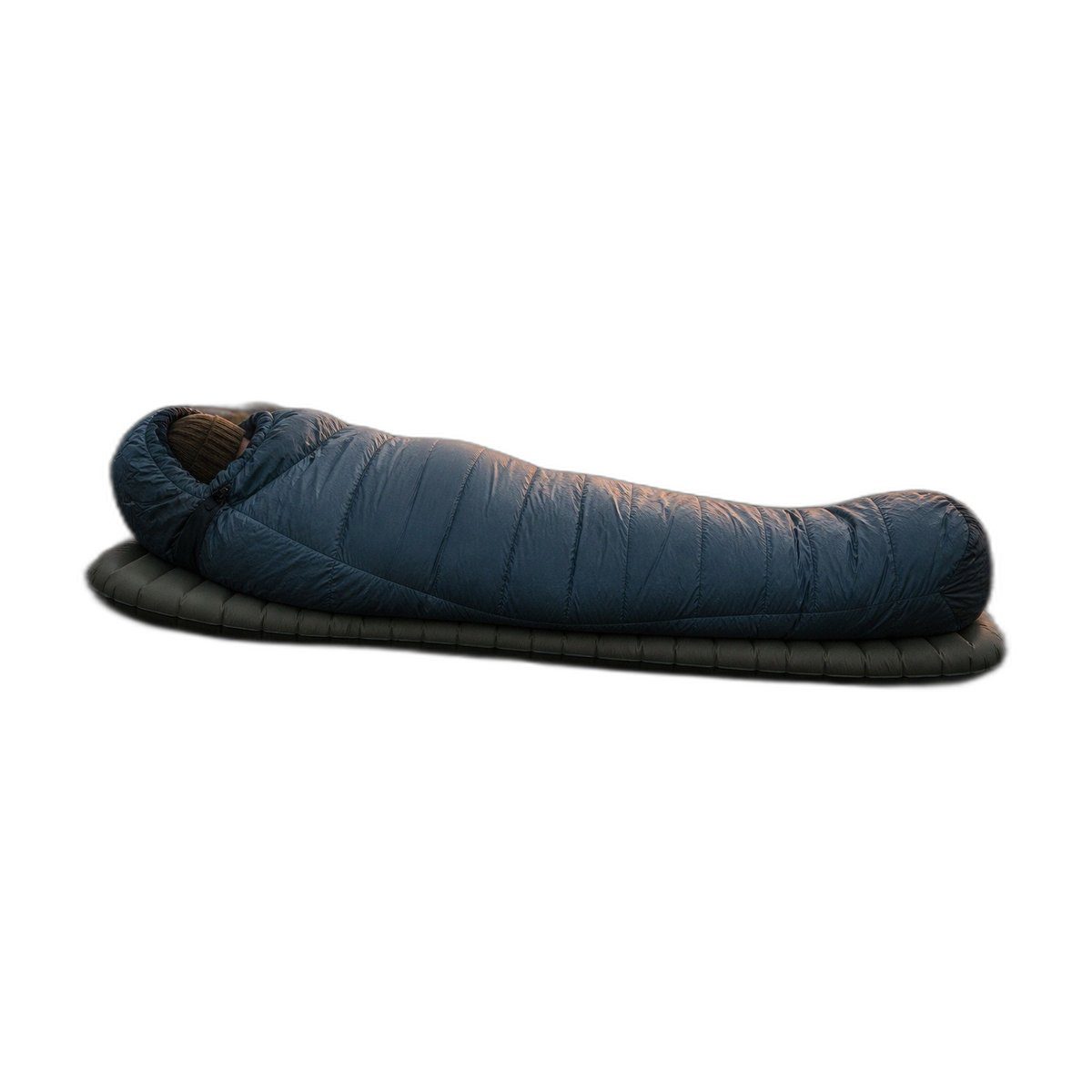
Choose a hoodless sleeping bag if the weight claim is your main question. Hoodless bags narrow the gap between bags and quilts because they remove the hood while keeping a wrapped shape. They are not as common as quilts, but they are the important middle option in this decision.
Choose synthetic insulation if vegan ethics, repeated damp conditions, or budget matter more than pack size. Synthetic quilts and bags usually take more space for the warmth, but they solve problems down does not solve as cleanly.
Warmth is about seal, not just rating
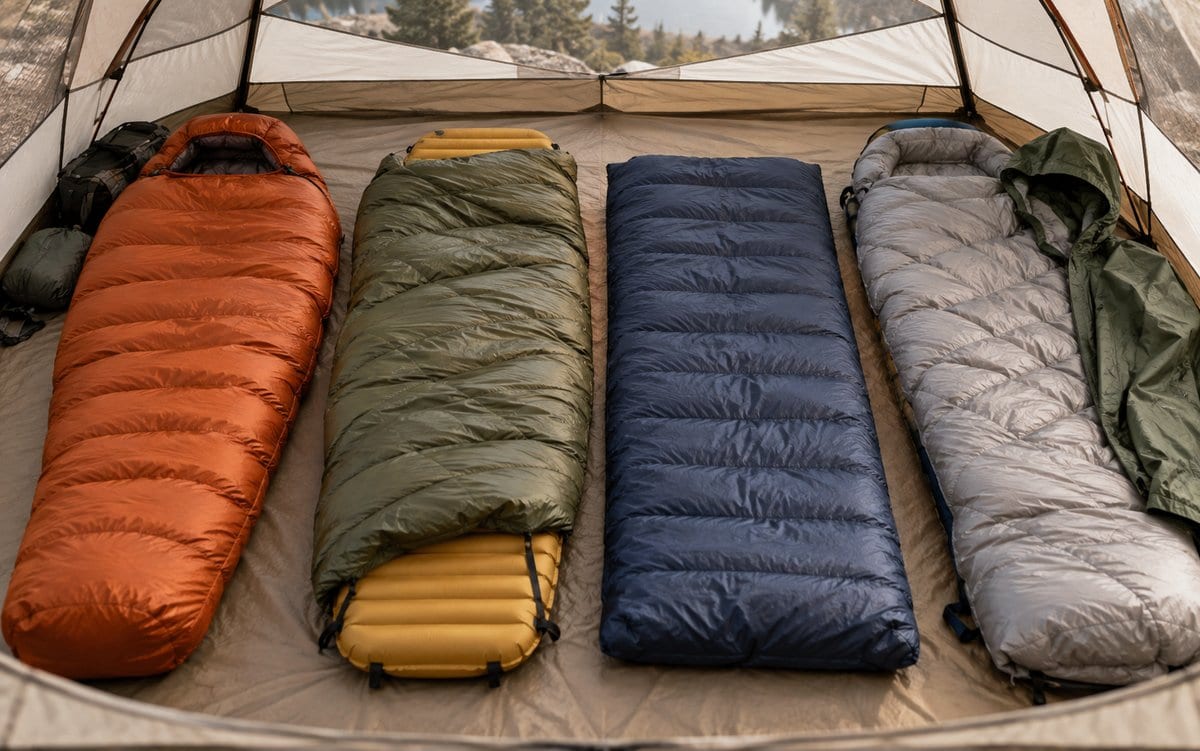
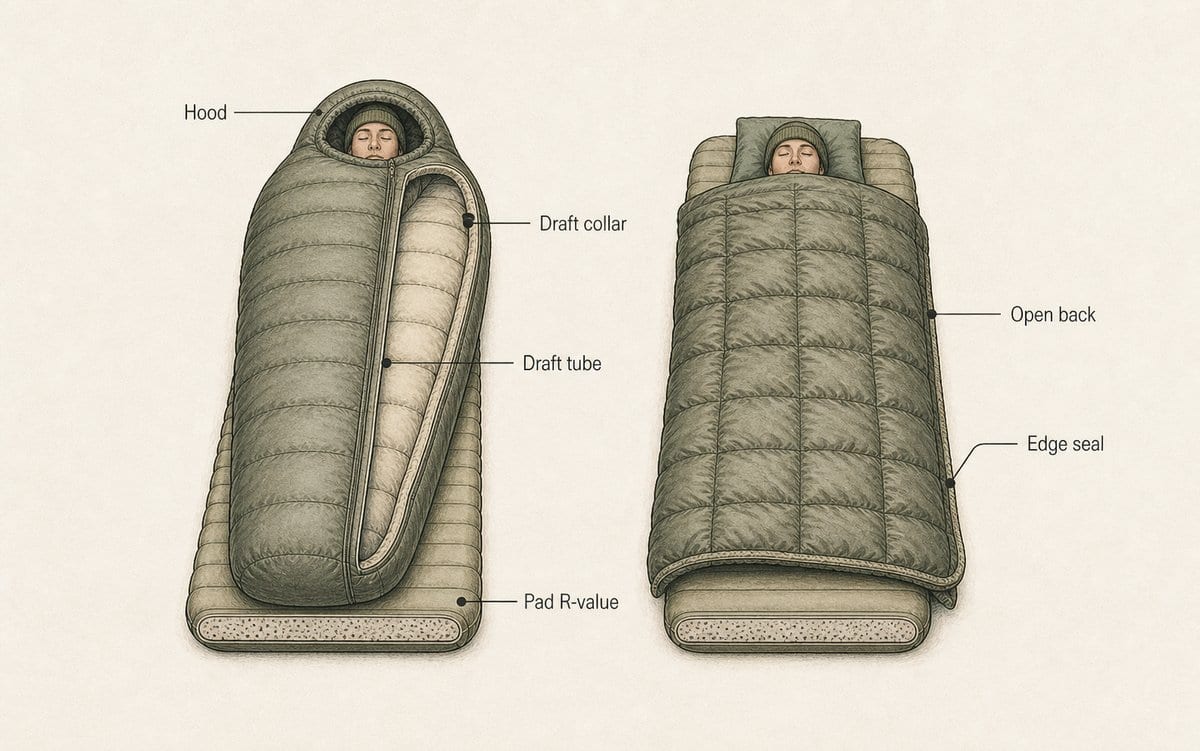
A sleeping bag wraps the body. That is the point. The hood holds heat around your head, the zipper draft tube protects the opening, and the draft collar helps keep warm air from pumping out when you move. For a cold sleeper, that sealed shape is worth real weight.
A quilt removes the insulated underside because insulation under your body is compressed by your weight. That is the efficiency argument. The catch is that the missing back has to be replaced by a warm sleeping pad and a clean edge seal. If the quilt is too narrow, the straps are loose, or the pad is underpowered for the night, cold air finds the gap.
For sleeping bags, use the EN or ISO comfort number when it is available, especially if you sleep cold. Many bag names highlight a lower-limit style number. That can make a bag sound warmer than it feels to a conservative sleeper. Quilts often do not have the same independent rating structure, so sizing, fill amount, pad pairing, and owner evidence matter more.
The weight claim needs context
The simple claim is that quilts are lighter because they remove the hood, zipper structure, and compressed underside insulation. Against many traditional mummy bags, that is a fair starting point.
The better comparison is system weight. A quilt may need a warmer pad, a hat or down hood, pad straps, and sometimes extra width to control drafts. A sleeping bag still needs a pad too, but it is less dependent on the pad edge seal for warmth.
This is where hoodless sleeping bags matter. Once the bag has no hood, the quilt advantage gets narrower. A quilt can still win for ventilation, movement, and customization, but it should not be sold as automatically lighter in every fair comparison.
Sleep style changes the answer
Side sleepers and restless sleepers are the strongest quilt audience. A quilt lets you roll under the insulation instead of fighting a narrow mummy shape. It also vents better on warm nights, which helps hikers who sleep hot or move between shoulder-season and summer trips.
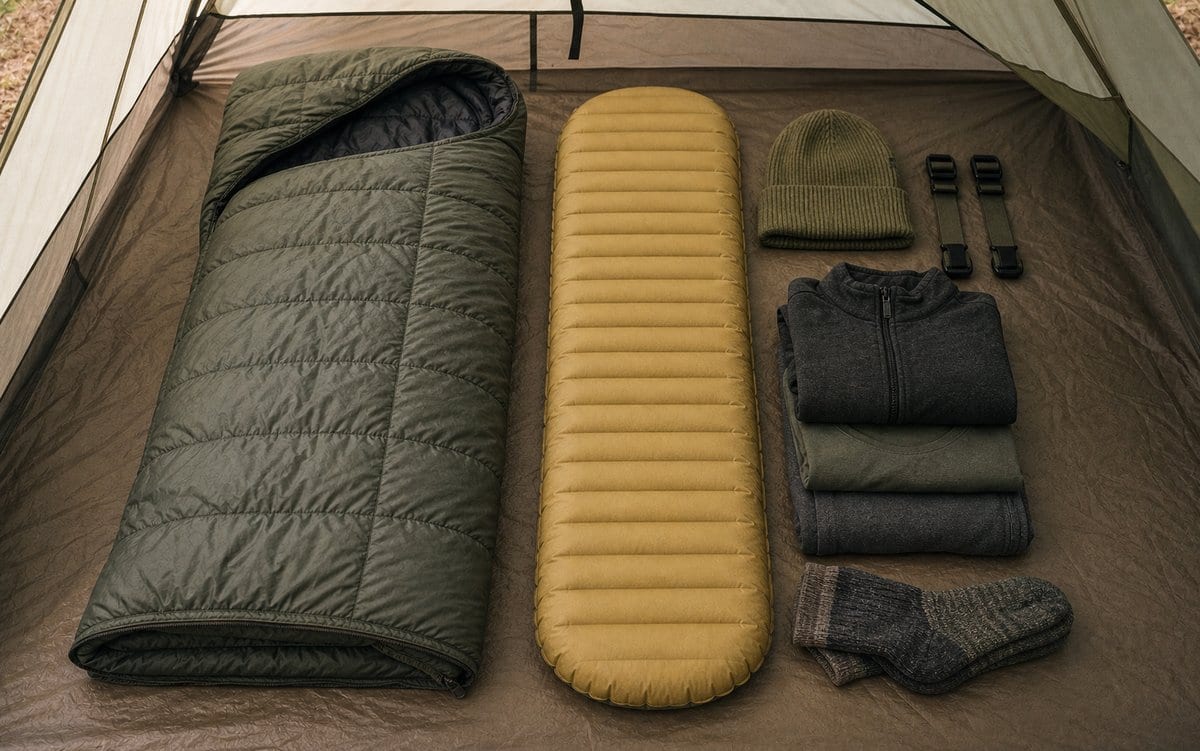
Cold sleepers should be more careful. A cold sleeper trying to buy one safe system should start with a conservative bag, or choose a quilt wider and warmer than the marketing number suggests. Add enough pad R-value and real head insulation before trusting the system in cold weather.
Bigger hikers and broad-shouldered sleepers should treat width as a warmth feature, not a comfort luxury. A narrow quilt can look efficient on paper and feel drafty in a tent. A narrow mummy bag can compress loft or leave too much dead air in the wrong places. Fit is part of warmth.
The pad is part of the quilt
Both systems need a sleeping pad. A bag is not magic underneath you. The pad still provides the insulation between your body and the ground.
A quilt makes the pad more important because the pad is also part of the seal. The quilt edges tuck, clip, or strap around the pad. When that works, the system is warm for its weight. When it does not, every roll can open a cold channel.
If you are new to backpacking, practice the strap setup before the first cold trip. If the whole appeal of camping is dropping into bed without thinking, that is a point for a sleeping bag.
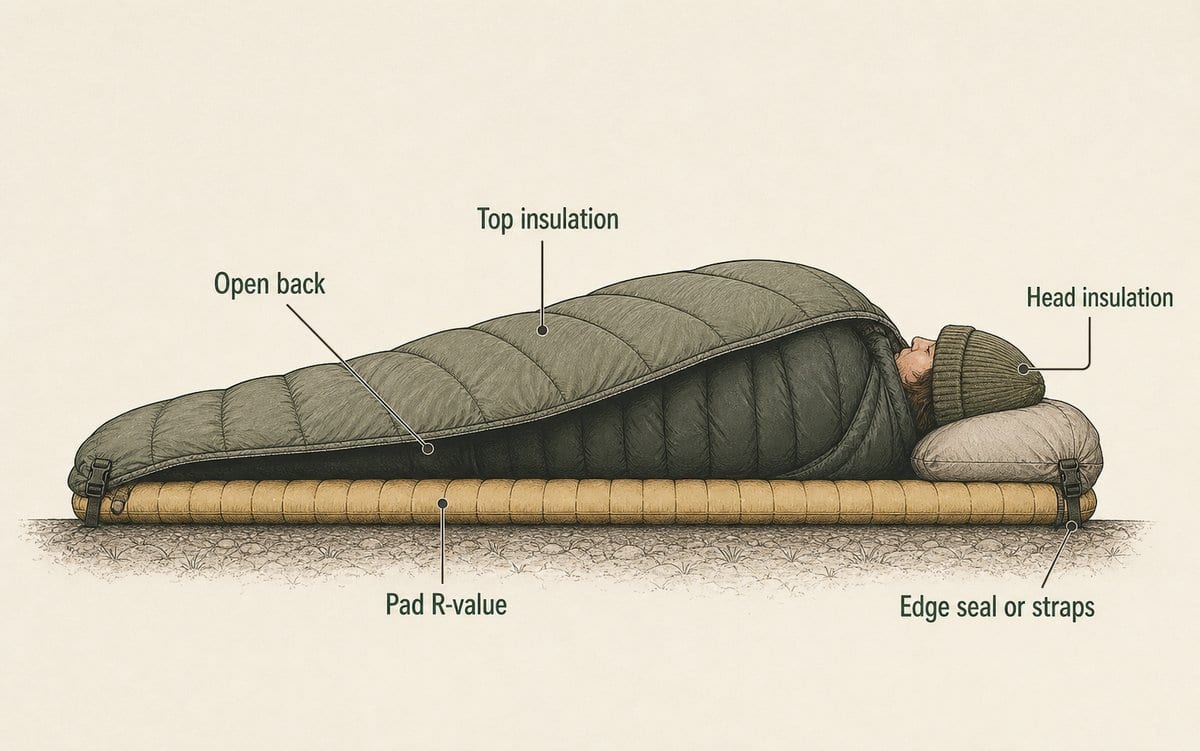
Down, synthetic, and vegan choices
Down is still the lighter and more compressible insulation for most backpacking sleep systems. If you are hiking mostly dry three-season routes and want the smallest packed size, down is usually the efficient answer.
Synthetic insulation has its own lane. It fits vegan buyers, tighter budgets, and trips where repeated damp exposure is part of the plan. The tradeoff is bulk and weight for the same warmth.
Do not frame this as good versus bad insulation. Frame it as risk management. Down rewards careful storage and dry camps. Synthetic gives up efficiency to reduce the penalty when moisture keeps showing up.
Care and construction clues
Durability should not decide this category by itself, but it should change how careful you are with the system. Down needs dry storage, gentle washing, and time to loft before a trip. Synthetic usually handles repeated dampness with less drama, but it still loses performance when it is dirty, crushed, or stored compressed for long stretches.
Baffles, shell fabric, and stitching are useful vocabulary, not proof that one model will last longer than another. Baffles shape the insulation so it stays where warmth is needed. Lighter shell fabrics can save weight, but they also ask for more care around grit, sharp gear, and repeated stuffing. Without product-specific evidence, treat construction details as clues to handling and warmth distribution, not lifespan promises.
Who should choose what
Pick a hooded sleeping bag if you sleep cold, want one safe answer, camp close to the rating floor, or do not want to manage straps.
Pick a backpacking quilt if you sleep warm or average, move around at night, want more ventilation, own a strong pad, and are willing to manage the edge seal.
Pick a hoodless sleeping bag if you want some quilt-like weight savings and room, but you do not want a fully open-backed system.
Pick synthetic if vegan ethics, wet climates, or cost matter more than the smallest packed size.
If you already know you want a quilt, the next step is a dedicated quilt buying guide. If you are still nervous about drafts or cold nights, stay with a bag until your pad, clothing, and campsite habits are dialed.
Gear spotlights
What we’re recommending
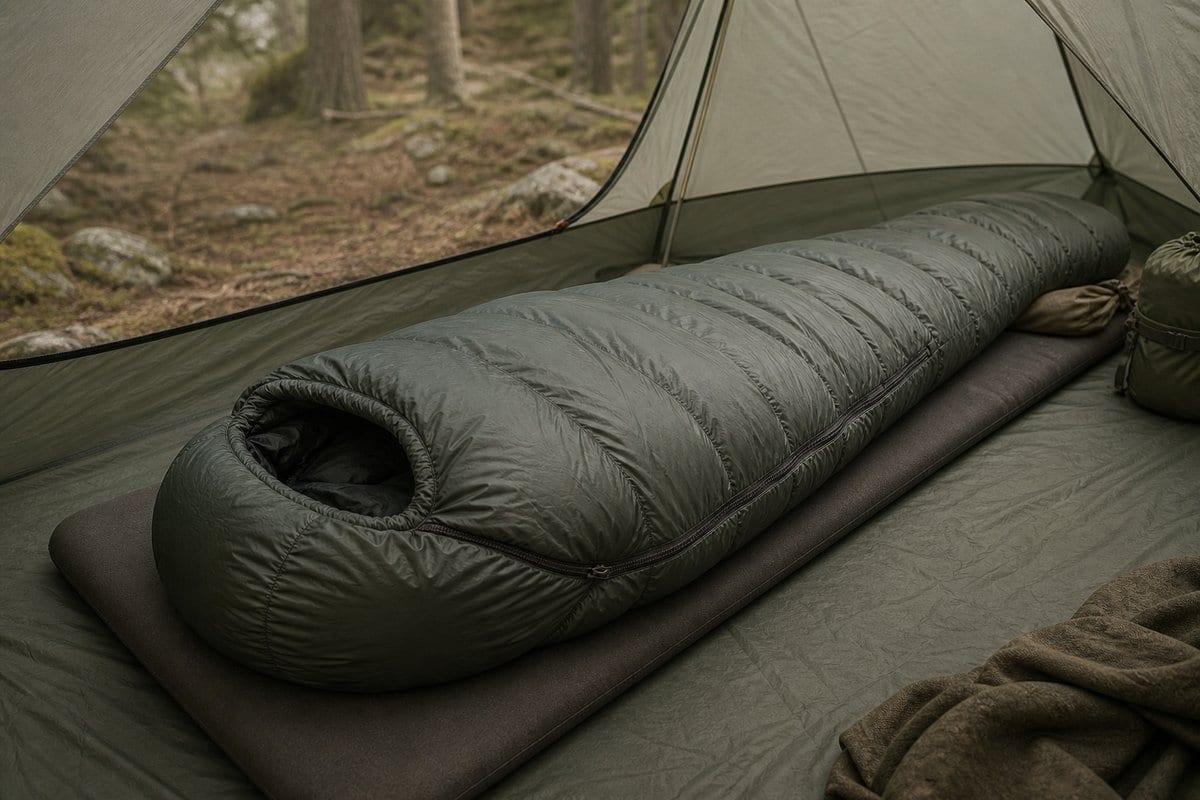
Safest cold-sleeper choice
Best for cold sleepers and beginners
Hooded mummy sleeping bag
The most sealed, low-fiddle option. Choose this when the trip may push the rating, when you want an integrated hood, or when a simple sleep setup matters more than saving a few ounces.
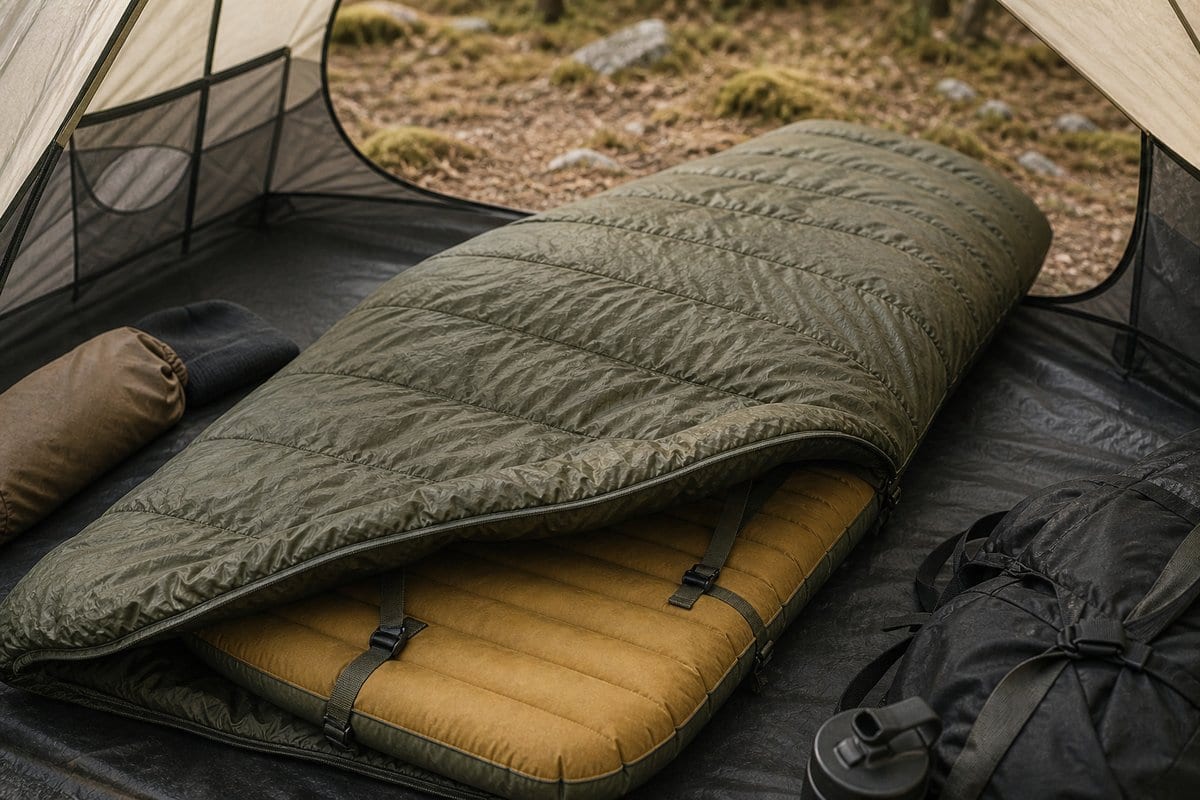
Best for weight and movement
Best for warm or average sleepers
Backpacking quilt
The flexible choice for hikers who sleep on their side, move around, want warm-weather ventilation, and already have the pad warmth and setup skill to control drafts.
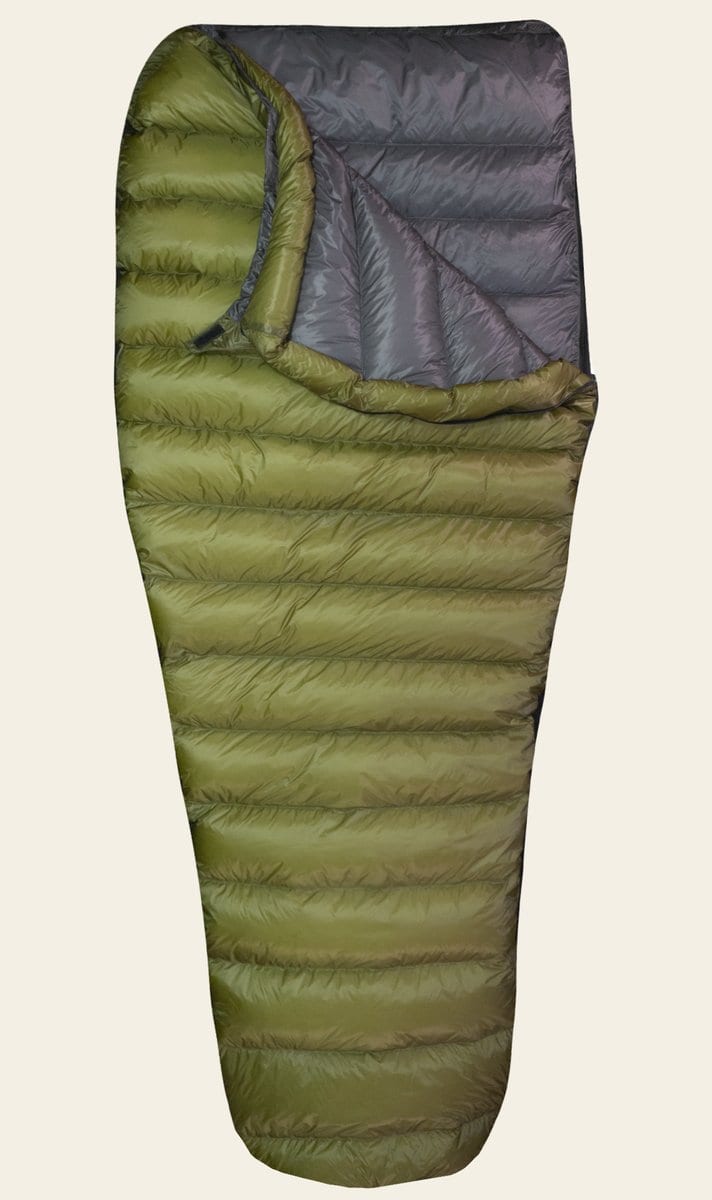
Best middle ground
Best for weight skeptics
Hoodless sleeping bag
A useful compromise when you want to question the quilt weight advantage fairly. It removes hood weight but keeps a more wrapped shape than a quilt.
Best for vegan or damp trips
Best for ethics and wet conditions
Synthetic quilt or synthetic bag
The right lane when down is not acceptable, budget is tighter, or damp weather is expected often enough that moisture tolerance beats packed size.
Get one honest gear take every Friday.
One email a week: new reviews, one gear pick with my reasoning, and nothing sponsored. Confirm your address and you get my printable 2-page backpacking gear checklist.
You'll get a confirmation link first, and nothing else arrives until you click it. Every email has a one-click unsubscribe. How your email is handled
Why trust BestForBackpacking
Honest gear advice for backpackers, researched, weighed, and recommended.
Every pick is based on deep research: a synthesis of long-term owner reports, independent reviewer tests, and manufacturer specs, weighted by source independence, specificity, and use-case match. Brooke Wilder is our gear editor, the editorial persona who turns that research into a clear recommendation.