
Retailer links on this page are affiliate links. We may earn a commission if you buy, and your price doesn't change. How affiliate links work →
Backpacks
Osprey Atmos AG 65 Review: Who It's Right For (and Who Should Look Elsewhere)
Last updated:
The Atmos AG 65 is the cool-back pack for 30 to 40 lb loads, at 4.6 lb. Buy it for warm, conventional trips; skip it for ultralight kits or loads above 50 lb.
SectionHiker says the Atmos AG 65's hipbelt has been called the "jaws of life", and I can't stop thinking about that nickname. It's a compliment. It's also a warning.
My call, once. Buy it if you carry 30 to 40 lb in warm weather and a sweaty back is your biggest complaint about backpacking. Skip it if your kit is ultralight, or if you routinely carry more than 40 lb, where OutdoorGearLab found it stops being supportive. I give it 8.8 out of 10.
 By Brooke5 min read
Share this post
Send it to someone who's planning a trip.
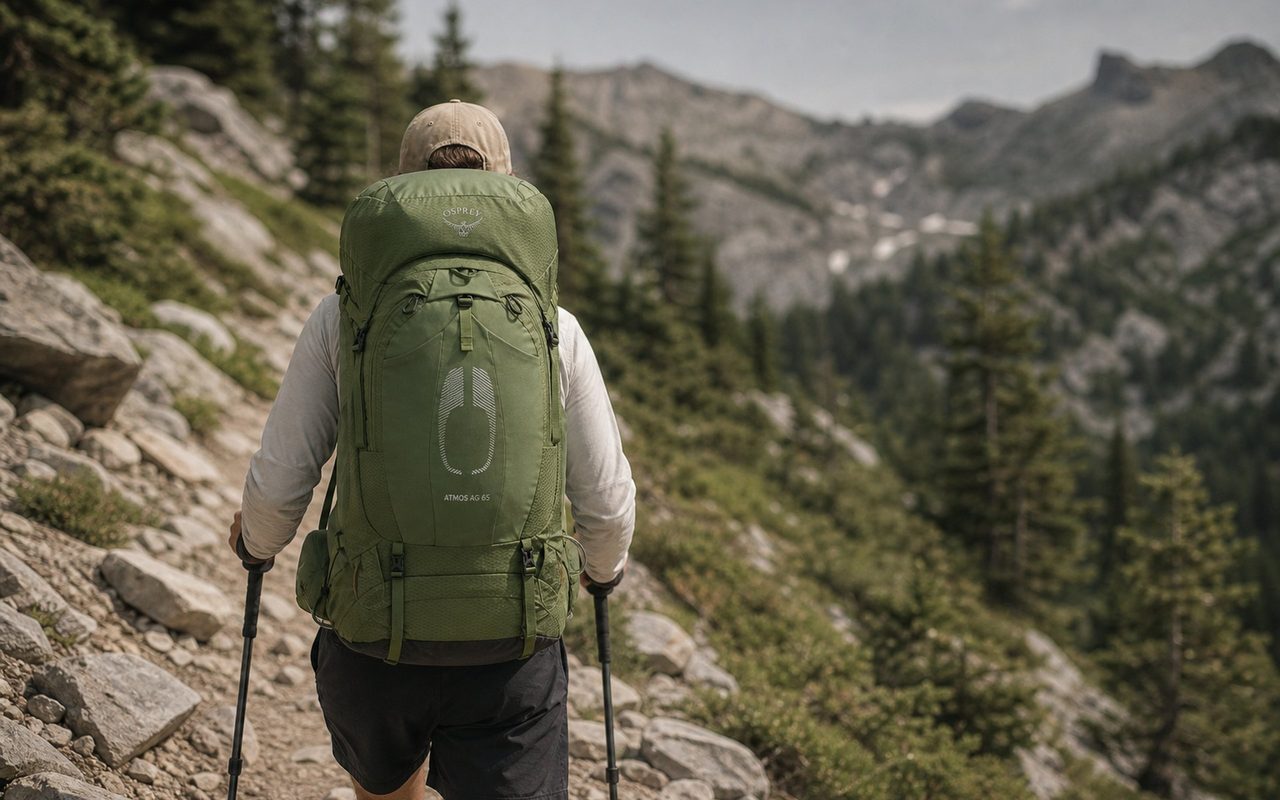
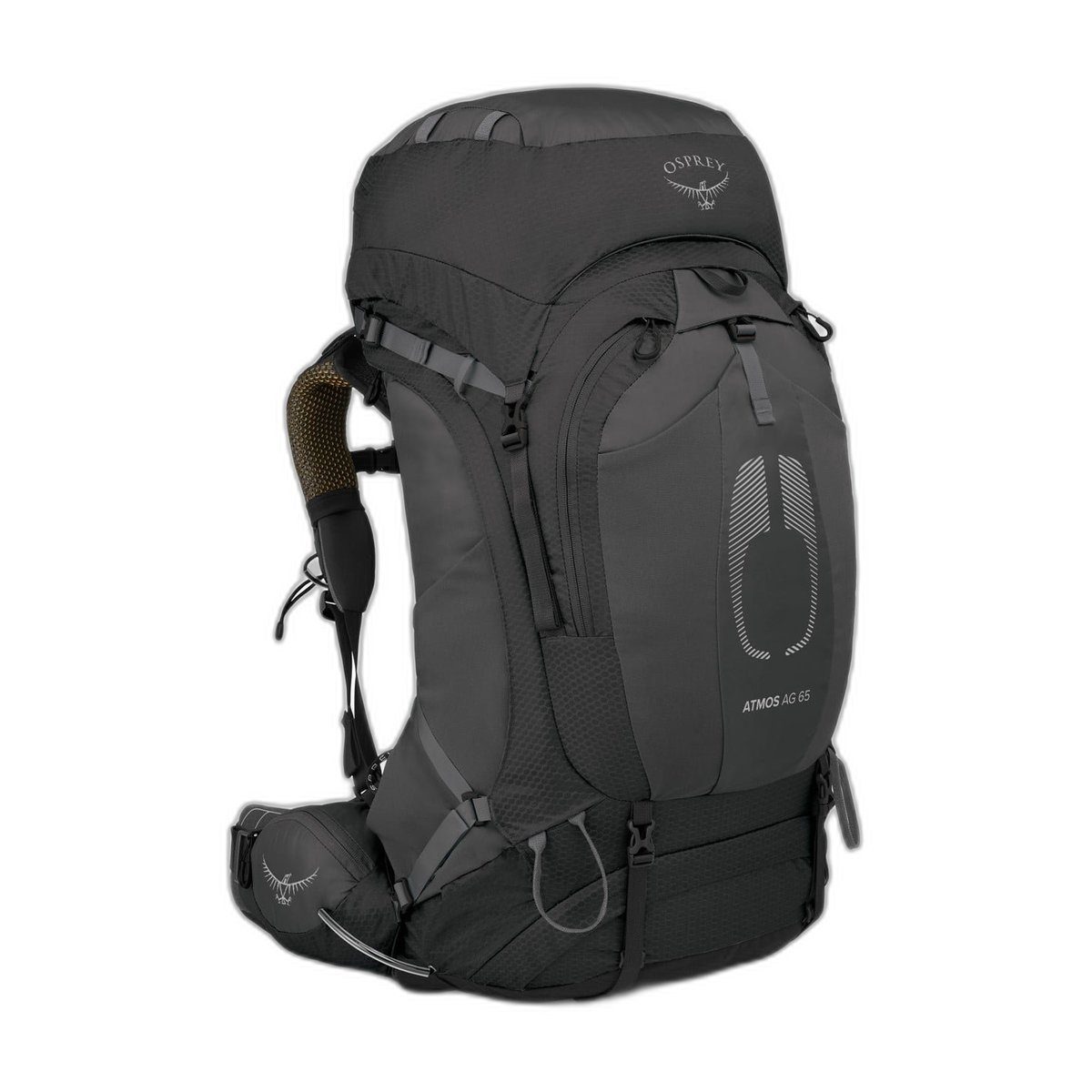
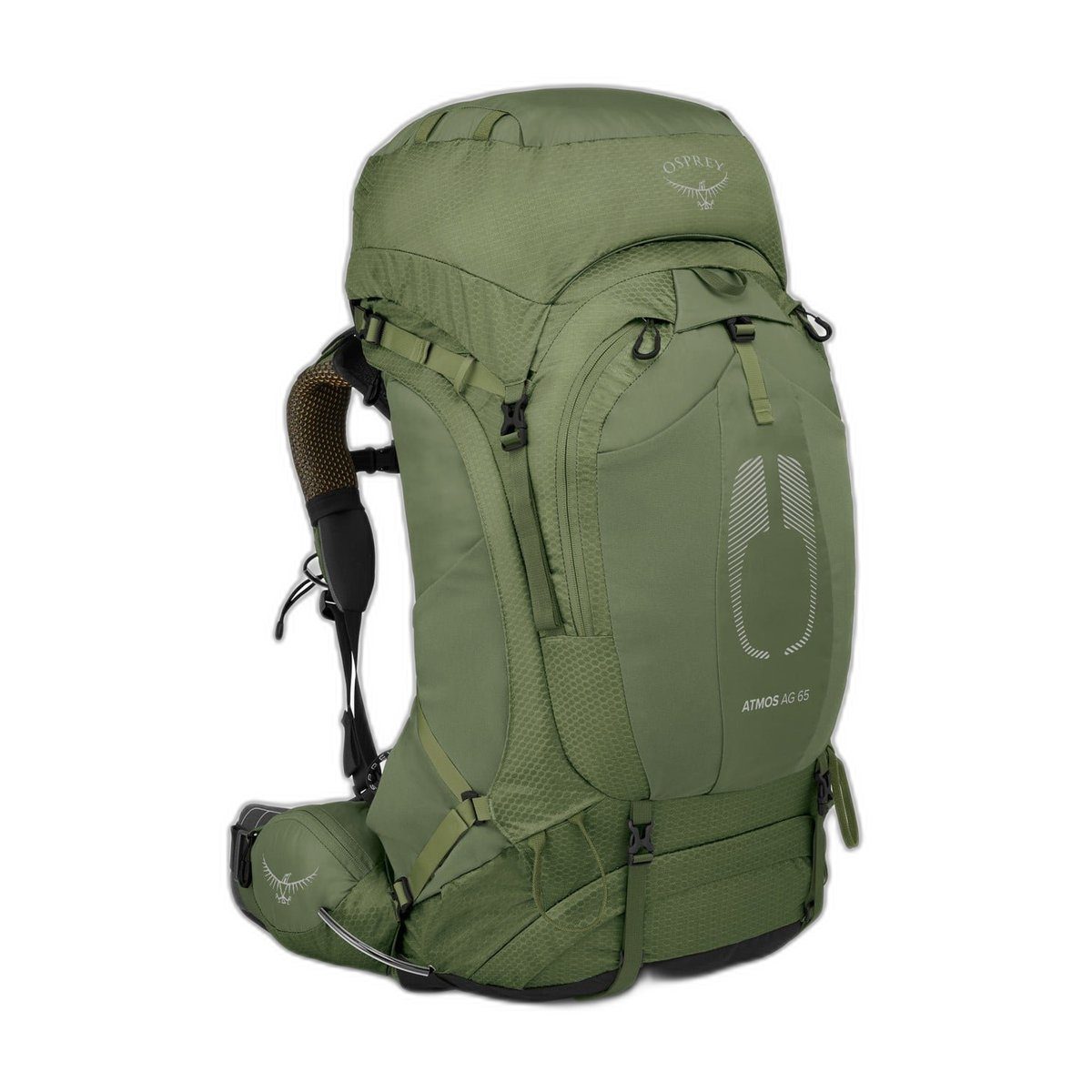
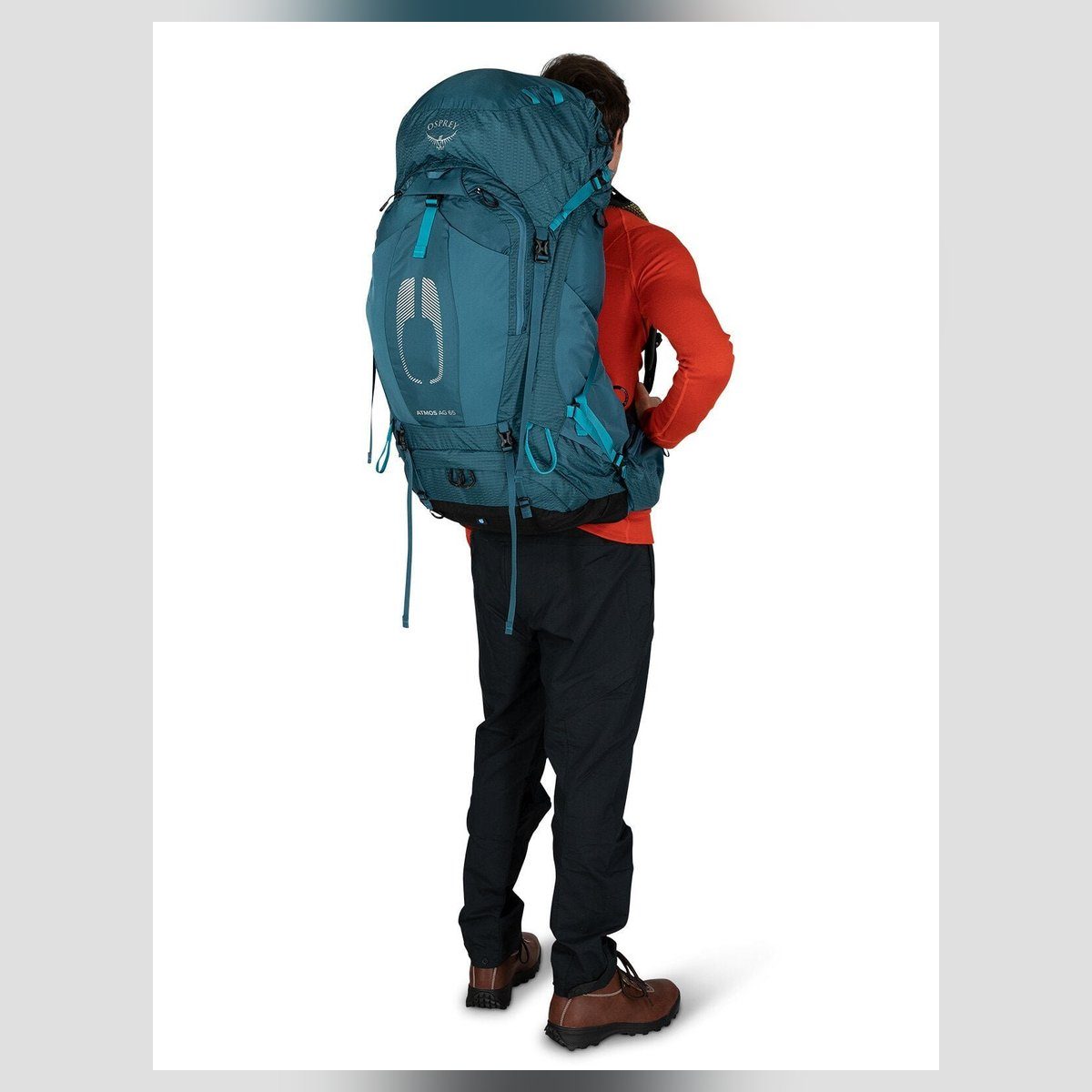
What does Anti-Gravity actually do?
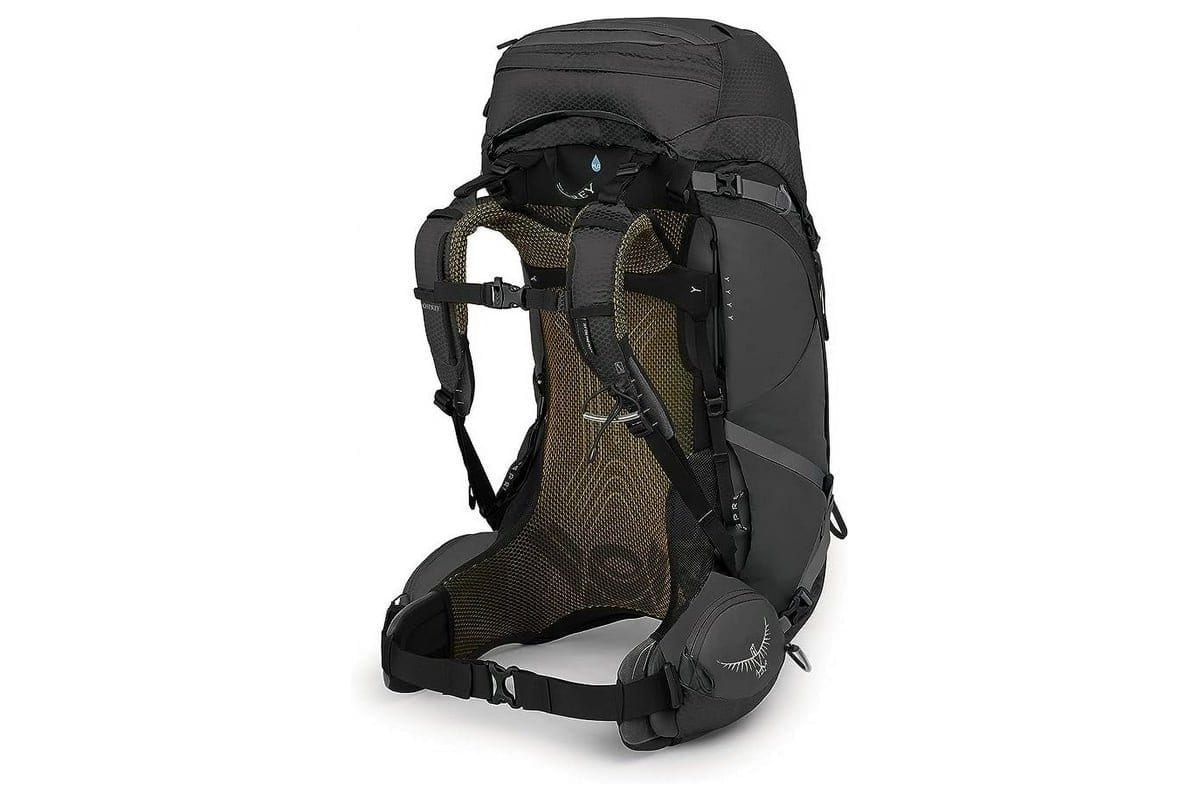
It's a tensioned mesh that runs from the shoulder straps, down your back and into the hipbelt in one continuous piece. SectionHiker says the Atmos changed backpacking when it first came out, as the first suspended-mesh system to marry those three parts. Your back rests on the mesh, not on foam, and air moves through the gap behind it.
Does it work? OutdoorGearLab calls the back panel exceptionally well-ventilated and an excellent choice for people who get sweaty. SectionHiker calls it the pinnacle of ventilated pack design, and says the hipbelt wraps the hips in a way that's nothing like a loose, independent belt. Hence the jaws.
The trade is that the pack rides a little off your back rather than flush against it. That's what moves the air. It's also why, at rest on a cold evening, the same gap lets cool air against your back where foam wouldn't. I couldn't find a tester who put a temperature on that, so I won't.
Where does it stop working?
Osprey rates it for 30 to 40 lb, and SectionHiker lists the same 40 lb maximum. OutdoorGearLab found it extremely effective at transferring loads up to 40 pounds, and says that above 50 it starts to feel "mushy", as one of its testers put it. It lists "not supportive for loads over 40 pounds" as its main reason to avoid the pack.
So there are really three zones. Up to 40 lb, it's in its element. From 40 to 50, it still works, but the shoulder straps get a bit too cushy, per OutdoorGearLab. Above 50, pick a pack built for heavy loads.
What about very light loads? I couldn't find a test that measured where the mesh stops earning its weight at the low end. What I can say is the arithmetic: at 20 lb total, a 4.6 lb pack is 23% of what you carry. At 35 lb, it's 13%. The lighter your kit, the more of it is pack.
How do you get the fit right?
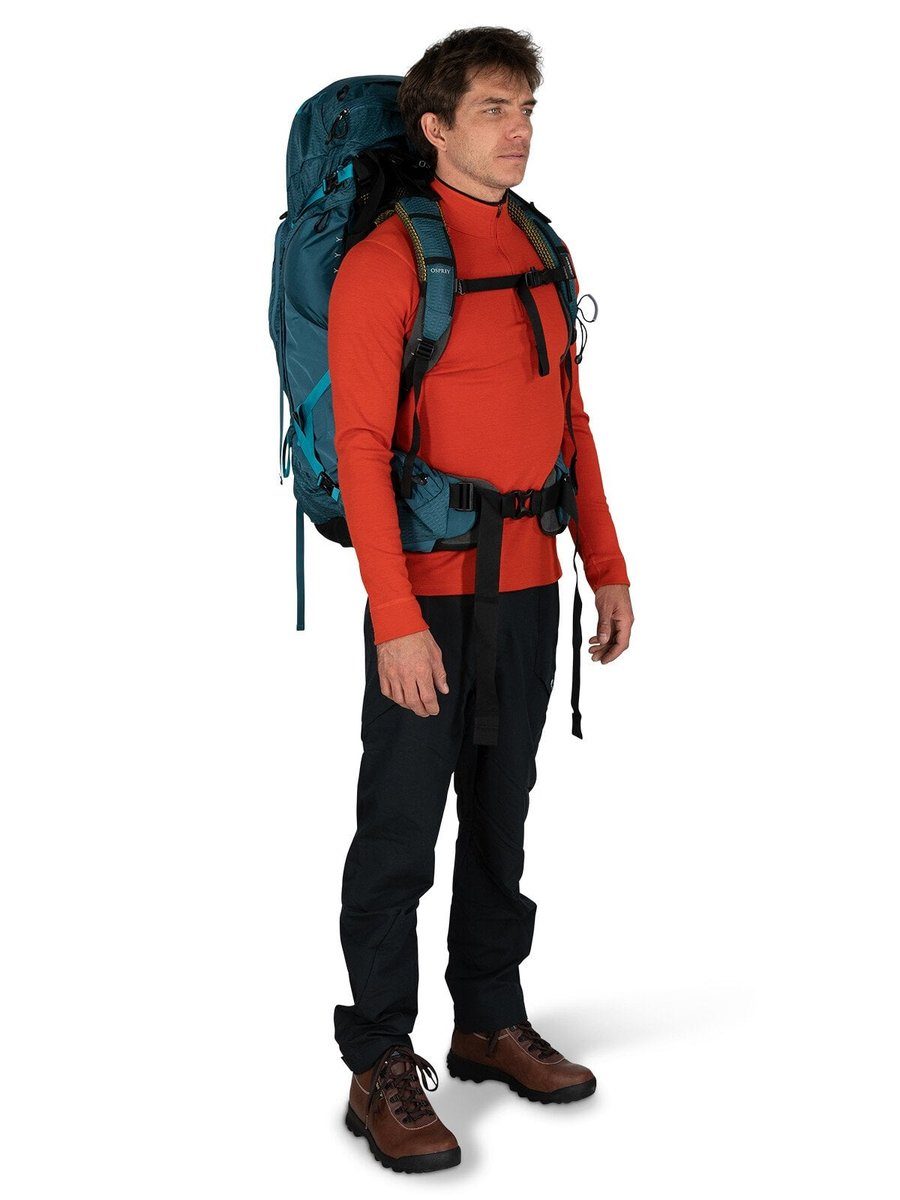
Osprey sells it in two sizes. Its S22 owner's manual gives the torso ranges as 17 to 20.5 in for the S/M and 19.5 to 23 in for the L/XL, and Osprey's product page shows the same. Pick the size whose range your torso sits inside, not at the edge.
Inside that range, the torso adjusts. OutdoorGearLab says the shoulder straps have about four inches of vertical play, and the hipbelt up to six inches of adjustment. SectionHiker explains why the belt adjustment matters: a belt that's too short gives no load transfer to the front of the hip bones, and the Atmos can be lengthened to wrap them properly.
Osprey's own measuring tip is to measure from the C7 vertebra, the bump at the base of your neck, to the top of your hip shelf.
What's it made of, and what's in the box?
SectionHiker lists recycled 210D and 500D high-tenacity nylon with a PFC/PFAS-free DWR. The 210D is the lighter fabric, so treat the Atmos as a trail pack rather than one for dragging up granite chimneys.
The feature count is high. SectionHiker counts 8 pockets plus the main compartment, and 4 ways in: the top, two long side zips and the sleeping-bag hatch. The two side zips don't meet, so it isn't a clamshell. OutdoorGearLab calls the zippered hipbelt pockets some of the biggest in its review, and loves the dual-access bottle pockets, though it notes tall bottles can bump your elbows.
Two small finds I enjoyed. SectionHiker lists a raincover as included. And a BV500 bear canister fits vertically, with other BV sizes horizontally.
Osprey backs it with its All Mighty Guarantee. Read the terms on Osprey's page.
4.6 lb according to whom?
Osprey's spec page lists the S/M at 4.613 lb. SectionHiker lists 4.6 lb, 73.6 oz, for the men's S/M it tested. SwitchbackTravel's figure is 4 lb 9.8 oz, and CleverHiker's is 4 lb 10 oz. Four numbers, all within half an ounce of 74 oz. That's a weight you can trust, and I'll admit a tidy cluster like that makes me happy. It almost never happens.
Is it heavy? Compared with Osprey's own Atmos AG LT 65, which OutdoorGearLab measured at about 4 lb 3 oz, yes, by about 7 oz. Compared with the Gregory Baltoro 65, its closest rival, no: SectionHiker's table lists the Baltoro at 4 lb 14.4 oz, about 5 oz heavier. Gregory's own figure for its smallest size is about 4 lb 12 oz, the number in the chart below. Either way, the Atmos is the lighter of the two.
Against ultralight packs it's in another class. The Gossamer Gear Mariposa 60 is about 33 oz in small with the hipbelt, by Gossamer Gear's figure. Less than half.
Who should buy it?
The Atmos AG 65 is for the three-season hiker with a normal kit, 30 to 40 lb, who wants a cool back and a pocket for everything. Weekenders, thru-hikers with a conventional load, and first-timers who can afford it all fit. Amazon owners agree: 4.7 stars from 425 ratings as of October 16, 2026.
It's not for ultralight hikers, who'd be carrying a quarter of their load as pack. It's not for heavy haulers above 40 to 50 lb, by OutdoorGearLab's testing. And if your torso is outside 17 to 23 in, neither size fits.
One sizing note: the L/XL is 68 L, still sold as the Atmos AG 65. If you're comparing it with other brands' 65 L packs, that's 3 extra liters.
The price band ran $290-370 on October 16, 2026, with Osprey's list price at the top.
Pros
- Anti-Gravity mesh: OutdoorGearLab calls the back panel exceptionally well-ventilated
- Transfers loads up to 40 lb extremely well, per OutdoorGearLab
- 8 pockets and 4 access points, by SectionHiker's count; raincover included
- 4.7 stars from 425 Amazon ratings (2026-10-16)
Cons
- 4.6 lb (73.6 oz) for the S/M, per SectionHiker and Osprey
- Mushy above 50 lb; not supportive above 40, per OutdoorGearLab
- Rides slightly off the back; not a pack for technical scrambling
- Not a clamshell: the two side zips don't meet
Key Specifications
- price
- $290-370 (Oct 16, 2026)
- volume
- 65 L (S/M) / 68 L (L/XL)
- weight
- 4.613 lb S/M (Osprey); 4.6 lb / 73.6 oz (SectionHiker)
- materials
- Recycled 210D and 500D nylon, PFC/PFAS-free DWR
- torso_fit
- S/M 17-20.5 in; L/XL 19.5-23 in (Osprey)
- load_range
- 30-40 lb (Osprey)
If this isn’t your pick
If this isn’t your pick
Here are a few options that might fit better based on what you just read.
Review
Osprey Rook 65 Review: The Budget Pack That Does Most of an Atmos
A budget price, a rain cover in the box and an adjustable torso. OutdoorGearLab calls it a great choice for those starting out.
Read the Osprey Rook 65 Review: The Budget Pack That Does Most of an Atmos review →Review
Osprey Aether 65 Review: 4.9 lb of Load Hauler, and Who Should Skip It
If you carry 40 lb or more, the math flips in your favor: at 60 lb the pack is a twelfth of the load, and reviewers who carried 60 lb reported good control. The 420D nylon and the adjustable harness are built for exactly this.
Read the Osprey Aether 65 Review: 4.9 lb of Load Hauler, and Who Should Skip It review →Review
Gregory Baltoro 65 Review: Heavy Loads, Heavy Pack
Hauling gear for kids or partners means heavy loads toward 50 lb, which is exactly what this pack is built for.
Read the Gregory Baltoro 65 Review: Heavy Loads, Heavy Pack review →Comparison
Osprey Atmos AG 65 vs Atmos AG LT 65 vs Gregory Paragon 60 vs Gossamer Gear Mariposa 60: Best Multi-Day Backpack, Compared
Gregory Paragon 60 wins for the majority multi-day buyer. It pairs the best balance of the four: 56 oz measured weight, a FreeFloat hipbelt that adjusts to a wide range of torsos and waistlines, comfortable carry up to about 45 lb, and the lowest street price band ($280-300) of the three framed finalists. You trade the Atmos trampoline back panel and the Mariposa lighter-kit weight, but neither matters more than a belt that fits when the trail goes long.
See the full comparison →Get one honest gear take every Friday.
One email a week: new reviews, one gear pick with my reasoning, and nothing sponsored. Confirm your address and you get my printable 2-page backpacking gear checklist.
You'll get a confirmation link first, and nothing else arrives until you click it. Every email has a one-click unsubscribe. How your email is handled
More from Backpacks
Osprey Aether 65 Review: 4.9 lb of Load Hauler, and Who Should Skip It
The Aether 65 weighs 4.919 lb by Osprey's figure and is rated to 60 lb. The math on what that costs you at 30 lb is the whole review.
 Brooke Wilder
9 min read
Brooke Wilder
9 min read
Osprey Rook 65 Review: The Budget Pack That Does Most of an Atmos
The Rook 65 is a 3.7 lb budget pack with a mesh back panel and a rain cover in the box. Buy it for 30-40 lb trips; skip it for heavier loads.
Brooke Wilder
8 min read
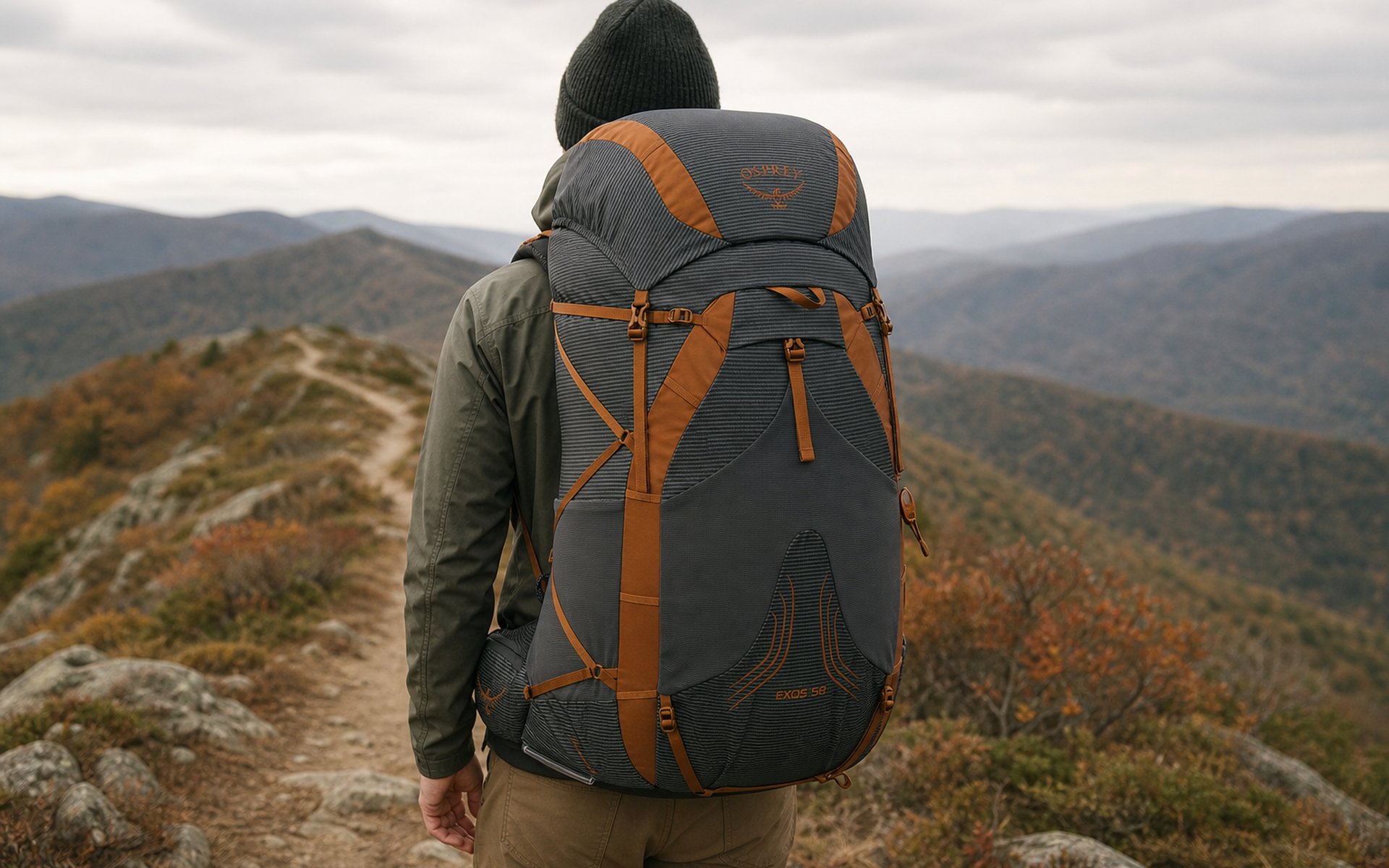
Osprey Exos 58 Review: The 2 lb 13 oz Pack That Carries 35 lb
The Exos 58 is a real frame and a ventilated back at 2 lb 13.4 oz, for 25 to 35 lb loads. Buy it in that window; skip it for ultralight kits or heavy hauls.
Brooke Wilder
9 min read
Why trust BestForBackpacking
Honest gear advice for backpackers, researched, weighed, and recommended.
Every pick is based on deep research: a synthesis of long-term owner reports, independent reviewer tests, and manufacturer specs, weighted by source independence, specificity, and use-case match. Brooke Wilder is our gear editor, the editorial persona who turns that research into a clear recommendation.