
Backpacking Stoves
Jetboil Flash 1.0L Review
Last updated: June 2026
Boils 0.5L in about 120 seconds. The Flash is the buy for weekend backpackers who want hot water fast without fuss. Know the simmer limitation before you buy.
The Jetboil Flash has been the default recommendation for backpackers who want hot water fast without thinking about it. At 13.1 oz and usually in the 139-155 REI price band as checked on June 10, 2026, it earns that reputation: a 120-second boil time per 0.5 liter, a rotary turn-and-click igniter, and a color-changing indicator that removes the one skill requirement of cooking at camp. It is not for everyone. Ultralight hikers will find several ounces of savings in an open canister stove setup. Anyone who needs simmer control will find the valve frustrating. For the backpacker who mainly needs fast, reliable hot water for dehydrated meals and morning coffee, this is the simplest answer in its price class.
 By Brooke7 min read
Share this post
Send it to someone who's planning a trip.
Who the Flash is actually for
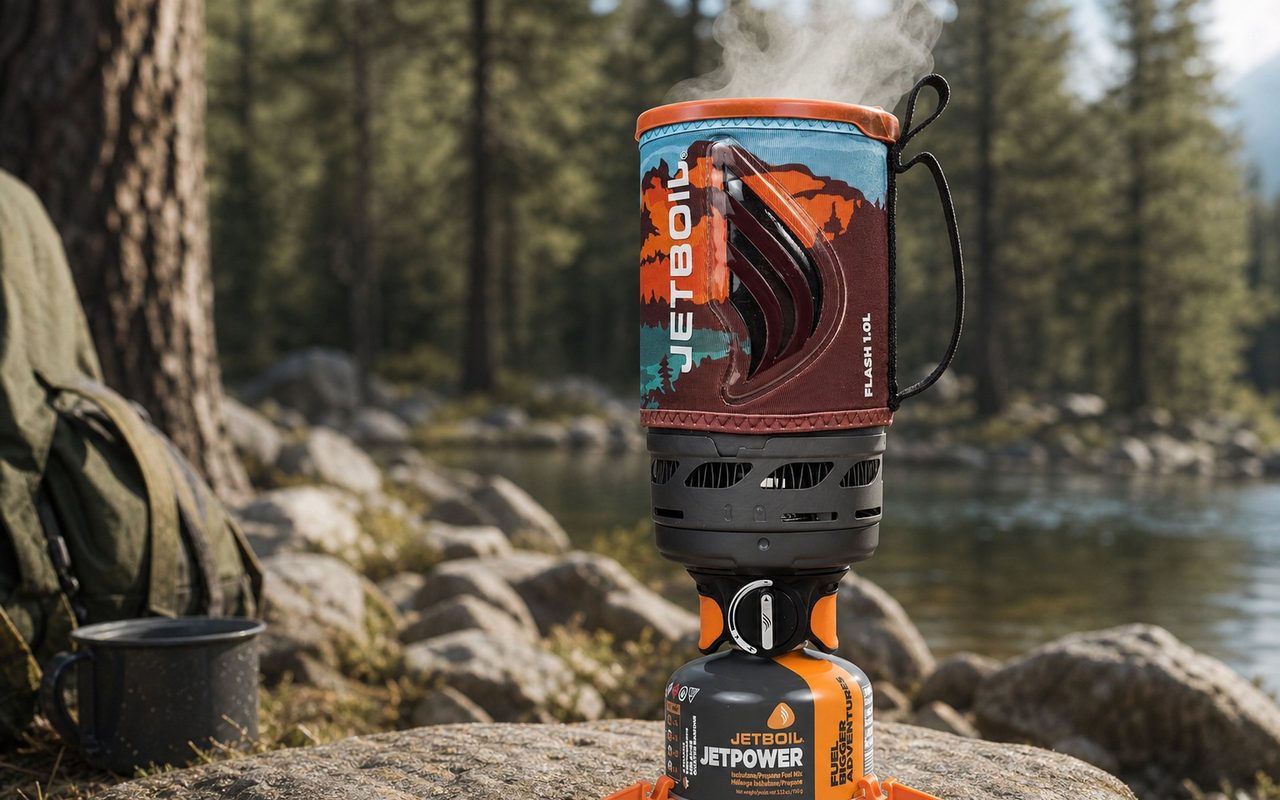
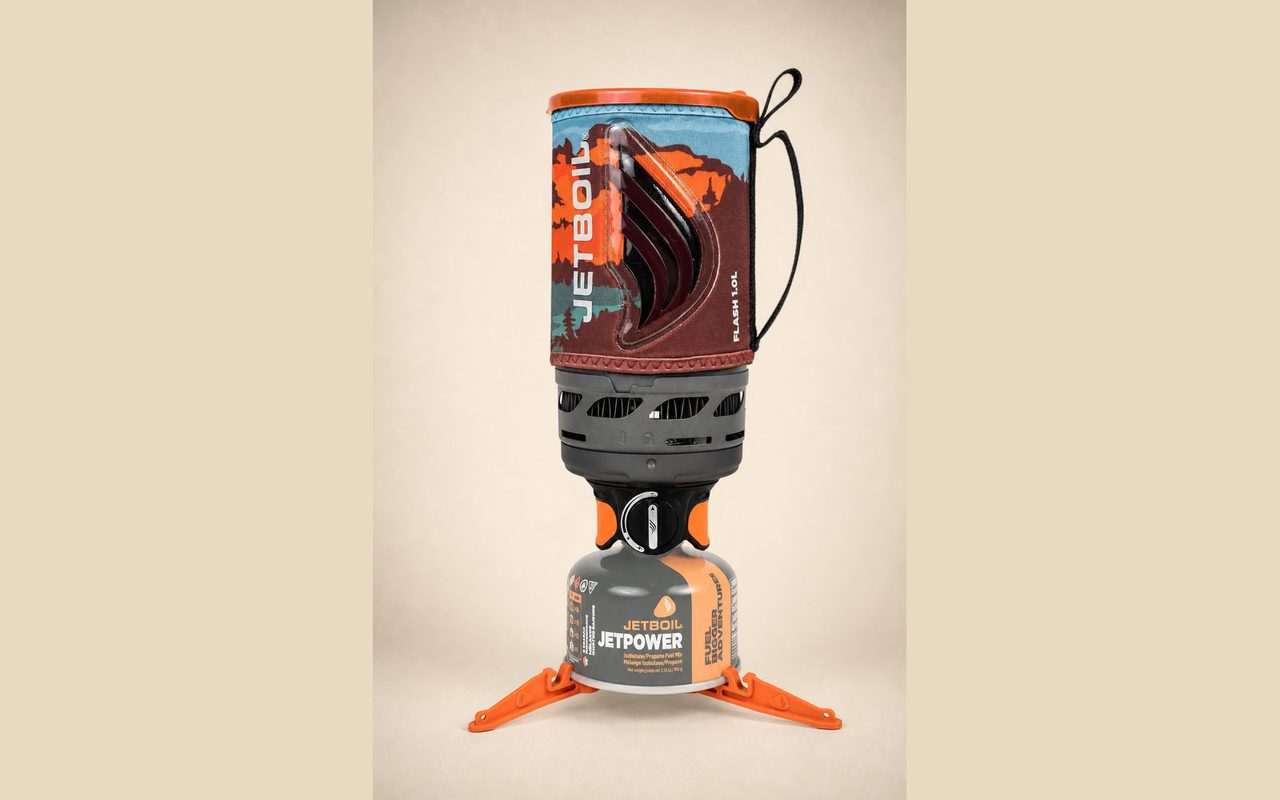
The Flash was built for a specific kind of backpacker: weekend and multi-night hikers who mainly need to boil water for dehydrated meals, coffee, and oatmeal and want a system that works without setup or fuss. Everything nests into the cup before you leave the trailhead. The rotary turn-and-click igniter means no matches to lose. The color-changing indicator means no standing over a pot. It just works.
Beginners benefit from the simplicity directly. There is nothing to learn, nothing to calibrate, and nothing to assemble wrong. If this is your first backpacking stove, the Flash's learning curve is effectively zero.
Car campers who occasionally backpack are a strong fit. The Flash packs small, handles cold starts well, and is reliable enough to use twice a year without relearning how anything works.
Two buyer profiles should look elsewhere. Ultralight thru-hikers who count ounces will find 5 or more ounces of savings in an open canister stove setup: a Soto Windmaster stove at 2.3 oz plus a titanium pot gets you to roughly 5 to 6 oz total versus 13.1 oz for the Flash. That is a meaningful weight difference on a month-long trail. And anyone planning to cook real food that requires simmer control (rice, pasta, anything sauce-based) will find the Flash's valve too coarse for the job.
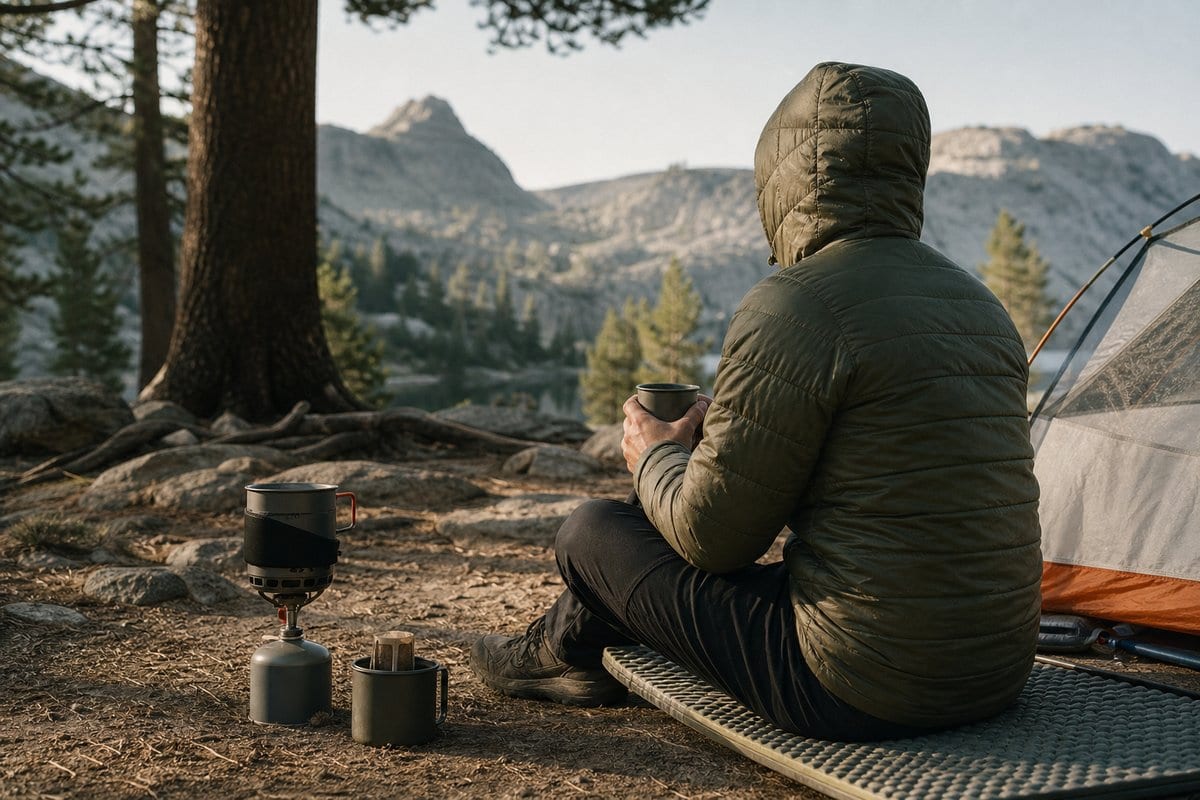
Speed and the FluxRing
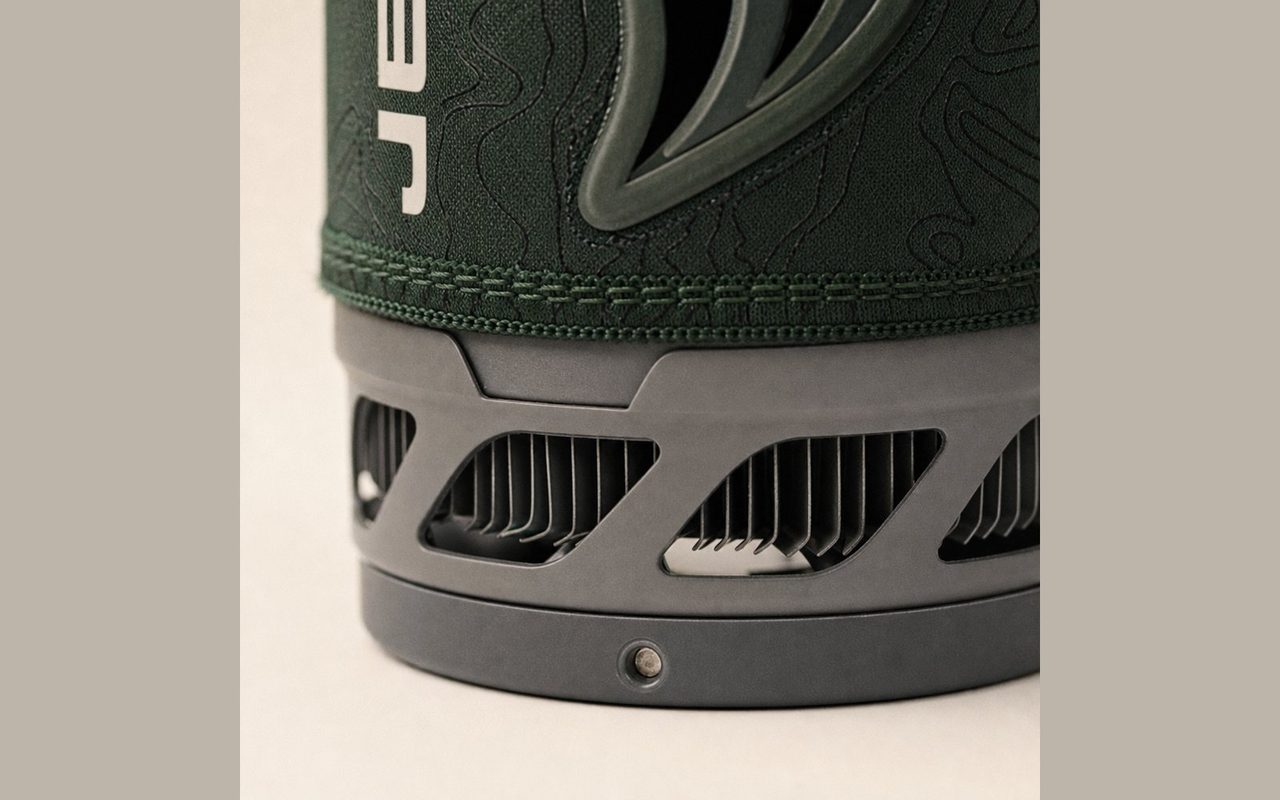
The Flash's boil time advantage comes from the FluxRing, which is a set of radial fins brazed to the bottom of the cup. The fins concentrate heat from the burner across a larger surface area than a standard round pot bottom. Jetboil claims a 30% efficiency gain over a conventional pot-on-stove setup. The practical result: Jetboil lists a 120-second boil time per 0.5 liter, averaged over the life of a JetPower can. That is still fast enough for coffee, oatmeal, and most dehydrated meals without waiting around at camp.
Fuel efficiency is genuinely good: Jetboil lists 10 liters of boiled water per 100g JetPower can. For trip planning, that is the cleaner number to use than counting boils because actual meal volume changes from one pouch or mug to the next.
Performance does degrade in cold and wind. Below 40 degrees F, the butane component of the isobutane/propane mix vaporizes less efficiently, extending boil times. Strong wind without a windscreen can roughly double the time to boil. These are not unique to the Flash but are worth accounting for in trip planning.
Ease of use: what the design gets right
The integrated system's strongest argument is elimination of friction. There is no separate stove head to thread onto a canister, no pot to balance, no valve to find in the dark. The canister clips into the burner, the cup seats onto the burner, the lid goes on. One motion per step.
The color-changing FluxRing heat indicator is the standout feature. A thermochromic coating on the cup's exterior shifts from blue to orange as the water approaches boiling. You light the stove, walk twenty feet to filter water, and when the indicator is fully orange the water is ready. It sounds small. After two days on trail moving camp before sunrise, not watching a pot is not small.
The rotary turn-and-click igniter is the update that makes the stove feel familiar. Open the valve, turn until it clicks, and the burner lights without hunting for matches or a lighter. A match that has been at the bottom of a pack for two days in a wet tent is not a sure thing. The Flash removes that variable.
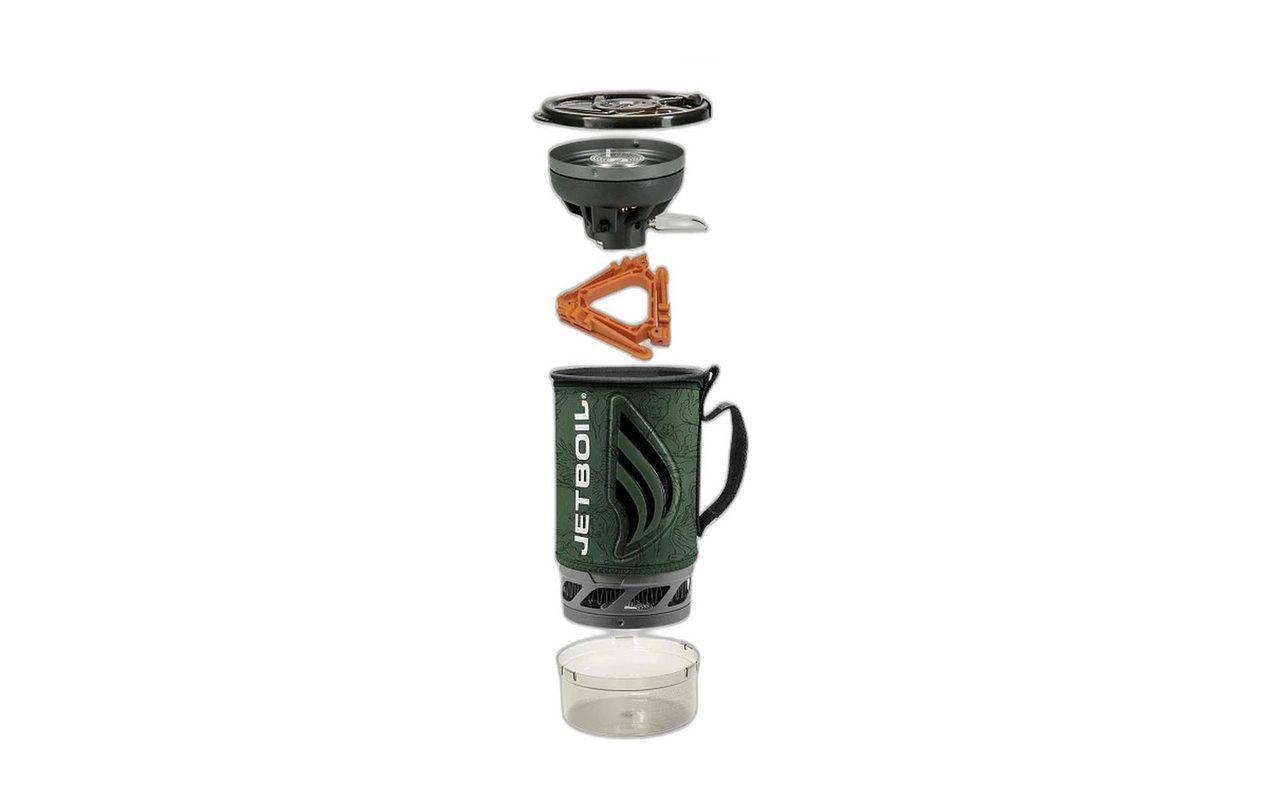
The nesting design also eliminates the loose-parts problem. Lid, measuring cup, canister stabilizer, and pot support tripod all stow inside the cup. Nothing to misplace.
The simmer problem
The Flash can technically simmer. The gas valve has a range. The problem is the sensitivity: there is very little usable range between near-off and full blast. Attempting to cook rice or pasta means constant dial adjustments, and the results are inconsistent. Scorched bottoms at low flame are common in user reports.
This is the most consistent complaint across multi-use reviews. It is also the reason Jetboil makes the MiniMo, which uses a pressure-regulating burner and a wider-mouth pot design to solve this specific problem. The MiniMo usually sits one price step above the Flash and weighs 1.5 oz more. If cooking real backcountry meals is part of your routine, the MiniMo is the right tool.
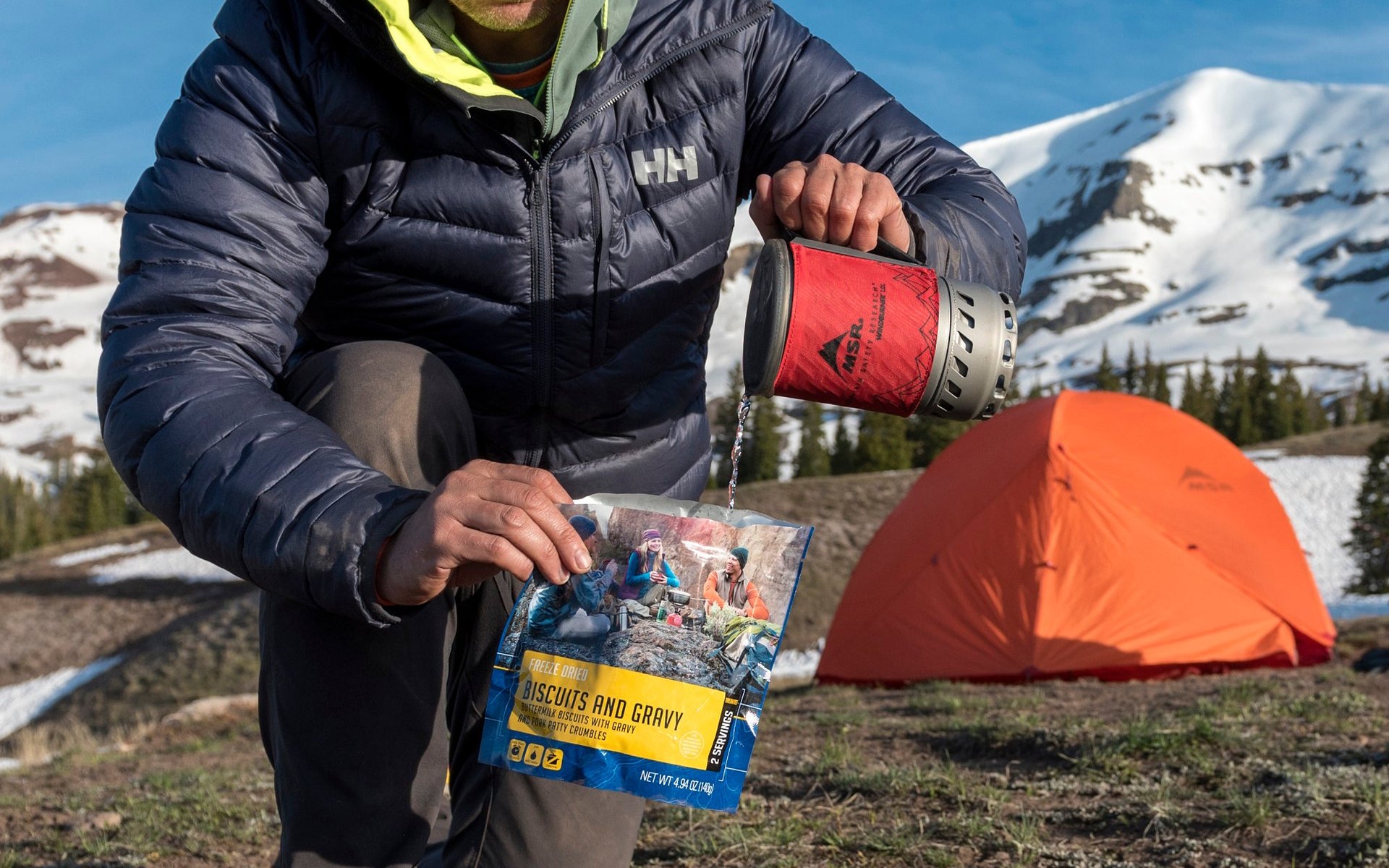
The MSR Windburner Solo is another option: a fully windproof integrated design with a radiant burner that handles simmer better and eliminates the need for a windscreen accessory. It usually sits above the Flash's price band, but it is the better choice for serious 3-season mountain use or cold-weather trips.
For the Flash's actual target buyer, this limitation is irrelevant. Dehydrated meals need boiling water, not a controlled simmer. Coffee needs boiling water. Oatmeal needs boiling water. The Flash does that faster than anything else in its price band.
Weight and the UL trade-off
13.1 oz is the honest liability for UL-focused backpackers. A comparable boiling capability from an open canister stove setup can reach 5 to 6 oz: the Soto Windmaster at 2.3 oz, a 450mL titanium pot at around 2.6 oz, and a windscreen at around 0.5 oz. That is a 7 to 8 oz savings per trip. On a 30-day thru-hike where every ounce adds up over thousands of miles, that gap matters.
For weekend backpackers and multi-night trips where total base weight is 15 to 20 lbs, 7 oz of stove weight is a smaller percentage of the optimization problem. The convenience trade matters more for this buyer. Nothing to assemble on a cold morning, no fumbling with a separate pot and stove head, no risk of dropping the canister threading.
The weight decision is clear if you sort it by trip length and weight philosophy. Short trips where convenience matters: Flash wins. Long trips where grams compound: open canister stove wins. Most backpackers in the middle of that spectrum will not regret the Flash.
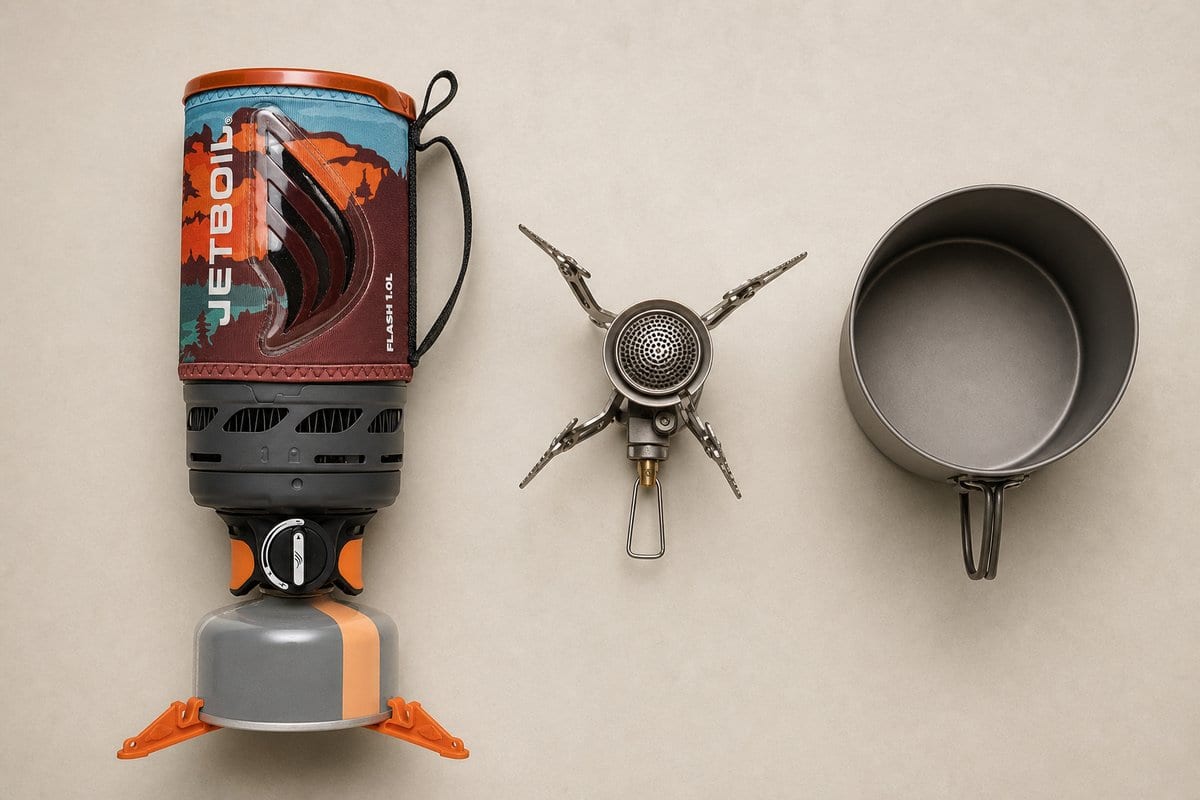
The windscreen: nearly mandatory
The windscreen is an aluminum wrap that blocks wind from disrupting the burner flame. REI's Flash plus windscreen bundle usually lands one small step above the base Flash system. Treat that spread as the cost of buying wind protection up front, not as a separate stove decision.
In calm conditions at summer camp elevations, the windscreen is optional. In shoulder-season trips, above treeline, or anywhere with consistent afternoon wind, it is not optional. Without wind protection, a steady 15 mph wind can double or more the boil time. The fuel efficiency that makes the Flash a good value falls apart in exposed conditions without the windscreen.
If you expect to use the Flash in fall or spring, plan to camp above treeline, or do any exposed ridge travel, start with the bundle. That extra spend is better than burning extra fuel over a longer trip.
For pure summer camping below treeline in calm conditions, the base Flash alone handles the job. Know your terrain before you buy.
Pros
- 120-second boil time per 0.5 liter is fast for an integrated backpacking stove at this price
- Color-changing FluxRing indicator shows when water is ready without guessing or watching the pot
- Rotary turn-and-click igniter works without matches or a lighter
- Everything nests into the cup: canister, stabilizer, measuring cup, and lid all pack as one unit
- Manufacturer fuel-efficiency spec is 10 liters of boiled water per 100g JetPower can
Cons
- 13.1 oz is heavy; a canister stove plus titanium pot runs 8 oz or less for an ultralight setup
- Simmer control is poor; the dial goes from near-off to full blast with little usable range between
- Closed ecosystem: the cup is Jetboil-specific and requires an adapter to use with a generic pot
- Wind and cold degrade performance significantly without the windscreen accessory
- 1.0L cup limits use to one or two servings per boil; groups need multiple cycles or a larger model
Key Specifications
- Volume
- 1.0L
- Weight
- 13.1 oz / 371g (system)
- Ignition
- Rotary turn-and-click
- Boil Time
- 120 sec per 0.5 liter
- Fuel Type
- Isobutane/propane (Jetboil JetPower canisters)
- Water Boiled
- 10 liters per 100g JetPower can
More from Backpacking Stoves
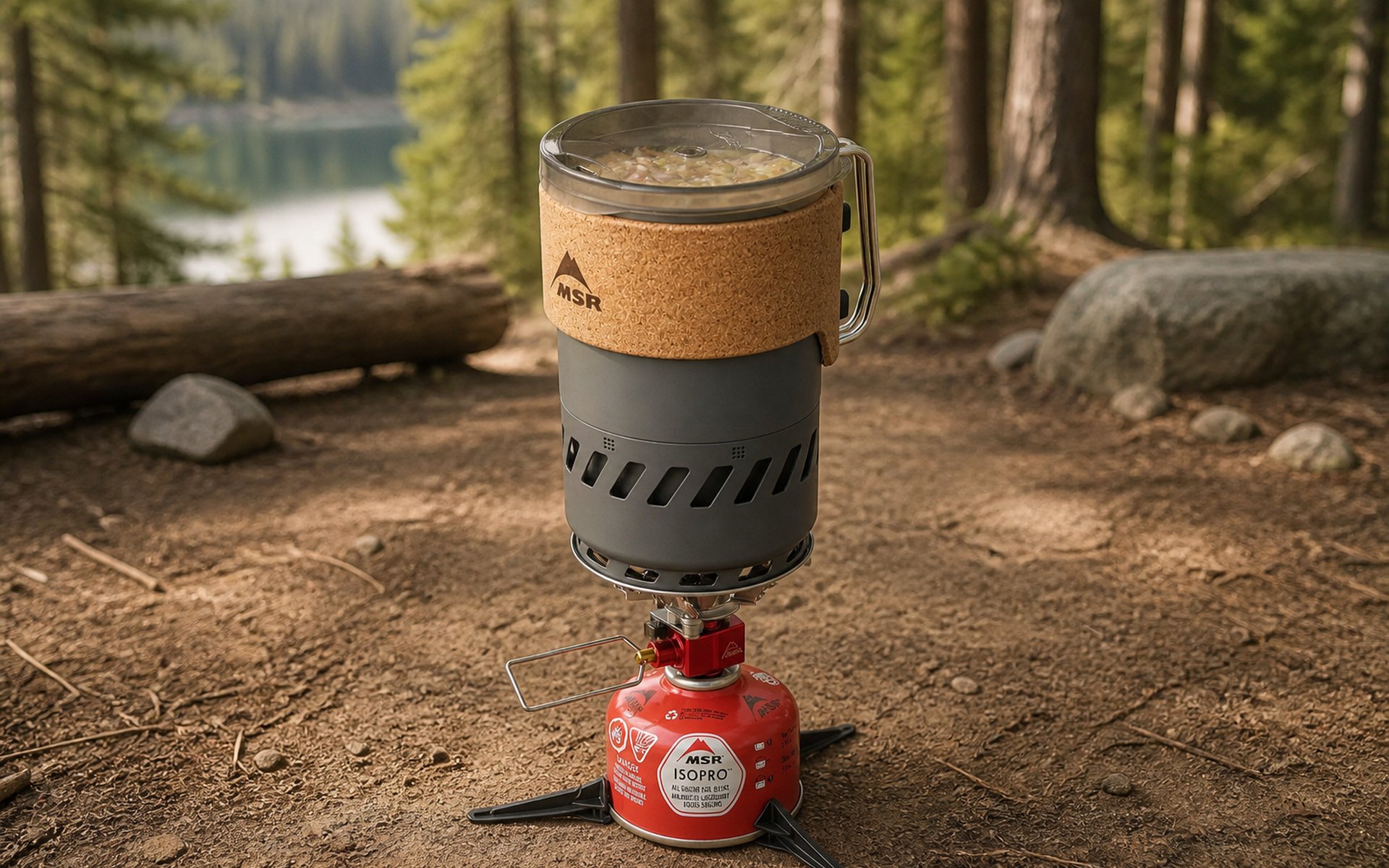
MSR Switch Stove System Review: Worth It for Real Trail Cooking?
The MSR Switch earns its weight with true simmer control and two cookware modes. It is a strong pick for trail cooks, but overkill for boil-only backpackers.
 Brooke Wilder
6 min read
Brooke Wilder
6 min read
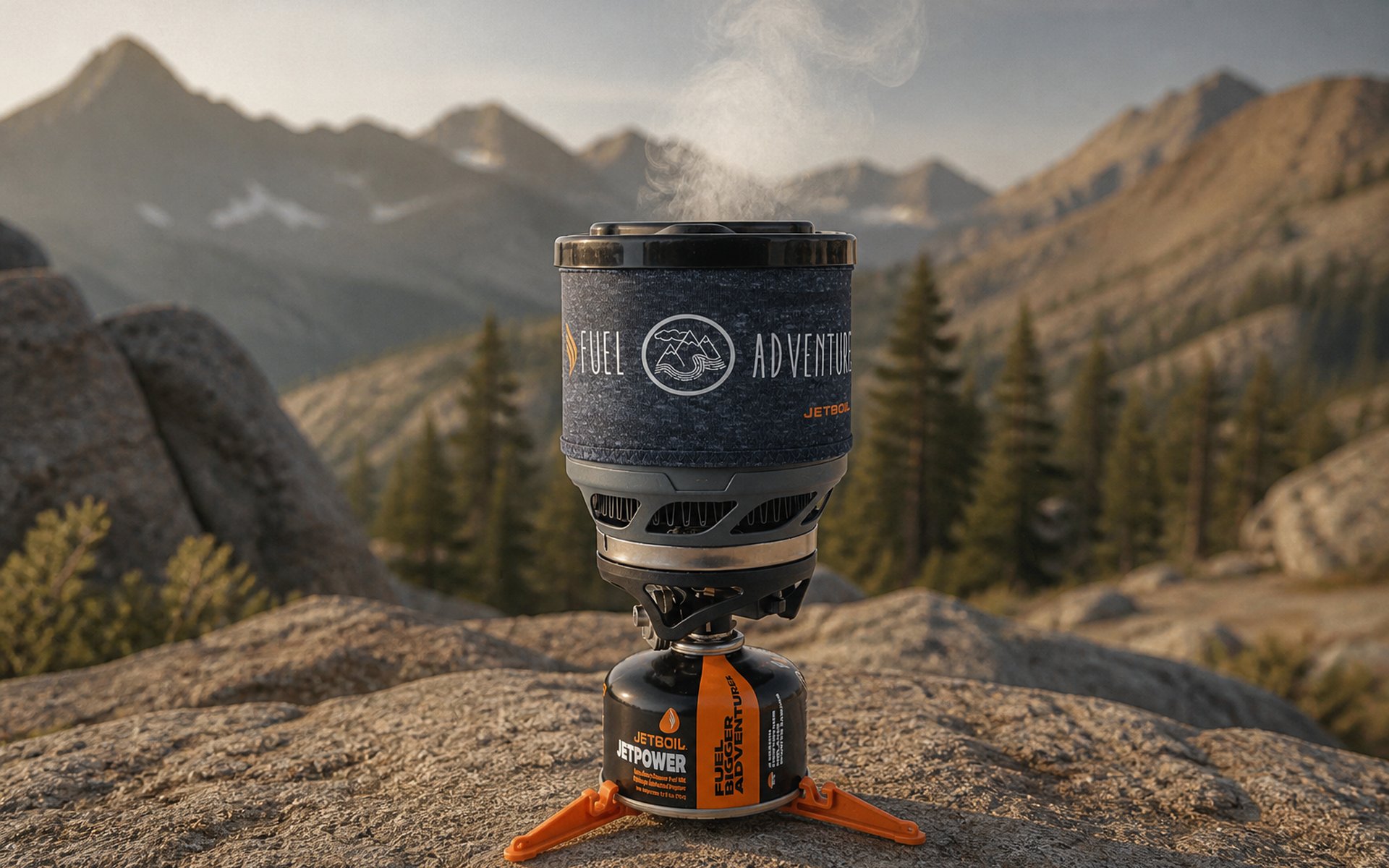
Jetboil MiniMo Cooking System Review
Jetboil MiniMo: integrated stove with real simmer control and cold-weather regulation. Full review, specs, and buy-or-skip verdict.
 Dhaval Parekh
6 min read
Dhaval Parekh
6 min read
MSR WindBurner Personal Stove System Review: Built for Wind, Not Flexibility
A strong boil-only choice for windy camps, with a real weight penalty and little cookware freedom.
Brooke Wilder
6 min read
Get one honest gear take every Friday.
No spam. Just gear picks, packing lessons, and notes from this week's research.
Why trust BestForBackpacking
Honest gear advice for backpackers, researched, weighed, and recommended.
Every pick is based on deep research: a synthesis of long-term owner reports, independent reviewer tests, and manufacturer specs, weighted by source independence, specificity, and use-case match. Brooke Wilder is our gear editor, the editorial persona who turns that research into a clear recommendation.