
Retailer links on this page are affiliate links. We may earn a commission if you buy, and your price doesn't change. How affiliate links work →
Satellite Communicators
Garmin inReach Mini 2 Review
Last updated:
Garmin rates the inReach Mini 2 at 14 days of battery with 10-minute tracking. That's 336 hours. It rates the newer Mini 3 at up to 350. Fourteen hours apart, about 4%, which isn't the battery gap I expected to find.
My call, once. Buy the Mini 2 if you want two-way satellite messaging and SOS anywhere on Earth in the lightest Garmin package, and the 100 dollars it saves over the Mini 3 matters to you. Skip it if a one-way beacon is all you need, or if you want the Mini 3's newer screen. I give it 8.5 out of 10.
 By Brooke5 min read
Share this post
Send it to someone who's planning a trip.

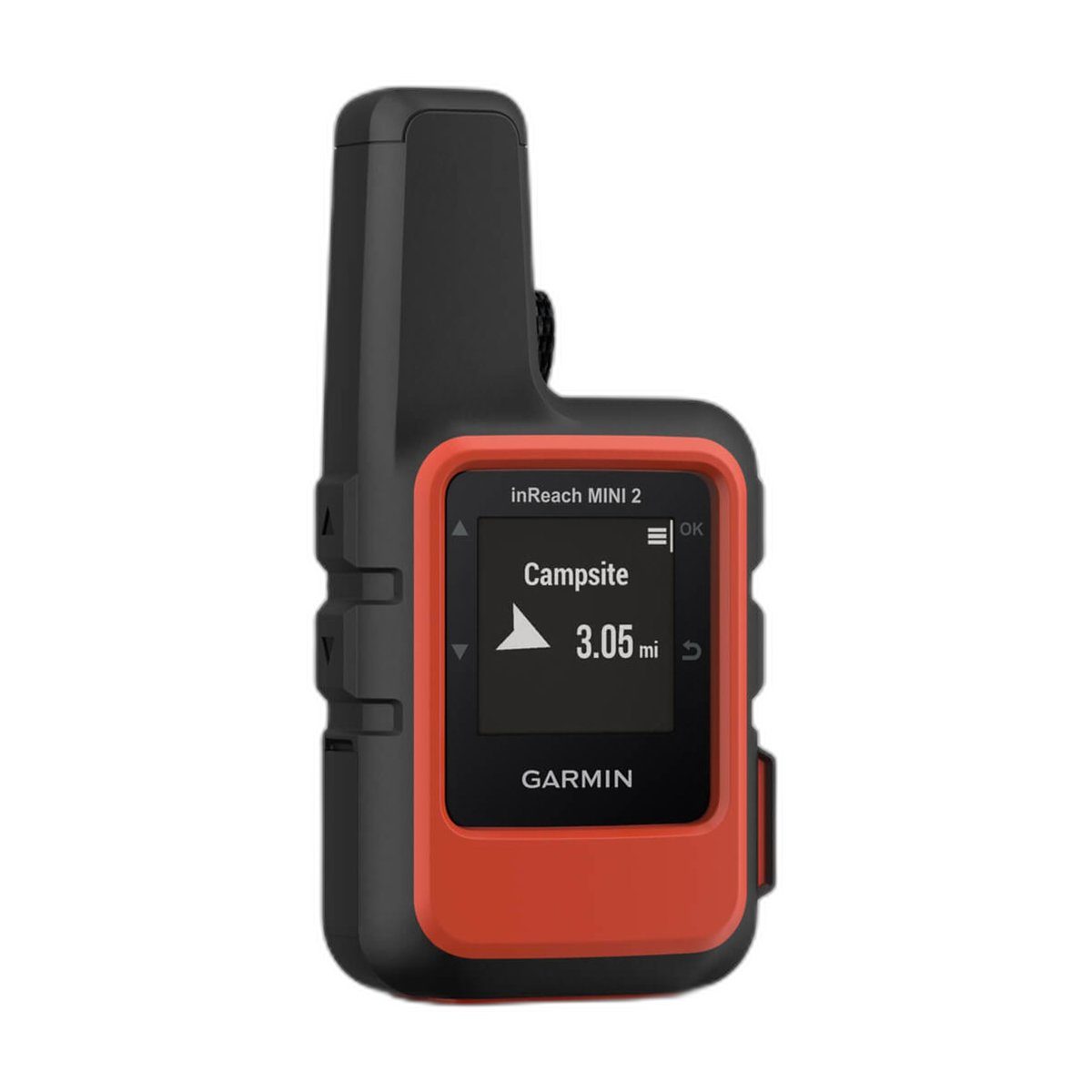
What kind of device is it?
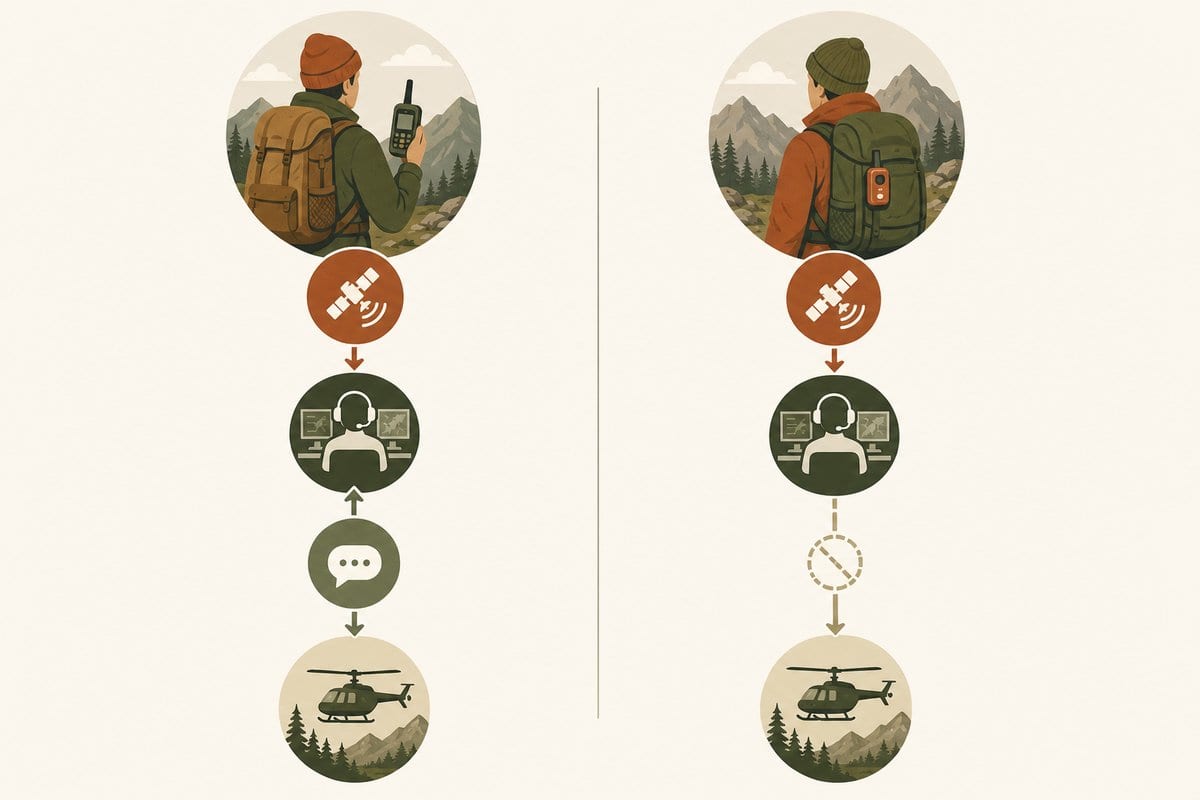
There are three common ways to carry emergency communication: a personal locator beacon, a phone with satellite SOS, or a two-way satellite communicator like this one.
A PLB sends a one-way 406 MHz distress signal to the COSPAS-SARSAT network. No subscription. But it can't confirm your alert was received or tell rescuers anything more.
The inReach Mini 2 does both directions. Garmin says your messages, SOS alerts and location tracking go over the global Iridium satellite network, so it works where phones can't. You can text people at home, share your location, and in an emergency trigger an interactive SOS to Garmin Response, which Garmin describes as a 24/7 staffed emergency response coordination center.
The trade is cost. You buy the device. Then you pay for a plan. Garmin says so plainly on the product page, and I appreciate that it doesn't bury it.
What does two-way SOS change?
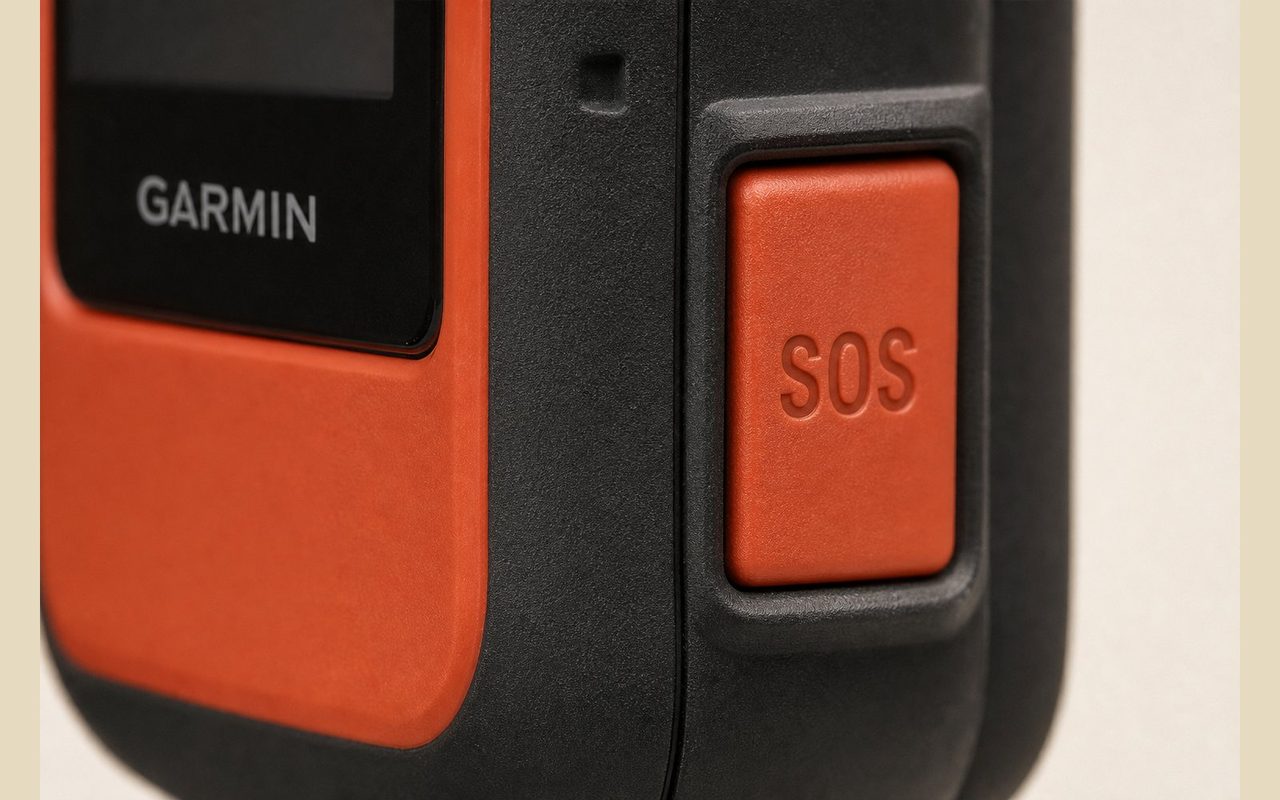
With a beacon, you press the button and wait. With the inReach, Garmin Response can write back. Garmin calls it an interactive SOS: the message goes to the coordination center with your GPS coordinates, and the conversation continues from there.
That matters because emergencies differ, and Garmin Response is staffed 24 hours a day, 7 days a week. A rolled ankle near the trailhead and a serious injury far from a road need different help, and a two-way link lets you say which one you have.
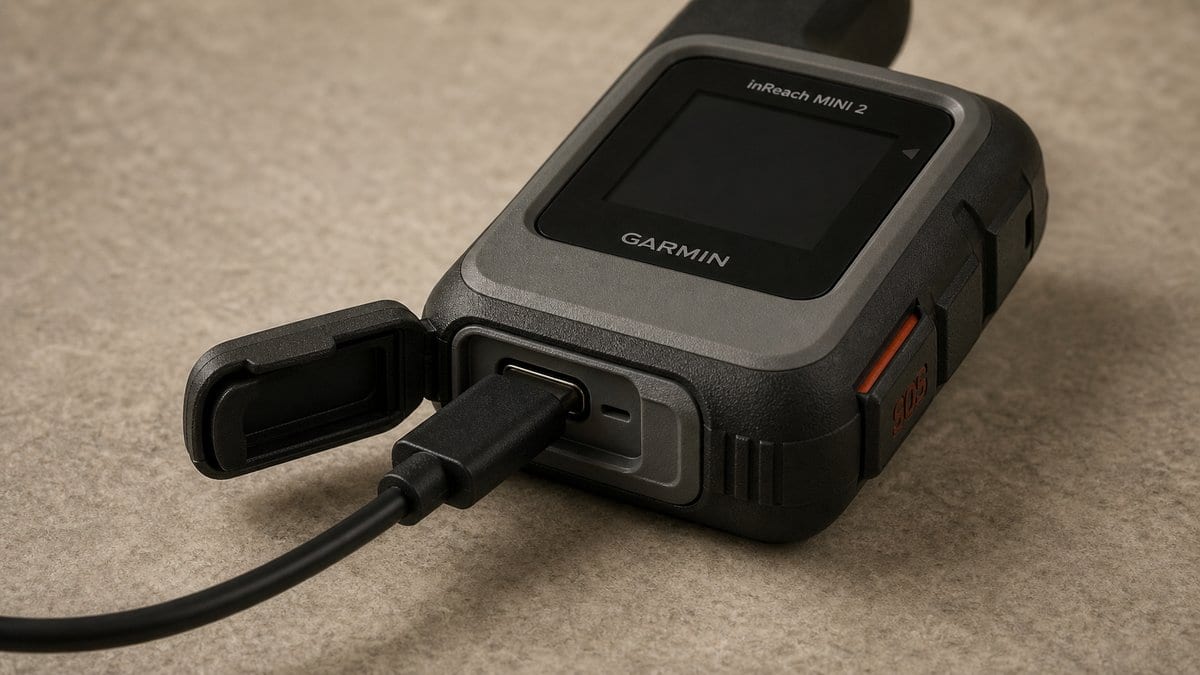
Plainly, because this is the part that matters: SOS needs the device to reach the satellites, so open sky helps. Learn how your device's SOS works before the trip, and keep it charged. Garmin's page lists other safety extras too: TracBack routing to retrace your path, a digital compass, and inReach weather forecasts.
What do the plans cost now?
I'll start with a correction. An earlier version of this review listed plan names and prices that are out of date. Here's the current picture.
Garmin's consumer plans are now called Enabled, Essential, Standard and Premium. DC Rainmaker and The Trek both list them at about 8, 15, 30 and 50 dollars a month, as of June 2026. Garmin's own table adds a one-time activation fee of about 40 dollars and says all plans include emergency SOS messaging. What changes between tiers is the messaging and tracking: Enabled charges per message, Essential includes 50 text messages, Standard 150, and Premium unlimited, with live tracking from every 10 minutes on the lower plans down to every 2 minutes on Premium.
The suspension rule, plainly. Garmin says you can suspend service for up to 12 consecutive months at no cost, and that on select devices emergency SOS remains available while suspended, with every other feature turned off. DC Rainmaker and The Trek both report the Mini 2 is one of those devices, and the original Mini 1 is not. Check your own device on Garmin's support site before you rely on it.
How long does the battery last, and how small is it?
Garmin rates the internal battery at up to 14 days with the default 10-minute tracking interval, and up to 30 days at 30-minute tracking. Do the sum for a trip: a 10-day route at 10-minute tracking leaves about 4 days in reserve on Garmin's figure. Cold, heavy messaging and more frequent tracking all cut into that, so carry a small power bank on long trips.
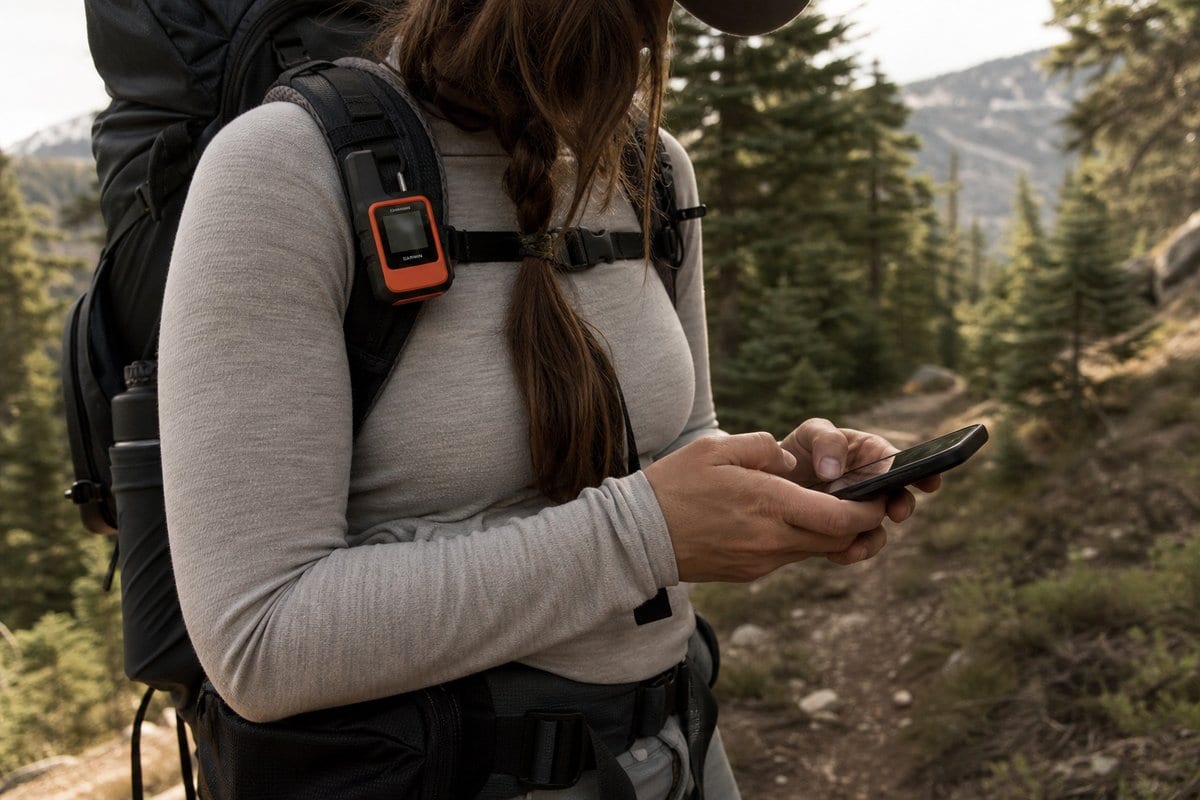
Garmin lists it at about 4 x 2 inches and 3.5 oz. It's rated IPX7 and impact resistant to MIL-STD-810. At 3.5 oz it fits a hipbelt pocket.
For divers, Garmin notes you can sync a Divers Alert Network ID, and that GPS and satellite communication don't work underwater.
Mini 2 or Mini 3?
Garmin lists the Mini 2 at about 350 dollars and the Mini 3 at about 450, as of October 16, 2026. That's a 100-dollar gap. Amazon had the Mini 2 at the low end of a $335-350 band the same day.
What the extra 100 dollars buys, by Garmin's specs: the Mini 3 weighs 4.31 oz, 122.2 g, against the Mini 2's 3.5 oz, so it's about 0.8 oz heavier. Its battery is rated up to 350 hours at 10-minute tracking, against the Mini 2's 14 days, or 336 hours. And DC Rainmaker reviewed the Mini 3 series in depth when it launched in December 2025, if you want the full list of what's new.
So the Mini 2 is lighter. It's nearly as long-lasting on Garmin's own figures. And it's 100 dollars cheaper. I didn't expect the older model to win on two of three counts. Both use Iridium and Garmin Response. For most backpackers, I think the Mini 2 is the better buy. If the price gap closes, look again.
How do you send messages?
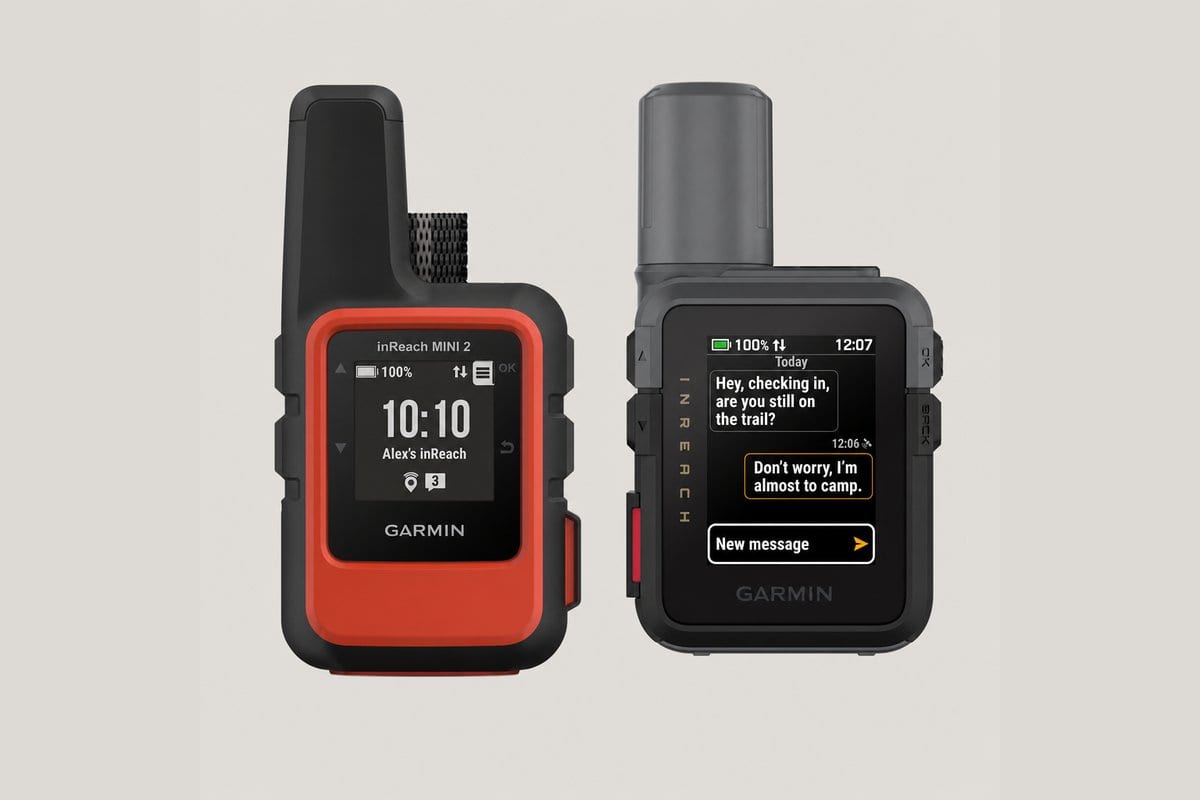
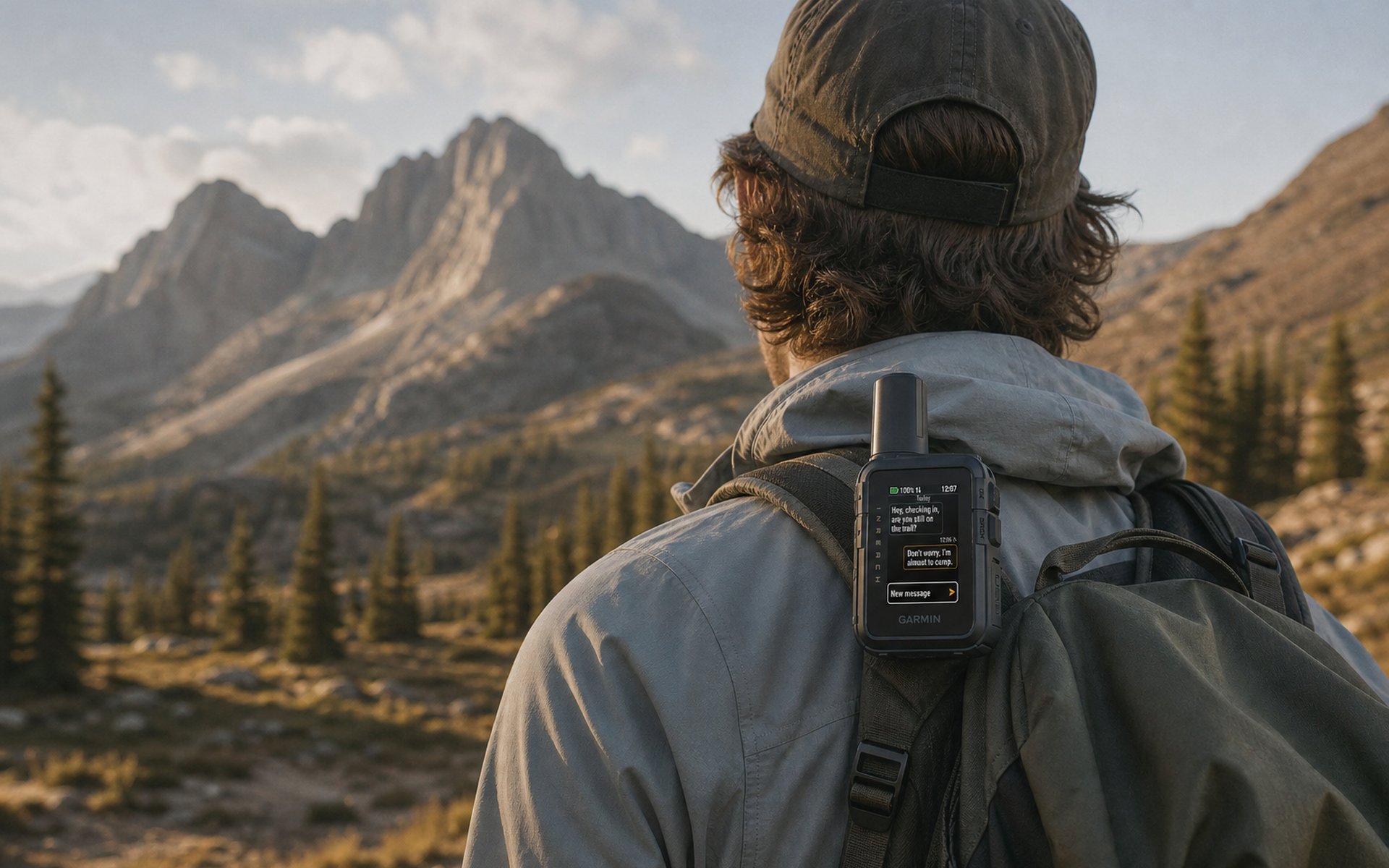
On the device itself, you can exchange texts with people at home or with other inReach users in the field, Garmin says. Typing on a device this size is slow, so set up preset messages before the trip, like "On schedule" or "Running a day late".
Most people pair it with a phone. Garmin now names two apps: Garmin Messenger, for fast messaging, group messaging and 24/7 SOS that isn't limited to cell coverage, and Garmin Explore, for maps, waypoints, trip planning and device settings. An earlier version of this page named Garmin's older Earthmate app.
Loved ones can follow you on LiveTrack, which Garmin says shows your location in real time along with distance, time and elevation, when used with the Messenger app.
Owners are many and happy: Amazon shows 4.6 stars from 2,606 ratings as of October 16, 2026.
Pros
- Two-way messaging and interactive SOS over Iridium's global network
- 3.5 oz and about 4 x 2 in, IPX7, MIL-STD-810 (Garmin)
- Up to 14 days of battery at 10-minute tracking (Garmin)
- SOS stays available on a suspended plan for up to 12 months (DC Rainmaker, The Trek)
- 4.6 stars from 2,606 Amazon ratings (2026-10-16)
Cons
- Needs a paid plan: about 8 to 50 dollars a month, plus activation
- Typing on the device is slow; most people pair a phone
- A PLB is cheaper if one-way distress is all you need
- The Mini 3 has the newer screen, for 100 dollars more
Key Specifications
- Size
- About 4 x 2 in (Garmin)
- Plans
- Enabled / Essential / Standard / Premium, about 8-50 dollars a month (June 2026)
- Weight
- 3.5 oz (Garmin)
- Battery
- Up to 14 days at 10-min tracking; 30 days at 30-min (Garmin)
- Network
- Iridium global
- Waterproof
- IPX7
Get one honest gear take every Friday.
One email a week: new reviews, one gear pick with my reasoning, and nothing sponsored. Confirm your address and you get my printable 2-page backpacking gear checklist.
You'll get a confirmation link first, and nothing else arrives until you click it. Every email has a one-click unsubscribe. How your email is handled
More from Satellite Communicators

Garmin inReach Mini 3 Review
The tiny Garmin inReach Mini 3 packs two-way satellite messaging, interactive SOS, and reliable Iridium coverage into 4.31 ounces. Worth it for remote or solo hiking?
 Brooke Wilder
8 min read
Brooke Wilder
8 min read
Garmin inReach Mini 2 vs Mini 3: Is the Upgrade Worth It?
The Mini 3 brings a much better screen, tougher ratings, and more navigation capacity. The Mini 2 keeps the same core safety jobs for less.
Brooke Wilder
9 min read
Why trust BestForBackpacking
Honest gear advice for backpackers, researched, weighed, and recommended.
Every pick is based on deep research: a synthesis of long-term owner reports, independent reviewer tests, and manufacturer specs, weighted by source independence, specificity, and use-case match. Brooke Wilder is our gear editor, the editorial persona who turns that research into a clear recommendation.