
Retailer links on this page are affiliate links. We may earn a commission if you buy, and your price doesn't change. How affiliate links work →
Headlamps
BioLite Range 500 Headlamp Review: Comfort-First Light for Camp and Trail
Last updated:
The BioLite Range 500 is a comfortable, waterproof rechargeable headlamp for backpackers who want one light for camp, hiking, and smoother night movement.
Eight minutes. That's how long iRunFar's reviewer charged a dead BioLite Range 500 to get an hour of light at full power. I love a spec that solves the forgot-to-charge-it problem on the drive to the trailhead.
My call, once. Buy it if you want a comfortable, waterproof, rechargeable headlamp for camp and ordinary night hiking. Skip it if you want to swap batteries in the field, need to run the lamp while it charges, or move fast on technical trails in the dark. I give it 8.2 out of 10.
 By Brooke5 min read
Share this post
Send it to someone who's planning a trip.

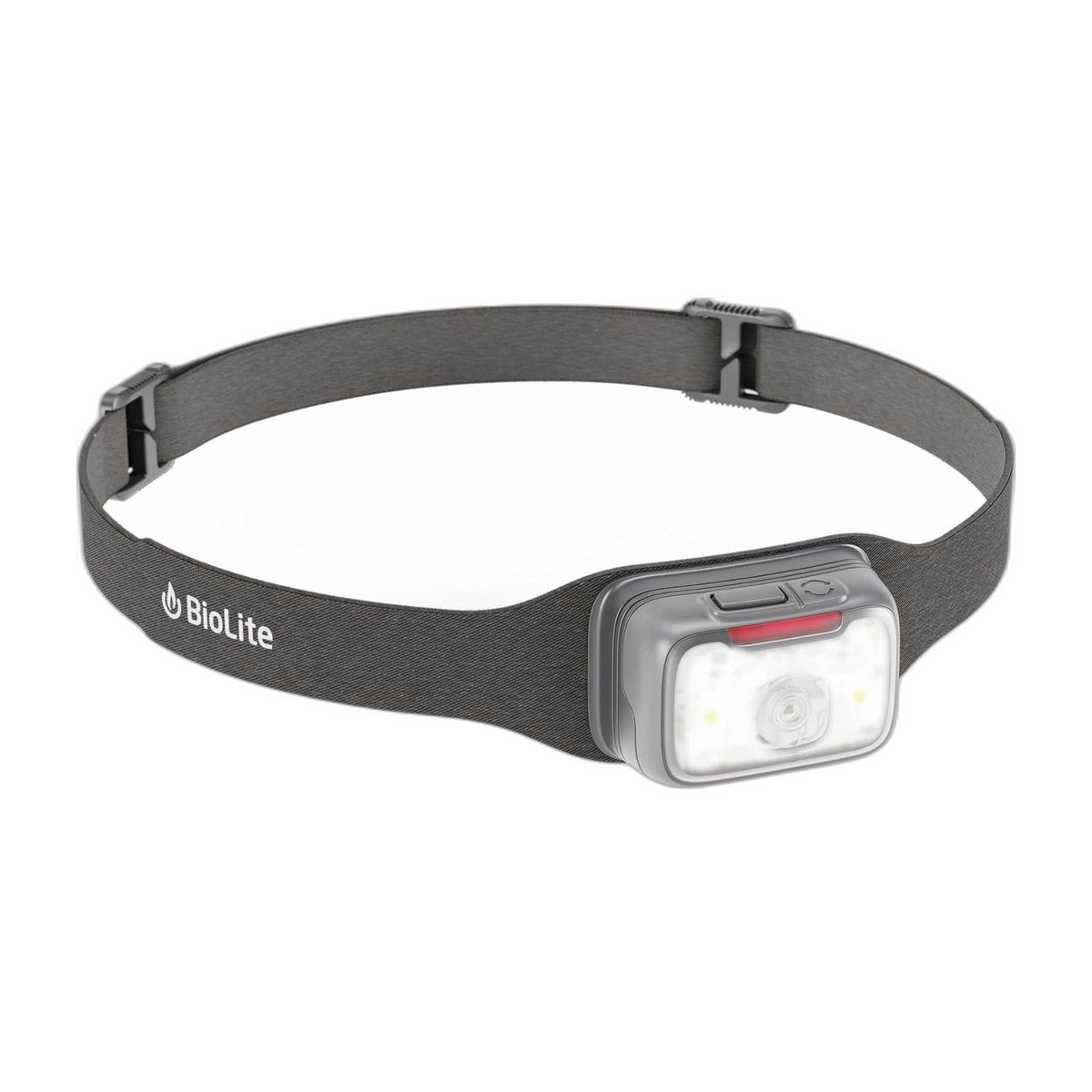
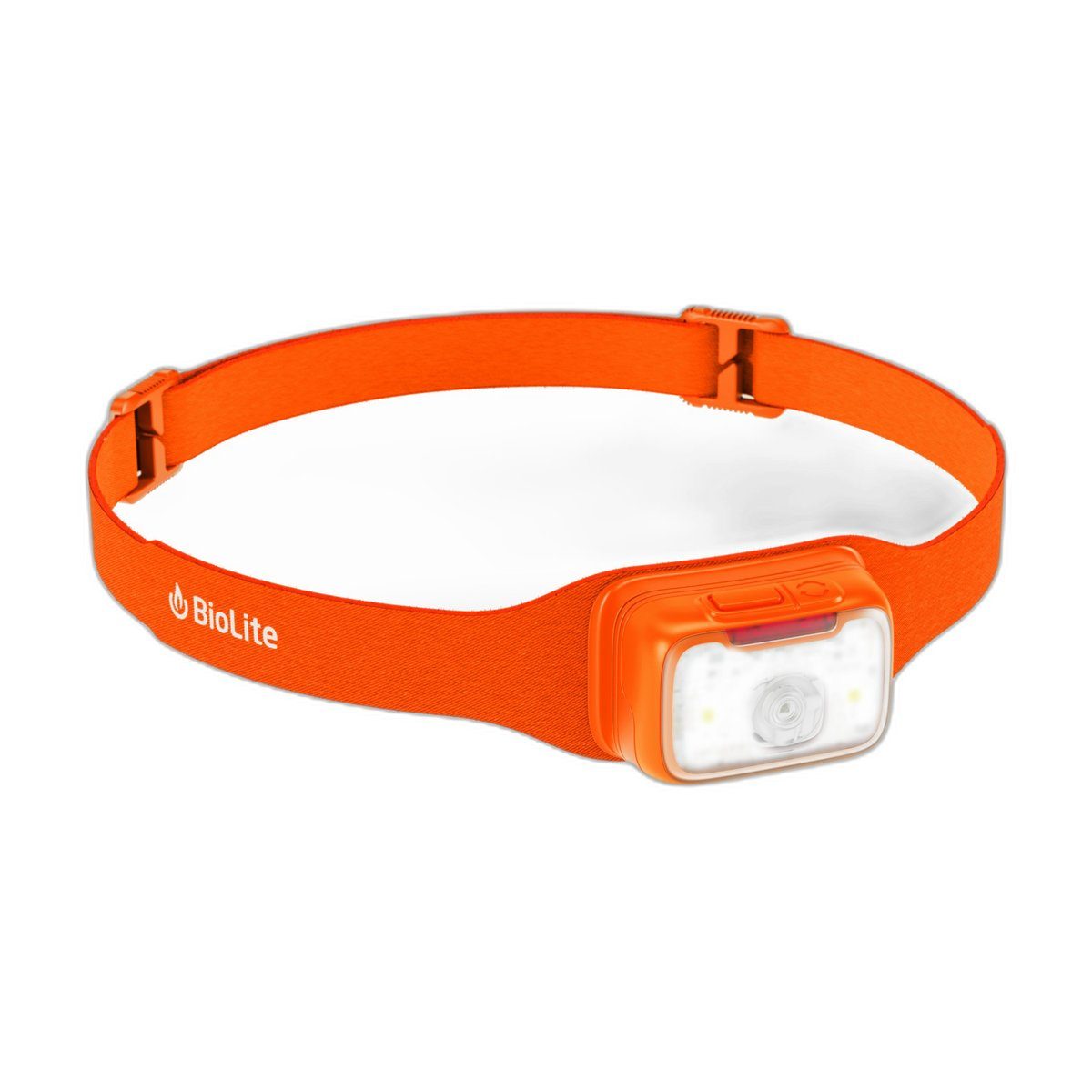
Why do reviewers keep talking about the band?
Because the band is the point. iRunFar's reviewer says there perhaps isn't a more comfortable headlamp they've worn: a soft, moisture-wicking band that also covers the back of the light where it sits on your forehead, so there are no cold, hard spots, and no bouncing or sliding. They tried to make it bounce, and it stayed put.
BioLite lists 2.6 oz, 75 g, with the battery built in. iRunFar weighed 2.6 oz, 74 g. One gram apart, and I'll happily take that.
It isn't the lightest lamp you can buy. BioLite's own Range 300 is 1.8 oz, 52 g, with a smaller battery. So the Range 500 costs you 0.8 oz over its little sibling, and buys 200 more lumens, a flood beam and double the battery.

How much light, and for how long?
BioLite lists 500 lumens at the top setting and a 100 m beam. iRunFar says the spot can light up a trail marker or road sign at least a soccer pitch away, and that the flood beam is softer and wider for smoother surfaces, though it occasionally creates a sparkly shimmer around tall grass on tired eyes.
Runtime, by BioLite's figures: 6 hours on high, 200 on low. Then a reserve mode gives 5 lumens for 1 hour when the battery is nearly flat, enough to get back to camp.
How close do testers get? iRunFar logged 5 hours 45 minutes at max, added up over several outings in 15 to 30°F, and says the cold trimmed the run time. Run the sum: 5:45 against 6:00 is 96% of the claim, in the cold. That's a maker number I'd trust.
The modes are dimmable white spot, dimmable white flood, white strobe, red flood and red strobe, per iRunFar.

How fast does it charge, and can you run it while charging?
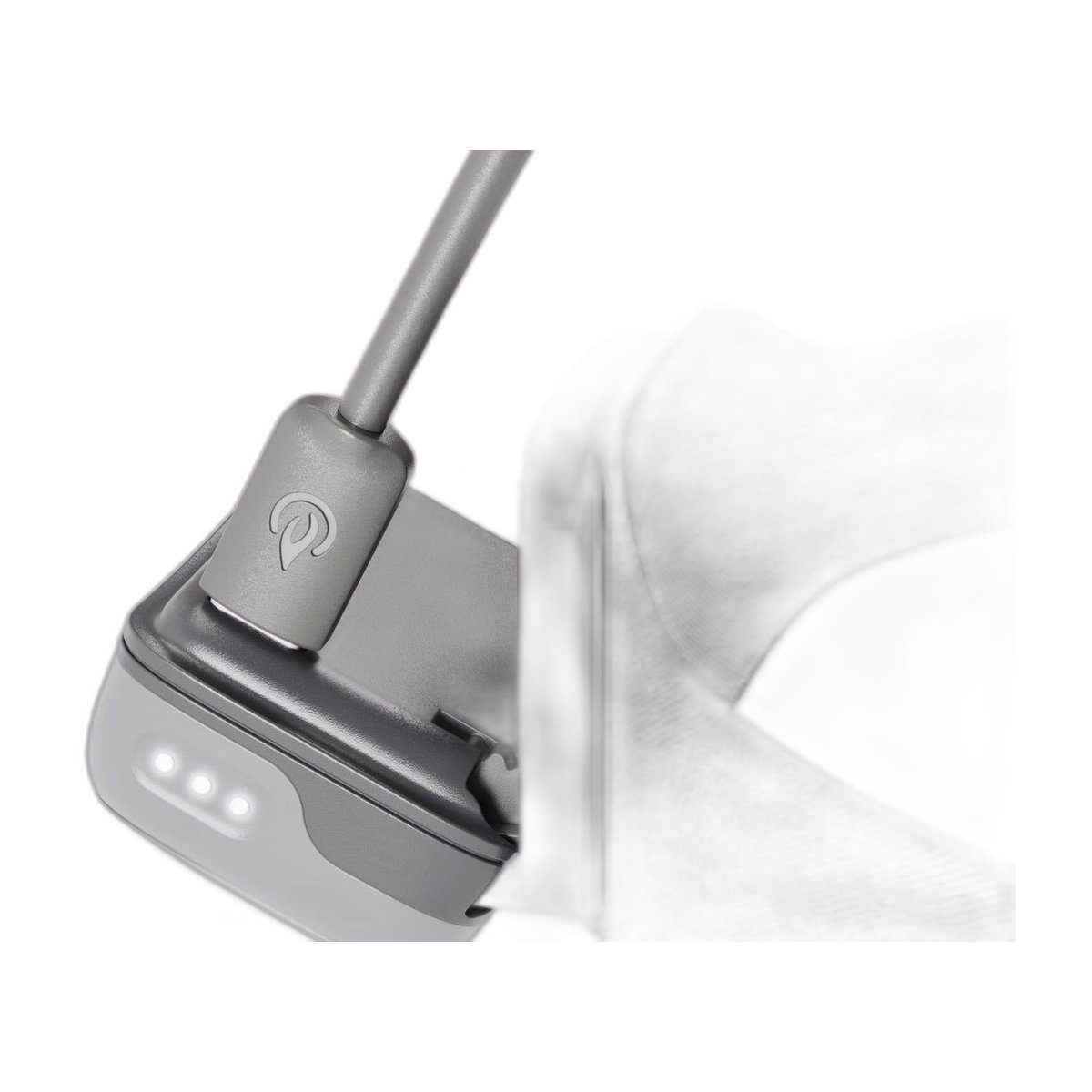
Fast. iRunFar says an 8-minute charge from dead gives an hour at 500 lumens, and empty to 80% takes 30 minutes. The battery is a 1,634 mAh lithium-ion cell, by BioLite's spec, charged over USB-C.
And no, you can't run it while it charges. iRunFar says it doesn't offer pass-through charging. BioLite's own FAQ points people who need that to its HeadLamp 800 Pro, which has a rear power source. The battery is built in, so there's no swapping in a spare.
Cold charging has its own limit. BioLite says the lamp operates from -20°C to +60°C and has a narrower range for recharging, for battery safety, and suggests keeping the headlamp and power bank in an inside pocket if you need to charge in the cold.
How waterproof, and how long will it last?
IP67, which BioLite explains as dust-tight, resistant to hoses and jet sprays, and submersible to 1 meter for up to 30 minutes. iRunFar used it in driving snow and rain with no issues.
On battery life over time, iRunFar saw no degradation in eight months of use. That's a good early sign, and it's all the long-term evidence I found. One sound habit from BioLite: if the lamp gets wet, let it dry before charging, and blow any dust out of the USB-C port first.
BioLite now offers a 3-year warranty on the Range series, per its own page and iRunFar. The lamp ships in lock mode, and a press-and-hold locks it off so it doesn't drain itself in your pack. Small thing. Saves a dead lamp.
Who should buy it, and what else to look at?
Buy it for camp chores, dog walks, car camping and ordinary night hiking, where comfort and quick charging matter most. iRunFar keeps it in the car and the pack for exactly that, and would still pick a more powerful light for overnight technical efforts.
Its one real gripe is the buttons. iRunFar found them not as easy or intuitive as it hoped, and suggests gloves may make them trickier.
Owners: Amazon shows 4.2 stars from 76 ratings as of October 16, 2026, a small crowd. The price band ran $65-70 that day, matching BioLite's list price. BioLite's own lineup is the first comparison: the Range 400 and Range 300 sit one and two steps cheaper, with 400 and 300 lumens. If you want swappable batteries, a hybrid lamp like the Petzl Actik Core is the usual alternative. If you want the lightest lamp, a minimalist Nitecore is.
Nerd corner: 300, 400 or 500?
BioLite sells three Range lamps, and its comparison table is the most useful thing on the page. Here's the lineup, by BioLite's figures and prices as listed on October 16, 2026. Prices move, so treat the dollar figures as that day's snapshot.
The Range 500: 500 lumens, a 100 m beam, a 1,634 mAh battery, 2.6 oz, about seventy dollars. The Range 400: 400 lumens, 90 m, the same 1,634 mAh battery, 2.6 oz, about sixty. The Range 300: 300 lumens, 75 m, an 817 mAh battery, 1.8 oz, about forty.
Now the sum I couldn't resist. Divide lumens by dollars. The 500 gives about 7.1 lumens per dollar. The 400, about 6.7. The 300, about 7.5. So the Range 300 is the best value on light alone, and the middle one is the weakest.
Why buy the 500, then? BioLite says only the 400 and 500 get the new two-button interface, and the bigger battery doubles the run time on low and in red mode. The 500 adds the white flood. Same weight as the 400. 100 more lumens. Ten dollars. I'd pay it.
Pros
- iRunFar calls it perhaps the most comfortable headlamp it has worn
- 8-minute charge gives an hour at 500 lm; 80% in 30 minutes (iRunFar)
- IP67, submersible to 1 m for 30 minutes (BioLite)
- 5:45 at max in 15-30°F against a 6-hour claim (iRunFar)
Cons
- Built-in battery: no swap in the field
- No pass-through charging (iRunFar; BioLite points to the HeadLamp 800 Pro)
- Buttons are less intuitive than hoped, per iRunFar
- 2.6 oz, 0.8 oz more than BioLite's own Range 300
Key Specifications
- Weight
- 2.6 oz / 75 g with battery (BioLite)
- Battery
- Built-in 1634 mAh lithium-ion
- Runtime
- 6 h high, 200 h low, 5 lm reserve for 1 h (BioLite)
- Warranty
- 3-year (BioLite)
- Max output
- 500 lm
- Water rating
- IP67, submersible to 1 m for up to 30 min
Get one honest gear take every Friday.
One email a week: new reviews, one gear pick with my reasoning, and nothing sponsored. Confirm your address and you get my printable 2-page backpacking gear checklist.
You'll get a confirmation link first, and nothing else arrives until you click it. Every email has a one-click unsubscribe. How your email is handled
More from headlamps
Best Headlamps for Backpacking 2026
Five current generation headlamps, matched to the trips you actually take: a balanced all-rounder, a waterproof wet-weather pick, a long-endurance color accurate lamp, a high-output trail runner, and a proven budget buy.
 Brooke Wilder
10 min read
Brooke Wilder
10 min read
Why trust BestForBackpacking
Honest gear advice for backpackers, researched, weighed, and recommended.
Every pick is based on deep research: a synthesis of long-term owner reports, independent reviewer tests, and manufacturer specs, weighted by source independence, specificity, and use-case match. Brooke Wilder is our gear editor, the editorial persona who turns that research into a clear recommendation.