
Sun Hoodies
Best Backpacking Sun Hoodies 2026
Last updated: September 2026
Four UPF-rated sun hoodies compared by fiber type, price, and use case. Natural fiber vs. synthetic for thru-hikers, weekenders, and desert hikers.
 By Brooke4 min read
Share this post
Send it to someone who's planning a trip.
At a glance
The contenders
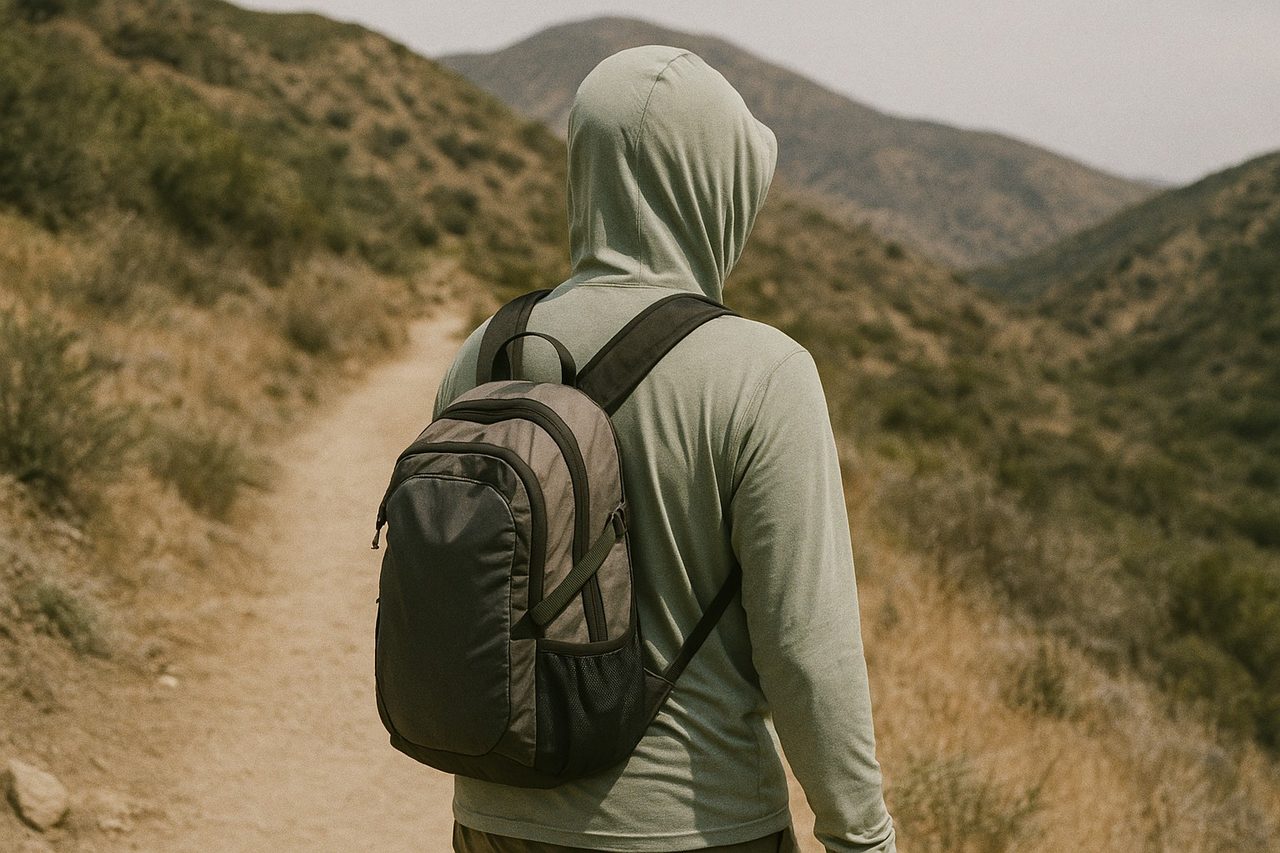
Ridge Merino Men's Solstice Lightweight Pullover Hoodie
~$85–100typical
The merino default for multi-day backpacking. Natural odor resistance and a comfortable merino hand make this the top all-around pick for three-night-plus trips. The Solstice Pro adds a half-zip and pocket.
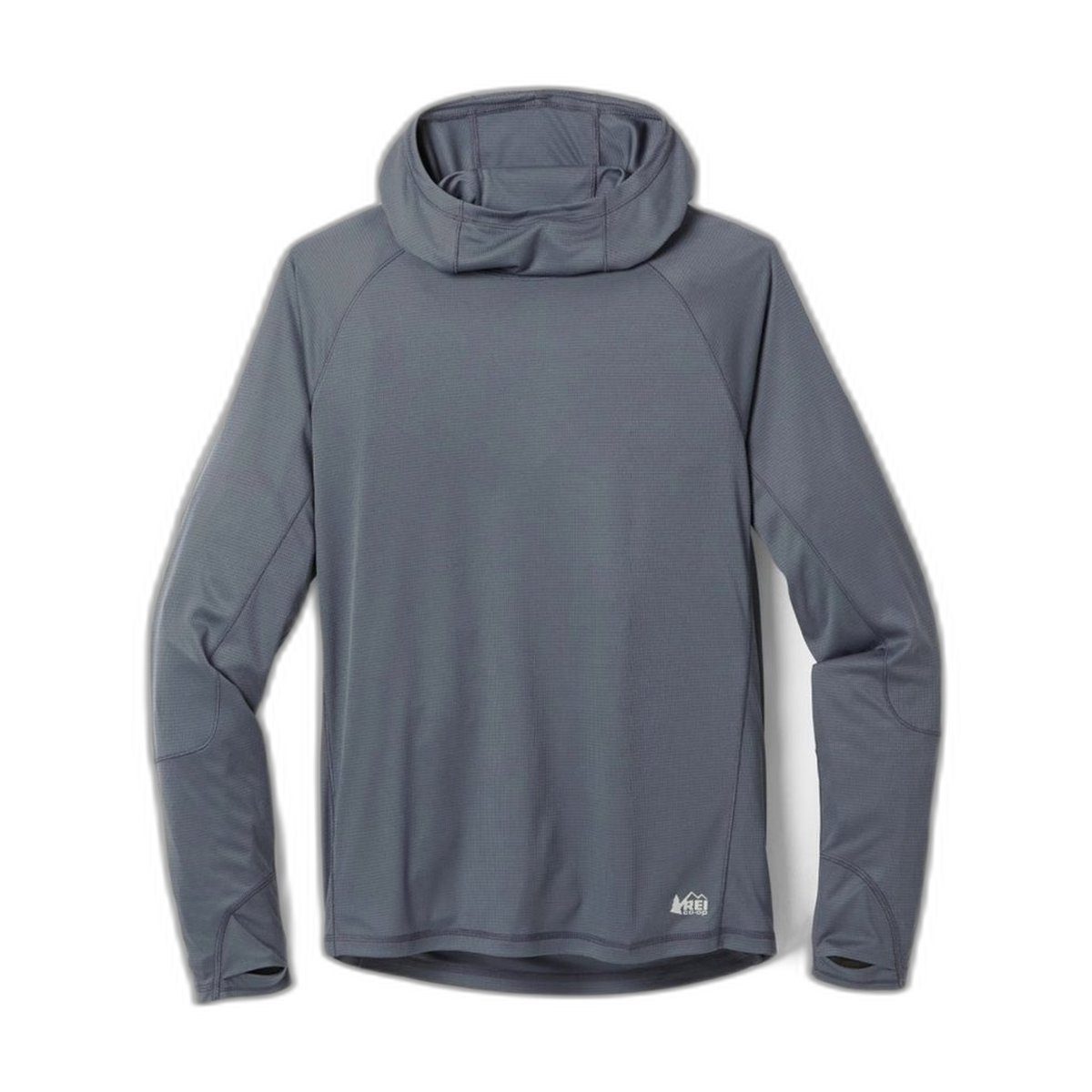
REI Co-op Flash Shade Hoodie
~$65–75typical
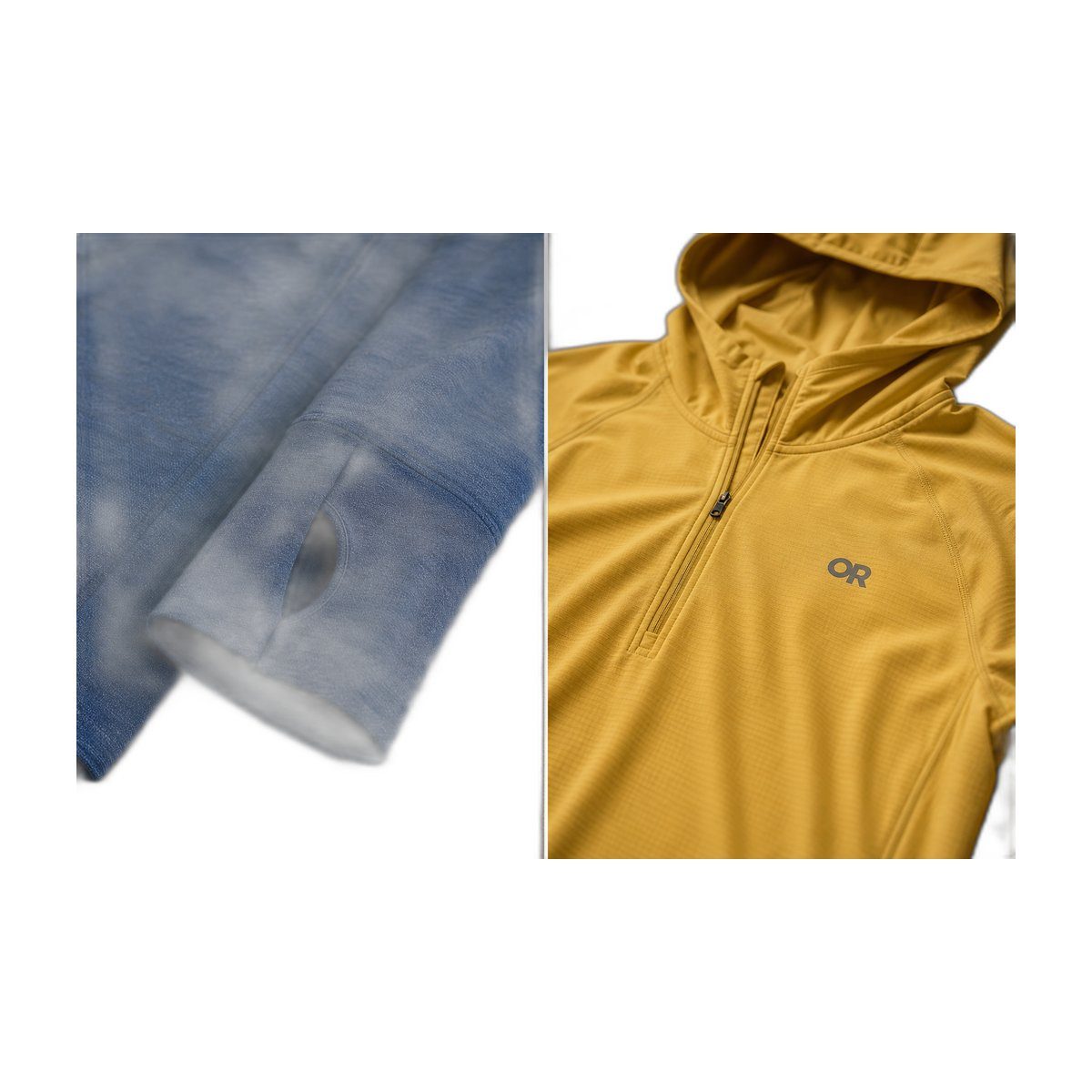
Best value in the comparison. Performance grid fabric wicks and dries fast, with thumbholes for sun coverage. The grid construction vents well during high-output efforts and holds up to pack friction.
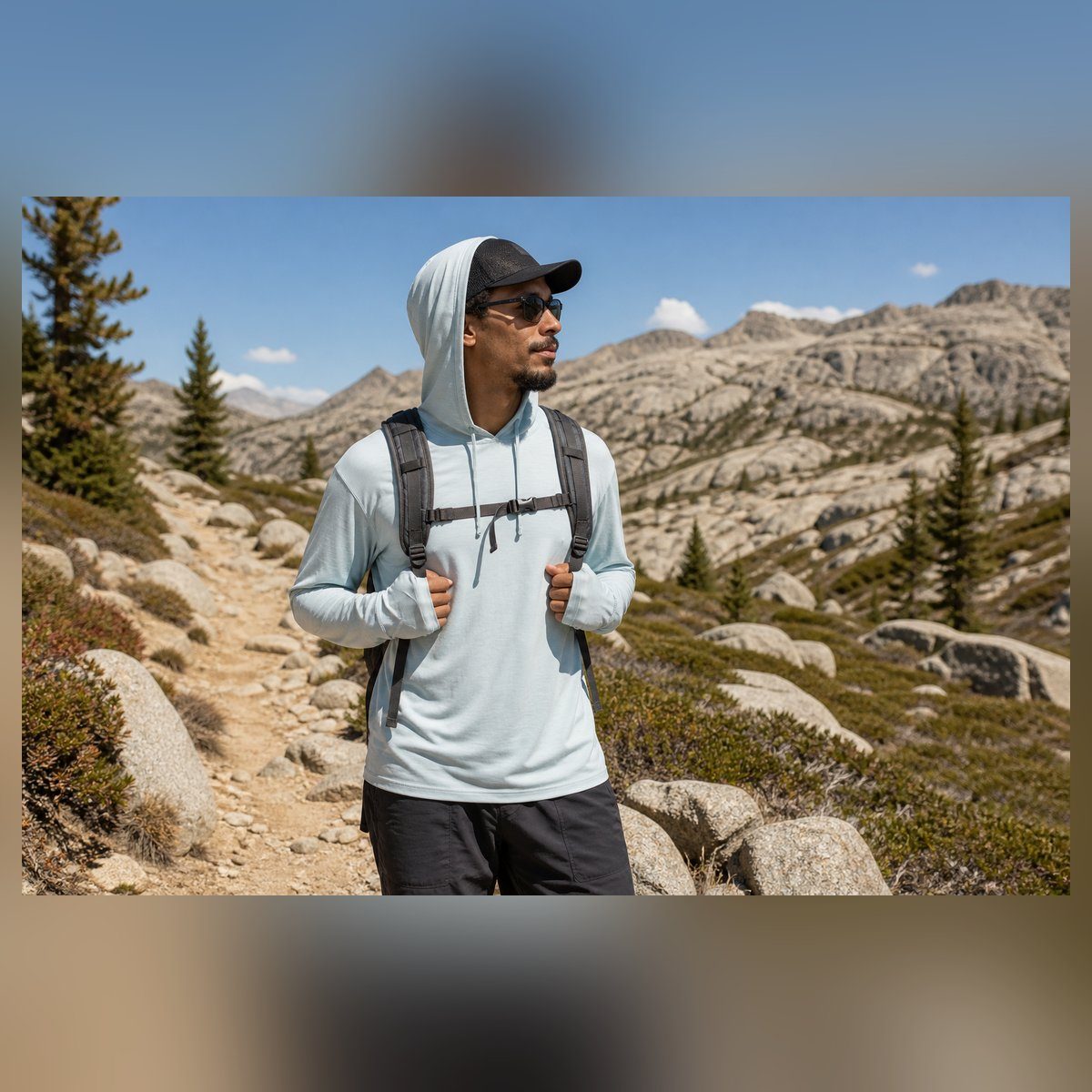
Paka Sol Hoodie
~$95–105typical
The softest shirt in this comparison. Royal alpaca and Tencel blend delivers natural odor resistance and a noticeably different feel from merino. Roomiest cut of the four; benefits from handwash care.
Outdoor Research Astroman Air Sun Hoodie
~$105–125typical
Top UPF performance at UPF 30-50+. 85% recycled nylon and 15% elastane built for high-output desert days. Best ventilation in this group with an articulated cut for technical terrain. It frequently runs below MSRP during seasonal sales.
Spec check
How they stack up at a glance
| Product | Price | Fiber type | UPF | Material | Best use | Buy |
|---|---|---|---|---|---|---|
| Ridge Merino Men's Solstice Lightweight Pullover Hoodie | ~$85–100 | Natural (merino) | UPF 35 | Merino wool fabric | Thru-hiking, multi-day trips | Check price → |
| REI Co-op Flash Shade Hoodie | ~$65–75 | Synthetic | UPF 50 | Performance-grid synthetic fabric | Weekend trips, high-output days | Check price → |
| Paka Sol Hoodie | ~$95–105 | Natural (alpaca blend) | UPF 30+ | 67% Tencel, 14% nylon, 14% Royal Alpaca, 5% spandex | Comfort-focused, shorter trips | Check price → |
| Outdoor Research Astroman Air Sun Hoodie | ~$105–125 | Synthetic (recycled nylon blend) | UPF 30-50+ | 85% recycled nylon, 15% elastane | Desert hiking, high-UV terrain | Check price → |
Ridge Merino Men's Solstice Lightweight Pullover Hoodie
- Price
- ~$85–100
- Fiber type
- Natural (merino)
- UPF
- UPF 35
- Material
- Merino wool fabric
- Best use
- Thru-hiking, multi-day trips
REI Co-op Flash Shade Hoodie
★ Top pick- Price
- ~$65–75
- Fiber type
- Synthetic
- UPF
- UPF 50
- Material
- Performance-grid synthetic fabric
- Best use
- Weekend trips, high-output days
Paka Sol Hoodie
- Price
- ~$95–105
- Fiber type
- Natural (alpaca blend)
- UPF
- UPF 30+
- Material
- 67% Tencel, 14% nylon, 14% Royal Alpaca, 5% spandex
- Best use
- Comfort-focused, shorter trips
Outdoor Research Astroman Air Sun Hoodie
★ Top pick- Price
- ~$105–125
- Fiber type
- Synthetic (recycled nylon blend)
- UPF
- UPF 30-50+
- Material
- 85% recycled nylon, 15% elastane
- Best use
- Desert hiking, high-UV terrain
Pick by scenario
Who This Comparison Is For
Jump straight to the winner for how you hike.
| Scenario | Best pick |
|---|---|
| Thru-hiker | Ridge Merino Men's Solstice Lightweight Pullover Hoodie |
| Weekender | REI Co-op Flash Shade Hoodie |
| Budget-conscious | REI Co-op Flash Shade Hoodie |
| Desert | Outdoor Research Astroman Air Sun Hoodie |
| First-timer | REI Co-op Flash Shade Hoodie |
Thru-hiker
Ridge Merino Men's Solstice Lightweight Pullover Hoodie
Weekender
REI Co-op Flash Shade Hoodie
Budget-conscious
REI Co-op Flash Shade Hoodie
Desert
Outdoor Research Astroman Air Sun Hoodie
First-timer
REI Co-op Flash Shade Hoodie
Natural vs. Synthetic: The Core Decision
The biggest split in this comparison is not price. It is fiber. And for backpacking specifically, the fiber choice matters more than it does for day hiking.
Merino wool and alpaca both resist odor through natural fiber properties. Bacteria that cause smell have a harder time building up in natural protein fibers. On a five-day trip where you are not washing, that difference is noticeable by day two or three. The Ridge Merino Solstice and Paka Sol both carry that advantage.
Synthetic fabrics, including the polyester blend in the REI Flash Shade and the 85% recycled nylon and 15% elastane fabric in the OR Astroman Air, dry significantly faster. If you are putting in big miles in hot conditions and sweating through the fabric, fast dry time matters. The synthetics cover a wider price range.
The honest tradeoff: if your trip is two nights or shorter, you will never notice the odor difference. Go synthetic and save some money. If you are out for four nights or more, natural fiber pays for itself in comfort.
UPF Ratings and Color: What Actually Protects You
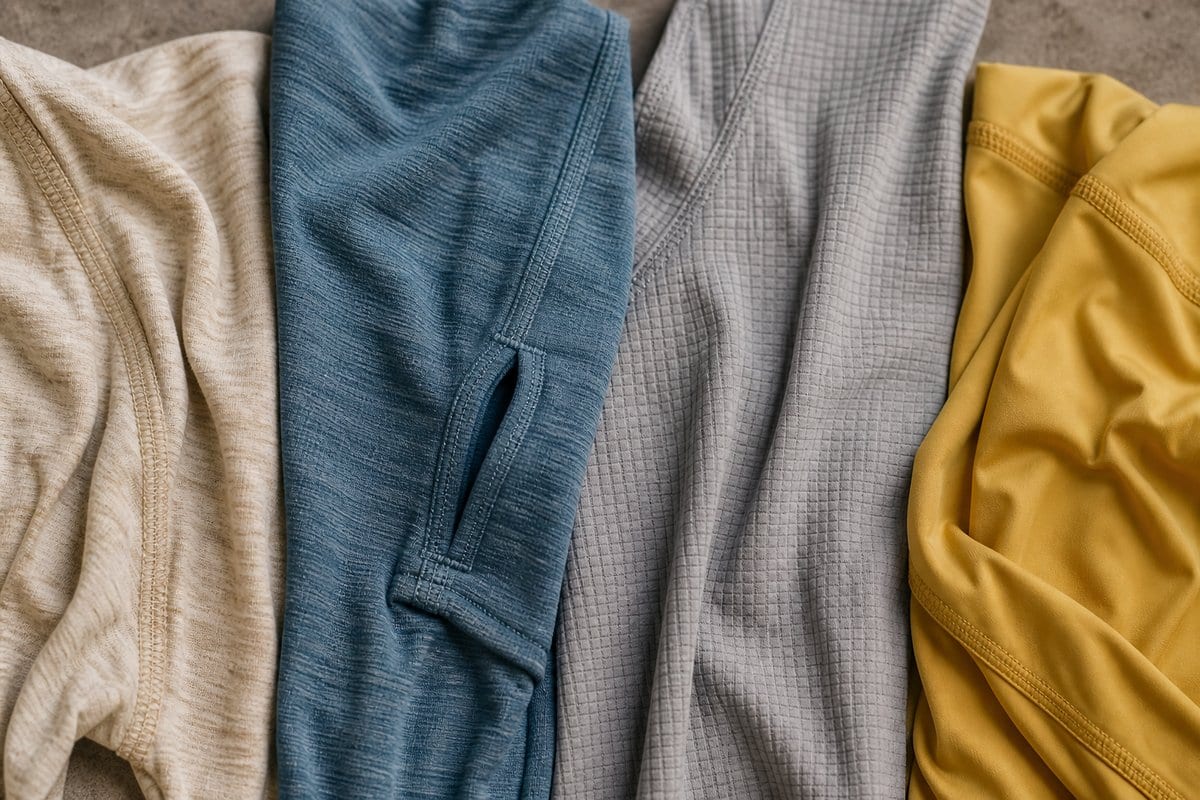
UPF ratings in this lineup span from the REI Flash Shade's confirmed UPF 50 to the OR Astroman Air's 30-50+ range, with the Ridge Merino at UPF 35 and the Paka Sol at UPF 30+. What does that mean in practice?
A UPF 30 fabric blocks about 97% of UV radiation. UPF 50 blocks about 98%. The difference between those two numbers is meaningful in clinical settings, but in normal backcountry use, any UPF 30+ fabric gives you substantial coverage over bare skin.
Independent testing by Liz Thomas at Treeline Review (2026) confirmed the Flash Shade's UPF 50 rating and found it lighter and faster-drying than REI's older Sahara Shade, which it effectively replaces. If you owned a Sahara Shade and liked it, the Flash Shade is the current step up.
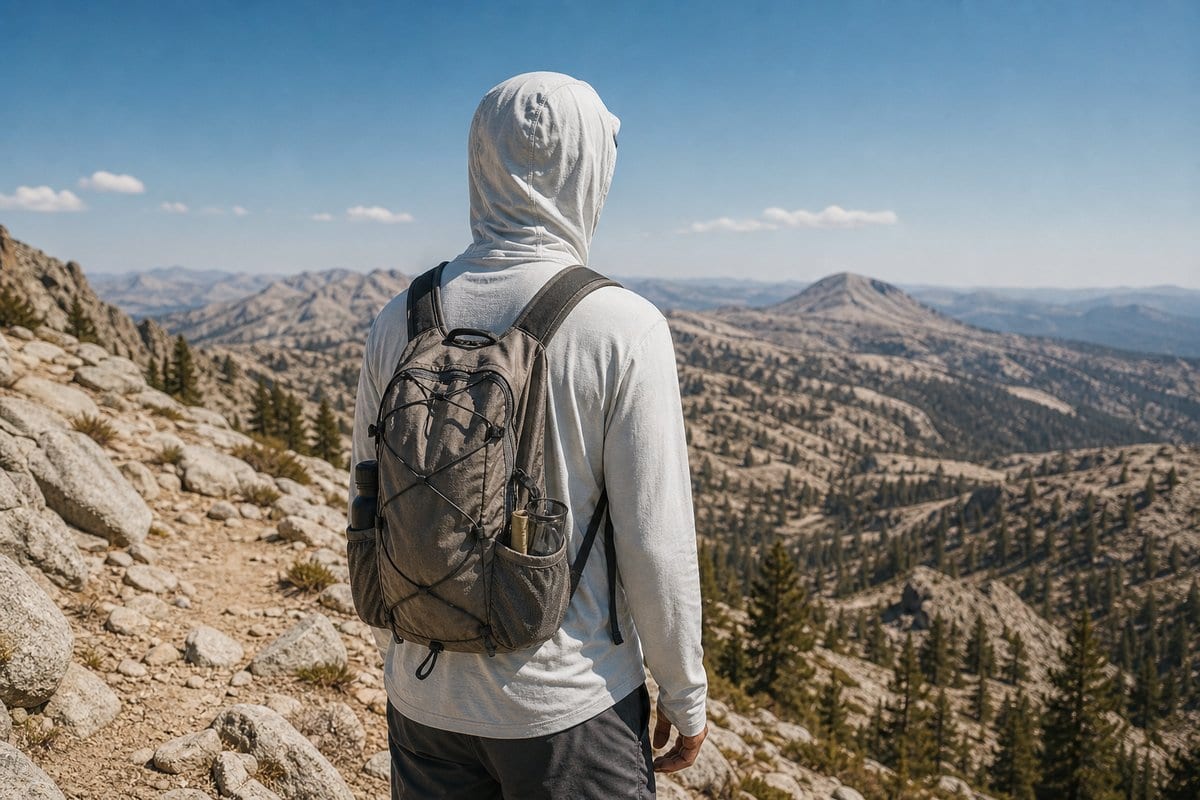
What matters more than the specific UPF number: color and fit. Research from the backpacking community consistently shows that light-colored, loosely fitting hoodies outperform dark-colored, tight-fitting ones with nominally higher UPF ratings. Direct sun on a dark fabric generates surface heat even with a good UPF rating. A white or light-colored sun hoodie in a relaxed fit keeps you cooler and protects better in real-world conditions.
All four hoodies in this comparison are available in light colorways. Pick light. Avoid black, charcoal, or dark green if sun protection and heat management are your priority.
Durability, Fit, and Breathability Under Effort
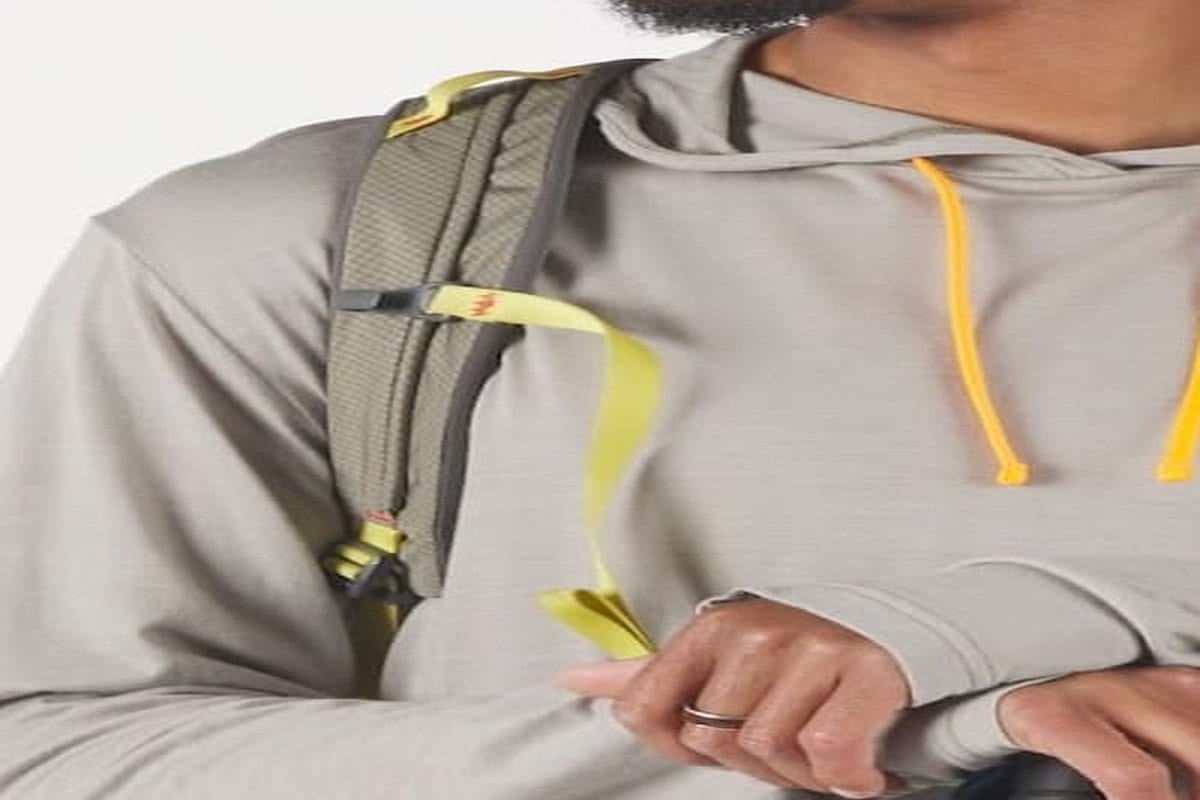
Durability splits along the same fiber line as odor resistance. The OR Astroman Air's 85% recycled nylon and 15% elastane fabric and the REI Flash Shade's performance grid both resist abrasion better than the natural-fiber picks. If you shoulder a heavy pack on long descents or scrub through brush, synthetic holds up longer at pack-strap friction points. Merino and alpaca are softer but pill more with heavy use. Neither the Solstice nor the Paka Sol is fragile, but they warrant more care than their synthetic counterparts.
Breathability during high-output efforts follows a similar pattern. The OR Astroman Air is built for aerobic desert hiking, and its ventilation shows when you are moving fast in direct sun. The REI Flash Shade's grid weave dries fast and vents well at a hard effort. Both synthetics outperform the natural-fiber options when you are sweating hard for sustained stretches. Merino and alpaca hold their comfort advantage at a steady hiking pace but can feel clammy in a long sustained push.
Fit across the lineup: the OR Astroman Air runs in an athletic articulated cut that does not restrict movement on technical terrain. The REI Flash Shade is also athletic and runs trim, so size up for a relaxed fit. The Ridge Merino Solstice runs true to size in a relaxed athletic cut. The Paka Sol has the roomiest cut of the four and layers well over a base layer if you run cold.
How to Pick the Right Sun Hoodie for Your Trip
Two questions narrow this comparison fast.
How many nights are you out? If it is one or two, any hoodie here works. The synthetic options are slightly cooler in high-output conditions and cost less. For trips of three nights or more, natural fiber's odor resistance makes the Solstice or Paka Sol the better call.
What is your biggest hazard? If you are hiking exposed desert ridges with high UV, the OR Astroman Air's UPF 30-50+ and ventilation architecture are designed for that environment. If you are in mixed terrain with occasional exposed stretches, any hoodie in this comparison gives you adequate protection.
Quick guide: one to two nights, any terrain: REI Flash Shade. Three-plus nights, mixed terrain: Ridge Merino Solstice. Premium natural fiber for shorter trips: Paka Sol. High-UV desert, technical terrain: OR Astroman Air.
Get one honest gear take every Friday.
No spam. Just gear picks, packing lessons, and notes from this week's research.
Why trust BestForBackpacking
Honest gear advice for backpackers, researched, weighed, and recommended.
Every pick is based on deep research: a synthesis of long-term owner reports, independent reviewer tests, and manufacturer specs, weighted by source independence, specificity, and use-case match. Brooke Wilder is our gear editor, the editorial persona who turns that research into a clear recommendation.